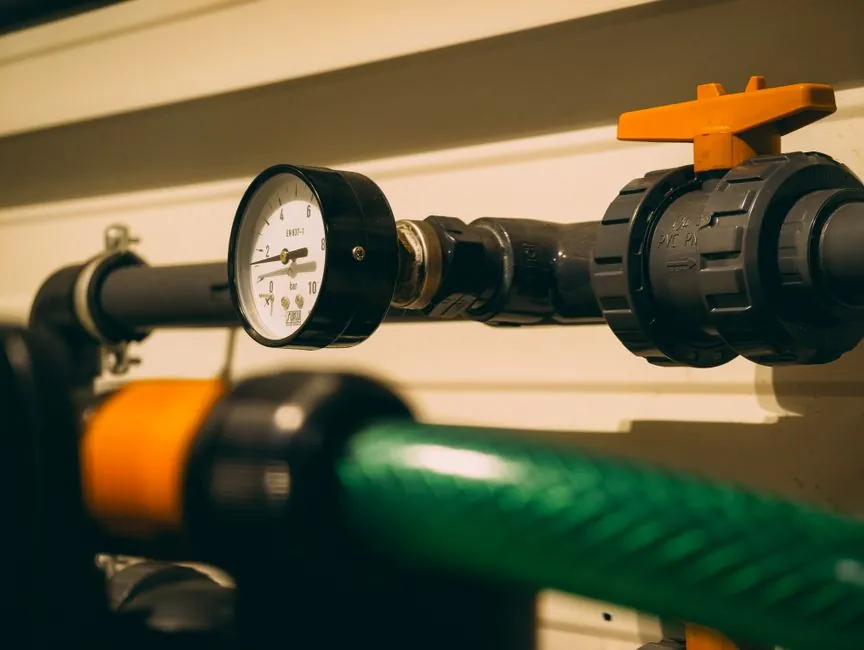
Steel-plastic composite pipe (SP-CP) is the dominant retrofit for cleanroom utility loops where galvanized steel would shed rust particles and where all-plastic plastic pipe lacks the pressure/temperature margin. The composite uses hot-dip galvanized or seamless steel as the load-bearing matrix, with an internal PE or epoxy powder coating applied by fusion spraying; the steel core provides mechanical strength while the plastic liner isolates the process fluid from metal contact [S4][S5].
Field tests in manufacturer literature show SP-CP delivers more than 3x the service life of straight galvanized pipe under identical water service, and large-diameter coated variants reach DN 1200 for high-loop headers [S4][S5]. Operating envelope for the bonded PE/EPOZY liner is documented at -40°C to +80°C with hot/cold cycling, no solvent exudation, and no microbe-supporting scaling on the smooth bore [S4].
Liner Chemistry and Cleanroom Compatibility
Inner-liner selection is the first hard decision: PE liners suit cold ultrapure-water loops (DI, WFI make-up) where extractables are tightly controlled, while fusion-bonded epoxy (FBE) tolerates higher-temperature hot-water sanitization (80°C+) and resists more aggressive cleaners [S7][S10]. Plastic-coated epoxy resin steel pipe is specifically listed as suitable for drinking water, clean water, seawater, warm water, oil, and gas media, with the inner and outer surface coatable independently to match the corridor environment [S1].
For semiconductor and pharmaceutical cleanrooms, the non-toxic, tasteless, and non-polluting profile of the PE/epoxy liner is a direct match for hygienic process-water requirements, and the smooth inner surface reduces particulate shedding compared to unlined carbon steel [S10][S8]. Cleanroom operators that route hot sanitization loops above 60°C should default to FBE rather than PE, since PE softens and increases permeation above ~60°C, per typical PE grade data sheets; the research material does not state a specific softening point, so check the resin TDS before specifying.
Base-Pipe Standard and Mechanical Envelope
SP-CP is a matrix-plus-liner product, not a standalone pipe, so the base-pipe standard governs pressure rating, dimensional tolerance, and weldability. Per [S1], if the base pipe is straight-seam steel, it must meet GB/T 3091-2015; if spiral submerged-arc welded, SY/T 5037-2018; if seamless, GB/T 8163-2012. The coating does not lift those standards, it inherits them, so a cleanroom spec sheet should call out the base-pipe code alongside the liner chemistry.
Pressure and temperature headroom is what justifies SP-CP over plastic pipe: the steel core retains the rigidity and compressive strength of seamless steel pipe, while the plastic liner brings chemical inertness the steel cannot offer on its own [S5][S3]. For a typical cleanroom branch line (DN15–DN50, 1.0 MPa, ambient), a GB/T 3091-2015 ERW base with FBE liner is the workhorse pick; larger headers (DN200–DN1200) step up to SY/T 5037-2018 SSAW with PE or FBE coating [S4].
Connection Methods: Why Cleanrooms Avoid Field Welding
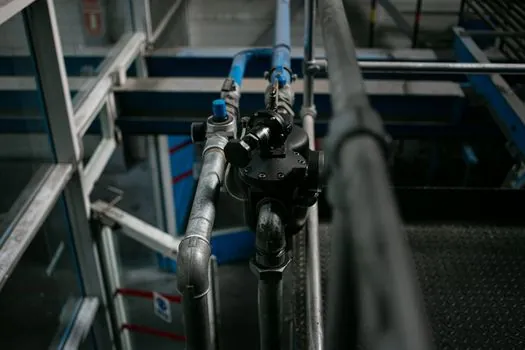
Plastic-coated pipes cannot be welded, only threaded or flanged, because field heat destroys the bonded liner [S1]. That single rule shapes cleanroom SP-CP layout: factory-prefabricated spool pieces with flanged joints dominate, while threaded connections are reserved for small-bore (typically under DN100) instrument-air and sampling-line drops [S1][S7].
The full connection menu documented in manufacturer literature includes threading, socket, flange, groove (Victaulic-style), and welding, with the welding option limited to the steel face after liner stripping, never the lined internal surface [S5]. For ISO Class 5 and cleaner rooms, flanged and grooved joints win because they can be torqued to a documented value, wrapped in cleanroom-grade vinyl or EPDM, and inspected without cutting the line open. Field weld x-ray or dye-pen inspection is impractical to keep clean, so cleanroom projects route around it.
Comparison: SP-CP vs. Alternatives on Four Cleanroom Criteria
On the four criteria that matter most in cleanroom specification, the field data lines up as follows (research-sourced where marked):
1. Corrosion resistance: SP-CP (PE/FBE liner) is non-reactive to most chemicals and does not scale or rust, matching the corrosion behaviour of all-plastic composite pipe but with higher mechanical limits [S2][S4].
2. Pressure/temperature: SP-CP retains the high-pressure and elevated-temperature envelope of steel pipe, documented to 80°C continuous and -40°C cold cycling for the liner, versus pure plastic which trades both down for flexibility [S4][S2].
3. Service life: SP-CP exceeds galvanized steel life by more than 3x in identical water service per manufacturer testing [S4][S5].
4. Installation in cleanroom: SP-CP shares fitting geometry with traditional galvanized pipe, so it can drop into existing galvanized layouts without redesign, but the no-field-weld rule forces spool-piece prefabrication off-site [S4][S1].
For purely cold, low-pressure DI loops below 1.0 MPa and under 60°C, all-plastic PEX or PP-R is easier to route and cheaper, so the SP-CP premium has to be justified by either temperature, pressure, code, or mechanical-damage risk [S2][S3].
Cleanroom Application Mapping
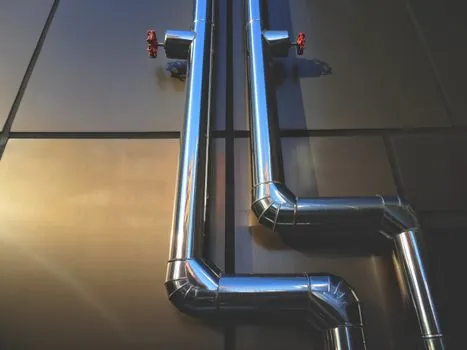
SP-CP fits a defined set of cleanroom utility services where its combination of metal strength and plastic cleanliness solves a problem neither material solves alone. Documented use cases include: tap water and pure-water make-up, natural gas and medical gas distribution, chemical and pharmaceutical process lines, and large-caliber headers up to DN 1200 for facility loop returns [S4][S5]. The hygienic, non-toxic, scale-resistant bore is also explicitly called out for food, beverage, and pharmaceutical fluid transfer [S8].
Three cleanroom segments where SP-CP is the default rather than the alternative: (1) high-temperature hot-sanitization loops above 60°C where PE pipe softens; (2) exterior or chase runs where mechanical impact or rodent damage would crush all-plastic; (3) large-diameter risers above DN100 where FRP composite and all-plastic pressure ratings drop and steel-only would corrode. Plastic-coated steel pipe is widely deployed in pharmaceutical, communications, electric power, marine, and gas distribution projects per manufacturer references, all of which overlap with cleanroom MEP scopes [S4][S5].
Limitations, Failure Modes, and What SP-CP Cannot Do
SP-CP is not a universal cleanroom solution. Three hard limitations to flag on the spec sheet: (1) field welding is off the table once the liner is bonded, so any future tie-in requires a flanged tee or a full spool replacement [S1]; (2) the bonded PE/FBE liner is rated -40°C to +80°C, so cleanroom steam lines above 80°C or cryogenic lines below -40°C fall outside the documented envelope and need stainless or specialty alloy [S4]; (3) at small diameters the cost premium over plastic pipe is harder to justify, so sub-DN15 instrument lines and drains are usually left in PP-R or PVDF.
Field failure modes to design against include liner damage from over-torqued flange bolts, galvanic isolation loss if stainless flanges bolt directly to carbon-steel SP-CP without a dielectric gasket, and UV-driven outer-liner degradation in exposed chases. Manufacturer literature also flags that the coating "does not age or crack" within the rated envelope, but that claim assumes factory-fusion application, not field patch repair [S4][S5].
Standards, Certification, and Sourcing Trail
Compliance for cleanroom SP-CP spec sheets should reference the base-pipe standard (GB/T 3091-2015 for ERW, SY/T 5037-2018 for SSAW, GB/T 8163-2012 for seamless) plus the liner-application standard; manufacturer certification commonly includes the China compulsory certification mark, plus FM and UL export qualifications, with production run under an ISO 9001-series quality system [S1]. Additional cleanroom-specific documentation to request from the mill: hydrostatic test reports, liner thickness mapping (typical 200–500 µm for FBE), and adhesion pull-test results per the applicable coating standard.
For projects tied to engineering plastic secondary loops or hybrid stainless headers, the same lot traceability should be carried through to the weld-end fittings, since a galvanized or carbon-steel fitting in a lined system defeats the corrosion logic. Cross-reference with the PE pipe selection for renovation projects when sizing the cold-side drops that feed an SP-CP header, and with the test leads for water treatment spec sheet when commissioning ultrapure-water loops that run through SP-CP risers.
For project schedules, the bottleneck item is almost always flanged spool-piece prefabrication lead time, not the pipe itself, so lock spool drawings before the steel matrix order is released.