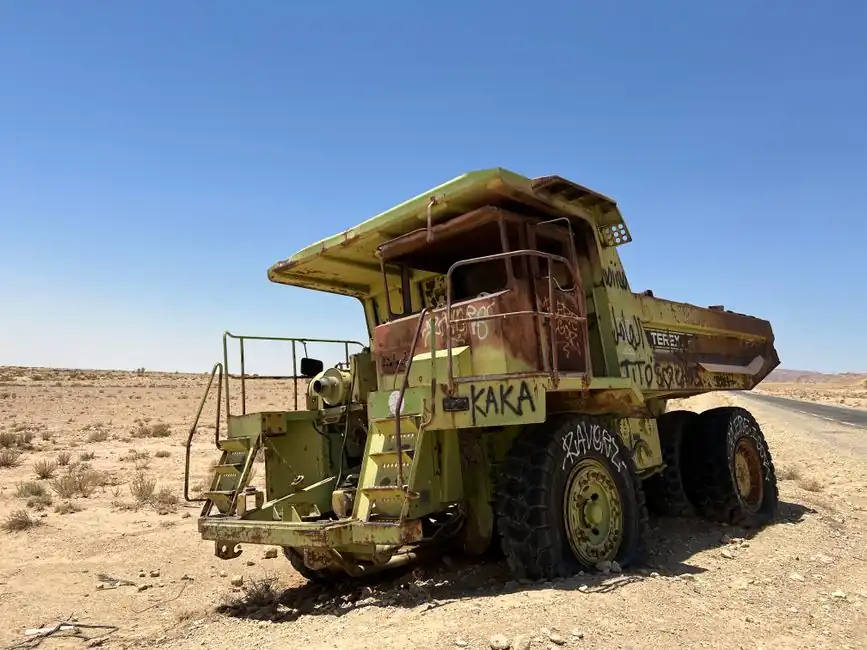
Cab-over engine (COE) dump trucks hold roughly 5% of the US truck market in 2026, while conventional (bonneted) designs account for the remaining 95%, with cab-overs still dominant in urban delivery, refuse collection, and weight-sensitive bulk haul [S3].
The choice is dictated by three hard numbers: turning radius, front-axle weight, and overall length budget under regional regulations; European length rules cap cab length at 2.35 m (7 ft 8.5 in) to maximize load area, and Asian markets follow similar logic, which is why no European OEM has produced a bonneted day cab since Scania exited in 2005 [S1][S2].
Architecture and Engine Placement
COE trucks mount the cab directly above the engine and front axle, eliminating the front hood and freeing 6-8 ft of chassis for body length on the same overall vehicle footprint; Isuzu Low Cab Forward (LCF) models add about 2 ft of usable body length versus an equivalent conventional chassis [S5].
Conventional trucks place a long hood forward of the cab, typically 70-75 ft total length when paired with a 53 ft trailer, while cab-overs reach the same cargo volume in 65-68 ft because the engine is tucked under the floor [S3]. Front-axle loading is the second-order effect: conventionals run 12,000-14,000 lb on the steer axle, cab-overs 10,000-12,000 lb, which lets a COE carry 2,000-3,000 lb more payload on weight-sensitive bulk or tanker dump bodies [S3].
Turning Radius and Urban Maneuverability
Isuzu LCF cab-overs spec a 49.5-degree wheel cut angle and yield a turning radius roughly 15-20% tighter than equivalent conventional trucks, a margin that determines whether a 12-yard dump body can navigate a residential cul-de-sac or a downtown loading dock [S3][S5].
Conventionals typically max out at 35-40 degrees of wheel cut because the long front overhang sweeps a wider arc; in European cities with narrow streets this is the reason bonneted day cabs effectively disappeared after 2005 [S1][S5]. For dump-truck duty cycles that involve repeated ingress/egress on tight jobsites, the COE geometry translates directly into fewer three-point turns and less pavement damage on curbs.
Visibility, Safety, and Crash Protection
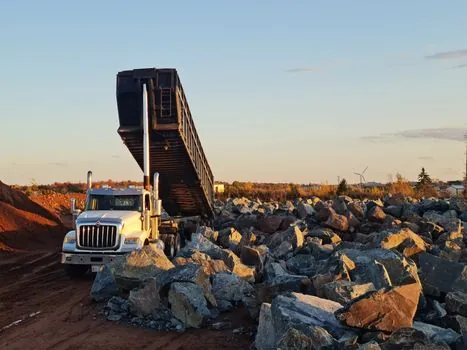
Conventional trucks provide 6-8 ft of crumple zone between the driver and a frontal impact, and NHTSA-derived survival rates are reported about 60% higher for occupants of conventionals versus cab-overs in head-on collisions [S3].
Cab-overs flip the safety trade: drivers sit above the front axle with a near-vertical windshield and see pavement as close as 8 ft ahead, versus a 20 ft forward blind spot in a conventional, which matters when pedestrians, cyclists, or ground crews work around a reversing dump body [S5]. Trade-off is real and has been documented by operators: a 2012 fleet account of an Isuzu cab-over head-on collision noted the oncoming car penetrated the driver's seat area, while conversely, a separate operator reported the COE's low front end lets a normal car slide underneath in a frontal strike [S4]. The cab-over's tilt-cab mechanism (45-degree on Isuzu LCF) gives 360-degree ground-level engine access and is one reason shop service can be completed roughly 30-40% faster than on a conventional [S3][S5].
Ride Comfort and Long-Haul Fatigue
Conventional cabs sit behind the front axle, so road shock and vibration are damped before reaching the driver, which is the dominant reason long-haul fleets and owner-operators default to bonneted designs for routes above 200 mi [S3].
Cab-over drivers sit over the axle and directly above the powertrain, a geometry that increases cabin noise and vibration and makes ingress/egress a multi-step climb up past the front wheel; in US COE applications operated at maximum weight, the Federal Bridge Formula forces an axle directly behind the front bumper, which makes the climb even more awkward than on European or Japanese cab-overs, where the entry path is straight in with handrails [S1][S2]. For dump-truck applications that mean highway speeds above 55 mph, conventionals also return 0.5-1.0 MPG better fuel economy because the long nose manages airflow more cleanly [S3].
Decision Matrix: Cab-Over vs Conventional Dump Truck
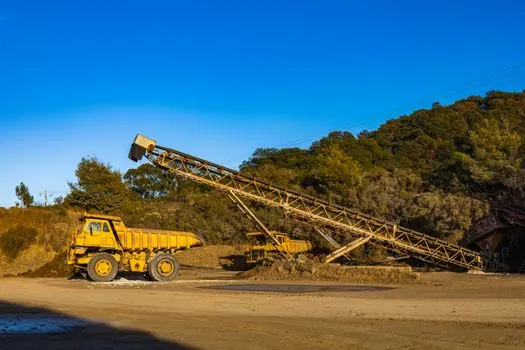
On four decision criteria drawn from the research, the trade-off looks like this: (1) turning radius favors COE (15-20% tighter, 49.5 deg wheel cut on Isuzu LCF) [S3][S5]; (2) front payload capacity favors COE (2,000-3,000 lb extra on weight-sensitive bulk) [S3]; (3) frontal crash protection favors conventional (6-8 ft crumple zone, ~60% better occupant survival) [S3]; (4) long-haul fuel economy and ride comfort favor conventional (0.5-1.0 MPG better, less driver fatigue) [S3].
Use-case mapping is straightforward: a 12-yard urban mulch or aggregate dump running under 50 mi per shift in a length-regulated metro should spec a cab-over (Isuzu, Hino, Mitsubishi Fuso, Autocar) [S1][S4]; a 16-20 ton mining or off-road dump running rough haul roads, or a long-distance belly or end-dump on interstates, should spec a conventional (Kenworth, Peterbilt, Mack, Freightliner) [S1][S3]. Owners who want both should evaluate a dedicated mining dump truck platform for off-road cycles rather than retrofitting a cab-over chassis with off-road suspension. For mixed urban and short-highway duty, a low-cab-forward cab-over on a medium-duty chassis remains the dominant US vocational choice [S5].
Operator Trade-Offs in the Field
Field reports from landscapers and municipal fleets running 12 ft bodies on Isuzu and Mitsubishi Fuso cab-overs consistently cite three things: nimbleness in tight lots, no front-axle squat under load, and a flipping cab that simplifies PM intervals; the same operators report faster tire wear, the need to extend trailer tongues to avoid jackknifing, and a higher cab step that slows in-and-out cycles on long days [S4].
For a 10,000 lb trailer tow rating, cab-overs handle the load fine on flat urban routes but are not the first choice for long-distance equipment hauls, where the conventional's longer wheelbase, heavier front axle, and available big-bore engines (commonly 13-15 L diesels in US long-haul specs) provide better stability under surge braking [S2][S3]. Fleet buyers comparing 4x4 capability should note that 4x4 cab-overs exist (Mitsubishi Fuso FG4x4) but the off-road catalog is thinner than for conventional pickups, which is why many operators convert a conventional one-ton dump and accept the maneuverability penalty instead [S4].
Standards, Sourcing, and Specification Notes

Two regulations drive the global split more than any marketing claim: European length rules (cab limited to 2.35 m, 7 ft 8.5 in) force the cab-over geometry, and the US Federal Bridge Formula, by penalizing tight axle spacings at maximum weight, historically forced a steer-axle placement that made COE entry awkward at GCW [S1].
Buyers should pin three data points on any quote: (a) wheel cut angle in degrees (target 45-49.5 deg for urban COE duty), (b) front-axle weight rating in pounds (lower numbers on COE mean more legal payload), and (c) bumper-to-back-of-cab dimension (the number that determines how much body you can mount on the chassis) [S3][S5]. For broader truck selection context, the dump truck and concrete mixer truck encyclopedia entries list related body-style trade-offs. Trackable signals through year-end 2026: any EPA 2027 heavy-duty NOx rule update affecting diesel aftertreatment packaging on cab-over medium-duty chassis, and any NHTSA revisit of the frontal-crash survival gap cited above [S3].
This topic is covered further in UL and CE Marking Calibration: In-House Lab vs Outsourced Traceability.