
A 600×200×200 mm autoclaved aerated concrete block weighs approximately 16 kg per piece in Indian supply, with 15–20 kg quoted as the normal band depending on the manufacturer's density grade [S1][S2].
The same 600×200×200 geometry covers 0.12 m² of wall area, consumes 8.33 blocks per square metre, and is the most commonly stocked 8-inch AAC format across Indian distributors from Udaipur to metro dealer networks [S1][S2].
Weight and Density Math for 600×200×200 mm
At nominal geometry, a 600×200×200 mm block displaces 0.024 m³ of wall volume. Dividing the 16 kg reference mass by 0.024 m³ yields a dry unit weight near 667 kg/m³, which sits inside the IS 2185 (Part 3): 1984 Grade II (551–650 kg/m³) and Grade III (651–750 kg/m³) density bands commonly produced in India [S1][S2].
Manufacturer-published tables for medium-format AAC confirm the 10–30 kg range across 600×200×125–200 mm geometries, with 200 mm thickness landing at the upper half of that band; this matches Magicrete's 15–20 kg reference for the 200 mm thickness class [S2][S3]. Reference product listings in dealer catalogues carry the 600×200×200 size as a stocked SKU alongside 100, 125, 150, 230, 250, and 300 mm thickness variants [S4].
IS 2185 (Part 3): 1984 Dimensional and Tolerance Rules
IS 2185 (Part 3): 1984 (reaffirmed 2020) sets the Indian standard AAC block size at 600 mm length × 200 mm height × 100–250 mm thickness, with dimensional tolerances of ±5 mm on length and ±3 mm on both height and width [S2]. The 200 mm thickness option sits inside the standard's nominal 100–250 mm range, so a 600×200×200 mm block is fully spec-compliant rather than a custom size [S2].
Buyers should verify IS certification marking, density/grade marking, and the production date stamp on each pallet before signing delivery challans, because dimensional drift outside ±3 mm drives mortar over-consumption and breaks RERA-stage wall-thickness calculations on fast-track projects [S2]. For comparison context on a related but different format, the smaller 600×200×100 geometry is covered in the AAC block sizing reference and weighs 7.5–10 kg per piece, or roughly half the 200 mm mass [S2].
How 600×200×200 Compares With Other AAC Sizes
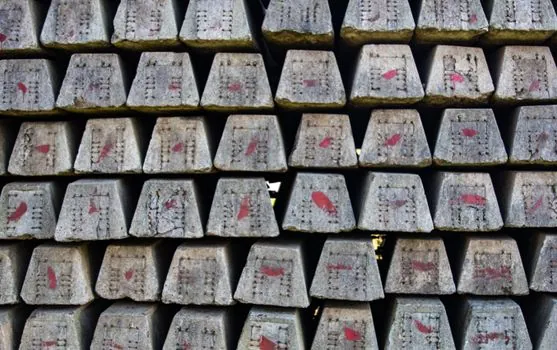
Side-by-side, the 600×200×200 format is the heavy/structural choice, the 600×200×150 is the mid-range partition choice, and 600×200×100 is the light partition choice; weight scales roughly linearly with thickness because length and height are held constant at 600×200 mm across all three [S2][S3].
The medium-format sizing band (600×200×125–200 mm) covers 10–30 kg per block and serves exterior walls and low-rise buildings, the dominant use case for the 200 mm variant in current Indian stock [S3]. The 200 mm option is up to three times lighter than a traditional clay-brick wall of equivalent R-value, reduces dead load on the structural frame, and is rated for 4–6 hours of fire resistance depending on plaster build-up [S4].
Logistics, Mortar, and Wall-Weight Math
At 8.33 blocks per square metre and 16 kg each, a 1 m² wall of single-leaf 200 mm AAC weighs roughly 133 kg excluding mortar and plaster, versus 200–250 kg for a comparable 200 mm clay-brick wall, which directly reduces column and beam steel sizing on multi-storey projects [S1][S2][S4].
Thin-bed mortar consumption drops to about 1.5 mm joint thickness with a notched trowel instead of the 10–12 mm bed joints used for clay brick, an installation sequence detailed in the AAC thin-bed mortar method statement and referenced against block geometry in the AAC block vs AAC brick naming reference. Standard pallet loads in Indian dispatch are typically 1.0–1.2 tonnes, which works out to 60–75 blocks of the 200 mm format per pallet, so a 100 m² wall draws 8–9 pallets delivered by road from regional plants at Udaipur, Hyderabad, Pune, and the NCR belt [S1][S2].
Selection Rules and Common Spec Mistakes

Specifying the 200 mm thickness is correct when the wall is load-bearing, exceeds 3 m in height, or sits on the perimeter of a building above G+3; the 100 mm or 125 mm format should not be used in those roles even though it is cheaper per piece [S2][S3].
Two recurring supply-chain errors show up on site: (1) quoting weight from a non-IS supplier whose dry density is 800–900 kg/m³, which pushes the 200 mm block to 19–22 kg and breaks the structural dead-load assumption, and (2) accepting blocks with corner chips greater than 5 mm, which are outside the ±3 mm IS 2185 width tolerance and force thick-bed mortar patches that defeat the thin-bed cost case [S2][S4]. Cross-check the geometry nomenclature in the AAC block encyclopedia entry and the heavier block-brick comparison before locking the BoQ, because several manufacturers label the same 600×200×200 mm piece as a "block" and others as an "8-inch brick" on the same invoice line [S1][S3].
Trackable Signals for the Next Procurement Cycle
Two verifiable watchpoints for the next 60–90 days: confirm whether your supplier's 2026 production lots carry the IS 2185 (Part 3): 1984 reaffirmed-2020 density grade stamp on the pallet wrap, and capture the actual kilned weight from at least three random blocks per truck using a calibrated platform scale, because a 16 kg average is the design baseline but anything above 20 kg signals Grade IV density rather than the typical Grade II/III AAC [S2][S3].
For component-level specifications, see gauge block.