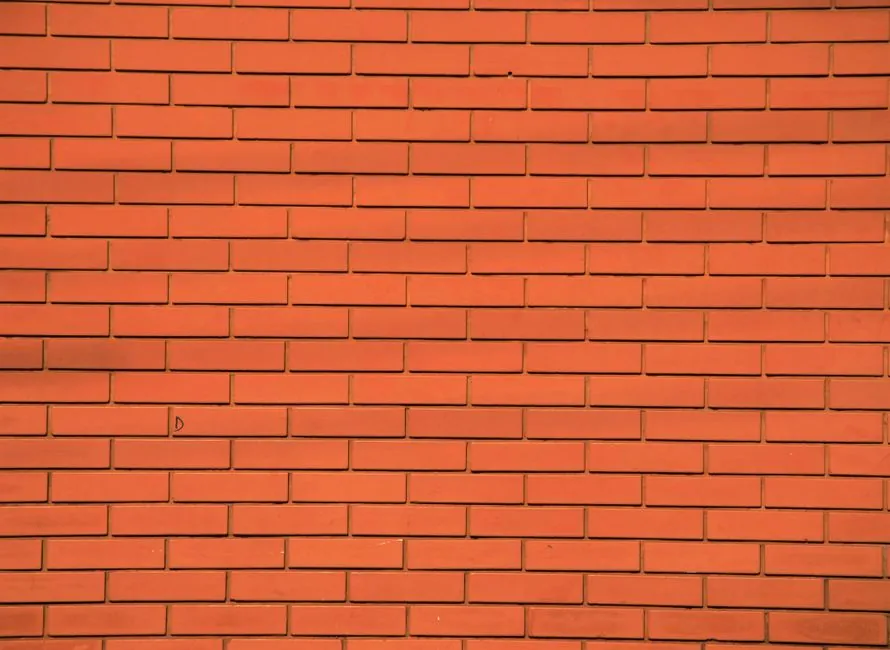
AAC blocks run 550–650 kg/m³ against 1,950–2,050 kg/m³ for fly ash bricks, cutting infill wall dead load by roughly two-thirds per [S3], which is why AAC has become the default infill in Indian RCC frames even though its Grade I minimum compressive strength of 3.5 N/mm² under IS 2185 (Part 3) is well below fly ash [S2][S3].
Fly ash bricks still post the highest per-unit strength of the three infill options at 7.5–10 N/mm² for Class I under IS 12894:2002, with the narrower 230×110×75 mm module that drops straight into a traditional masonry workflow [S2][S4]. The right call comes down to whether the wall is non-structural infill in a high-rise frame or a load-bearing partition in a low-rise build.
Density and dead load: the structural case for AAC
AAC infill at 550–650 kg/m³ weighs about a third of an equivalent fly ash brick wall at 1,950–2,050 kg/m³, and a building with AAC infill instead of fired clay brick can shed 15–25% of total structural dead load per a 2026 builder analysis [S1][S3]. That weight saving cascades into smaller columns, smaller footings, and less steel in the RCC frame, which is the real economic argument for AAC despite its higher per-block price of 40–70 INR versus 6–12 INR for fly ash [S4].
For a typical 100 m² of 200 mm infill, switching from fly ash brick to AAC removes roughly 280–320 kg/m² of dead load from the frame, a number that drives beam sizing more than the per-block sticker price ever will [S3]. See the deeper breakdown of moisture-corrected delivered density in this delivered-density analysis before signing off on a structural load schedule.
Compressive strength: fly ash leads, AAC trails
Fly ash bricks top the strength table with 7.5–10 N/mm² for Grade I under IS 12894:2002, AAC Grade I sits at the 3.5 N/mm² minimum under IS 2185 (Part 3) and typically reaches 3.5–5.0 N/mm² in lab tests, and burnt clay brick under IS 1077 lands at 3.5–10.5 N/mm² class-dependent [S2][S3]. For non-load-bearing infill in an RCC frame, 3.5 N/mm² is sufficient because the frame carries the gravity loads, which is why AAC still dominates high-rise infill.
Where the spec bites is load-bearing low-rise work: a 4-storey walk-up on fly ash brick can take higher floor loads than the same building on AAC, and switching without re-running the structural design is a common failure mode. As a quick rule, specify fly ash brick when the wall carries floor load, and AAC when it only fills the frame.
Thermal and acoustic performance: AAC by a wide margin
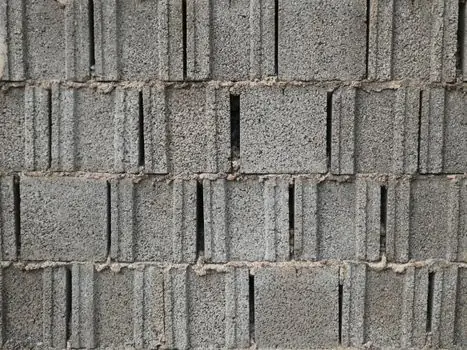
AAC's thermal conductivity of 0.10–0.24 W/m·K is roughly a third of clay brick (0.7–1.0 W/m·K) and noticeably below the commonly cited 0.5–0.8 W/m·K range for fly ash, which is why AAC walls keep rooms cooler in hot-humid Indian climates per 2026 buyer guidance [S3][S5]. That single number reshapes the MEP sizing: lower conductive load means smaller chillers and shorter HVAC run-hours.
For a wall-by-wall thermal decision tree against fired clay, see the AAC vs Fired Clay Brick thermal conductivity map. On acoustics, AAC's mass-plus-porosity combination absorbs mid-band noise better than the denser fly ash brick, though neither matches the raw mass damping of solid concrete for low-frequency plant rooms.
Water absorption, fire, and on-site behaviour
Fly ash brick absorbs less water than burnt clay brick thanks to its pressed, controlled-cure process, which means less curing water, fewer damp patches, and lower waterproofing cost on external walls per 2026 fly ash brick guidance [S5]. AAC, being cellular, needs careful detailing at plumbing penetrations and external exposure: a standard AAC external wall without a proper render coat will wick moisture.
On fire resistance both pass the typical 2–4 hour infill requirement, AAC through its mineral composition and fly ash through its density. The two real on-site gotchas are AAC's brittleness (poor fixings for heavy fixtures without chemical anchors) and fly ash brick's variability when sourced from non-IS-marked suppliers, a risk that is best controlled by batch-tested compressive cubes at site.
Cost: per-block vs finished wall
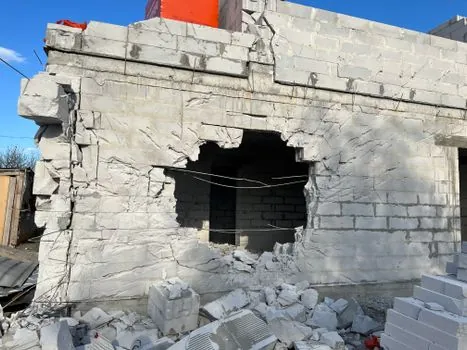
Per unit, fly ash brick is the cheapest at 6–12 INR versus 40–70 INR per AAC block, and far cheaper than the 8–15 INR for burnt clay brick in some metros [S4]. A 2025 peer-reviewed lab study found AAC still came in 29% cheaper than clay brick and 36% cheaper than fly ash brick for a completed wall, once mortar consumption, fewer joints (AAC's 600×200×100–300 mm module covers area faster), and labour time were factored in [S3].
The crossover point is wall area: for a small 30 m² partition on a low-rise build, fly ash brick wins on simplicity and unit price. For a 5,000 m² high-rise infill, AAC's installed-cost advantage compounds and the structural dead-load saving often pays for the higher block price outright. Always run the cost on finished wall area, not on per-block quotes.
Decision matrix: which to specify when
Four criteria, three options, in priority order for the specifier: (1) Dead load on the frame: AAC wins, 550–650 kg/m³, fly ash loses at 1,950–2,050 kg/m³; (2) Per-unit compressive strength: fly ash wins, 7.5–10 N/mm² under IS 12894:2002, AAC loses at 3.5 N/mm² under IS 2185 (Part 3); (3) Thermal conductivity: AAC wins, 0.10–0.24 W/m·K, fly ash loses at the commonly cited 0.5–0.8 W/m·K; (4) Per-block price: fly ash wins at 6–12 INR, AAC loses at 40–70 INR per [S2][S3][S4].
Use this to map use case to material: high-rise RCC infill above G+3 specifies AAC, low-rise load-bearing walls up to G+2 specify fly ash, basement and damp-zone retaining walls specify fly ash with waterproofing, and internal partitions in any frame specify AAC for speed. For naming and module details that affect BOQ line items, see AAC block vs AAC brick naming and size.
Standards, sourcing, and failure modes to watch

Three Indian Standards govern the choice: IS 2185 (Part 3) for AAC, IS 12894 for fly ash brick, and IS 1077 for burnt clay brick, and every delivery should carry the relevant ISI mark plus a batch test certificate [S2][S4]. The most common spec-side failure is treating AAC as a structural block: it is an infill product, and any load-bearing claim on AAC must trace back to the manufacturer's specific grade test, not the generic IS 2185 minimum.
The most common fly ash failure is sourcing outside IS 12894, which lets under-cured, high-absorption bricks into the wall and causes plaster cracking within one monsoon. The 2026 fly ash brick market in India sits inside a wider AAC market expanding from roughly $3.6 billion in 2024 toward a projected $6.2 billion by 2030, driven by green-building codes and government fly-ash utilisation policy, so certified supply is becoming easier to find [S2]. Next signal to watch: IS 2185 (Part 3) revision notes and any state-level mandate tying thermal conductivity limits to walling-material choice in new commercial builds.
For the relevant spec sheets and selection criteria, see aac block, block brick, and fired brick.