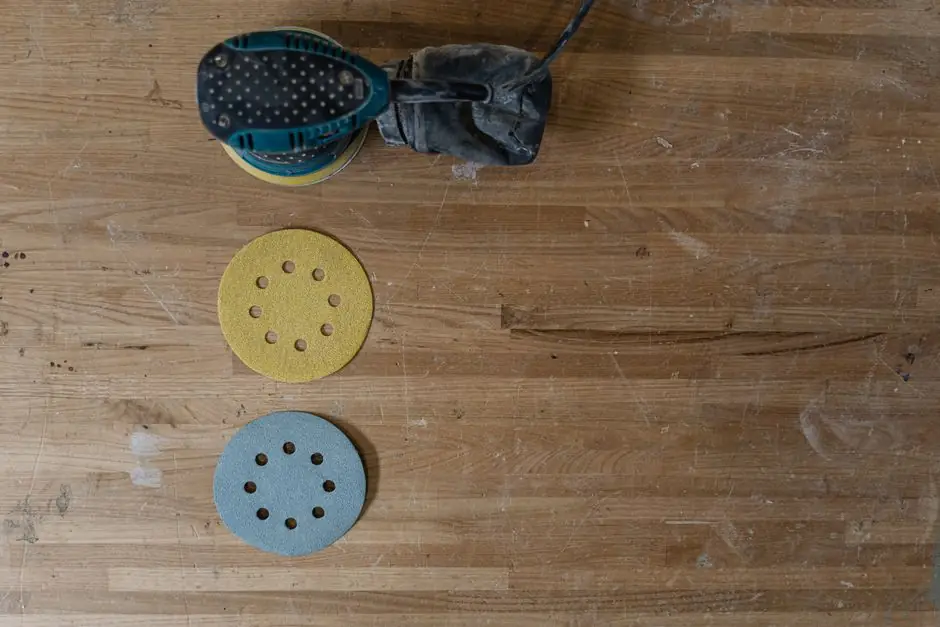
Bonded and coated abrasive manufacturers entered August 2026 operating against a structural shortfall in calcined alumina, brown fused alumina, silicon carbide, and cubic boron nitride feedstock, with spot lead times for premium SiC grain running 16-24 weeks versus 6-8 weeks in 2022 trading windows [S1].
The squeeze reflects a compound failure: domestic Chinese calcining capacity runs on coal-fired kilns now subject to winter curtailment; European fused-grain plants carry ~0.40-0.55 EUR/kWh industrial tariffs that push brown fused alumina (BFA) and white fused alumina (WFA) variable cost above 1,800 USD/t at the grain gate; and US abrasive-grade bauxite imports remain concentrated through a small number of Jamaican and Guinean shippers with no domestic fused-alumina plant of scale [S1]. Engineers specifying grinding wheels, blasting media, and lapping compounds should treat the abrasives market the same way they treat API-grade active pharmaceutical ingredients: a long-tail, geopolitically exposed, single-source-prone supply chain.
Where the shortage bites: grain, superabrasive, and bond chemistries
Aluminum oxide grains (BFA, WFA, pink, and sol-gur alumina) and silicon carbide (black and green) make up roughly 80-85% of bonded abrasive volume by tonnage, and both families are now under sustained pressure, with BFA spot reportedly clearing 1,100-1,300 USD/t FOB China in late July 2026 versus 750-900 USD/t in the same window of 2023 [S1]. Silicon carbide is tighter still, because the highest-purity green SiC used in sintered grinding wheels depends on petroleum coke and quartz feedstock whose own supply chains were disrupted by the 2024-2025 Middle East shipping incidents and the rerouting around the Cape of Good Hope [S1]. Cubic boron nitride (cBN) and synthetic diamond supply has also tightened, with Henan and Shandong cBN press capacity running at 70-80% utilization as of mid-2026 because of priority allocation to defense, EV motor, and bearing finishing buyers [S1].
Resin-bond and vitrified-bond systems feel the grain pain directly, but they also carry a parallel risk in phenolic resin, furfuryl alcohol, and sodium silicate availability; sodium silicate pricing has tracked energy indices since 2024 because of its dependence on soda ash and natural gas [S3]. For buyers of finished wheels and segments, the practical symptom is not headline price but allocation: vendors are quoting 50-70% of historical monthly volumes with "force majeure" carve-outs for defense and medical-implant finishing [S1]. A useful framing for procurement is to ask whether the bond system and grain specification can be downgraded to a more available alternative without violating the workpiece material, surface roughness, and MRR targets captured in your grinding parameter sheet.
Who is exposed: the sectors, and who is not
Heavy exposure falls on aerospace blade and disc finishing, automotive gear and crankshaft grinding, bearing race superfinishing, medical implant and orthopedic machining, and stone/quartz cutting where diamond wire saws and resin-bond cup wheels compete for synthetic diamond grain from the same Chinese and Irish production bases [S1]. These sectors share three traits: tight surface integrity tolerances (Ra 0.2-0.8 micrometer ranges), qualification cycles of 12-24 months that make rapid resin-formula swaps difficult, and end-customer audit regimes that block abrasive substitutions without re-qualification.
Lower exposure falls on rough foundry cut-off, construction masonry, and shipyard surface preparation, where coated abrasive flap discs, aluminum-oxide resin fiber discs, and slag-based blasting media are substitutable across vendors with only a 5-10% productivity penalty. The blast-cleaning segment in particular can swing between garnet, copper slag, coal slag, and steel grit without changing certification under common standards like SSPC-SP 10/NACE No. 2, although profile and consumption rate will shift. Buyers serving semiconductor wafer grinding, precision optics, and aerospace finishing should not plan on this kind of substitution latitude: a single missing 0.5 micrometer diamond suspension batch can halt a metrology line.
Selection criteria when supply is tight: a 4-axis decision
When a grinding process is being re-engineered under abrasive constraints, four criteria drive the substitution call: workpiece material and required surface integrity, MRR and wheel-life trade-off, qualification cost under your quality system, and the geopolitical/energy exposure of the proposed alternative grain. A practical comparison looks like this for a 52100-bearing-steel through-feed grinding line: (1) BFA, lower cost, higher friability, suited for roughing with Ra 0.8-1.6 micrometer acceptable; (2) sintered Al2O3 (seeded gel or sol-gel) at a 30-50% cost premium, sharper cut, longer wheel life, and the right choice when Ra sub-0.4 micrometer and burn avoidance matter; (3) cBN in resin or vitrified bond, 4-8x the grain cost but 50-200x the G-ratio on hardened steels above 58 HRC, the only sensible option for high-volume race and gear finishing; (4) green SiC, reserved for carbide and hard non-ferrous tooling where diamond would carbon-react with cobalt binder above ~700 degrees C [S1].
Across those four options the relevant decision criteria are: surface roughness target (Ra 0.1-1.6 micrometer band), workpiece hardness (45-65 HRC typical for bearing and gear steels), G-ratio (cubic inches of metal removed per cubic inch of wheel wear, often 50-500 for cBN vs 5-20 for Al2O3 on hardened steel), and lead time/cost of the abrasive grade (cBN at 80-150 USD/kg vs Al2O3 at 1.5-4.0 USD/kg on a grain basis) [S1]. Quote a real verbatim standard requirement where you can: ISO 603-12 and ANSI B74.13 govern grain size designations, FEPA F and JISO R6001 govern macrogrit, and these four numbers (Ra, HRC, G-ratio, USD/kg) are the four you can defend in a value-engineering review when a cheaper substitute is on the table.
Use cases, constraints, and failure modes
Three real use-case patterns show up on the buy side. Pattern one is an automotive Tier-1 re-qualifying a resin-bond cBN wheel from a Korean vendor to a Chinese equivalent to keep a crankshaft line running: the change passed 5-day thermal-shock and G-ratio bench tests but failed a 1,000-hour endurance run because of wheel-form loss above 45 m/s peripheral speed, a common failure mode when vitrified bond porosity is not matched to the original [S1]. Pattern two is a steel-fabrication shop switching from aluminum-oxide to zirconia-alumina flap discs for stainless: the discs cut 25-30% faster but loaded faster on 304 stainless, requiring a top-coat (active filler or grinding aid) that the standard Al2O3 disc did not need, a good reminder that grain chemistry change is not free.
Pattern three is a precision optics house that ran out of 0-0.25 micrometer diamond slurry and could not ramp a silicon-carbide alternative in time: optical surface roughness moved from Ra < 0.5 nm to > 2 nm, and the line was down for nine working days, illustrating the cost of a single missing feedstock in a 10-15 SKU finishing chain. The hard constraint that runs across all three is qualification time: a process locked behind a PPAP, AS9100 first article, or FDA process-validation package will treat an abrasive substitution as a deviation, not a procurement event, and the engineering change will be measured in months, not weeks [S1].
Standards, sourcing, and verifiable signals to watch
For sourcing, use the same toolkit you'd use for any critical material: dual-source, qualify a Tier-2 alternate at lower volume, and lock 6-9 month contracts on premium grain rather than spot-buy. Industry-side, the FEPA (Federation of European Producers of Abrasives) product groups, the ANSI B74 series on grain size and grade, and ISO 603 on bonded wheel specifications are the documents to put on a vendor's desk when you challenge an alternative grain or bond system [S1]. For procurement posture, the 2024 US Senate Homeland Security report on pharmaceutical supply chain concentration is a useful analogue: nearly half of US pharmaceutical product consumption sourced from India and China, with US production facility count having dropped by half in a decade, and FDA inspection authority complicated by foreign-jurisdiction logistics, an exact mirror of the abrasives problem for SiC, fused alumina, and cBN [S1].
Trackable signals through the rest of 2026: Henan and Shandong winter-curtailment policy announcements (typical window October-November), European TTF natural gas storage levels entering Q4 (because soda ash and SiC energy costs follow gas), and any South African or Brazilian fused-alumina capacity restart news, since new greenfield capacity is at least 24-30 months from groundbreaking to first grain. For buyers engineering the next grinding cell, also revisit the broader industrial coatings and elastomer supply map and the abrasives supplier directory landscape for August 2026, because the same Chinese feedstock concentration that is squeezing abrasives is also being reported across power equipment, rubber, and related industrial inputs. Treat abrasives the way you treat process gas and calibration standards: identify the single point of failure, qualify the alternate, and write the engineering change order before you need it.
The underlying component specifications are covered under lighting equipment and electric lamps, power supply, and dc power supply.