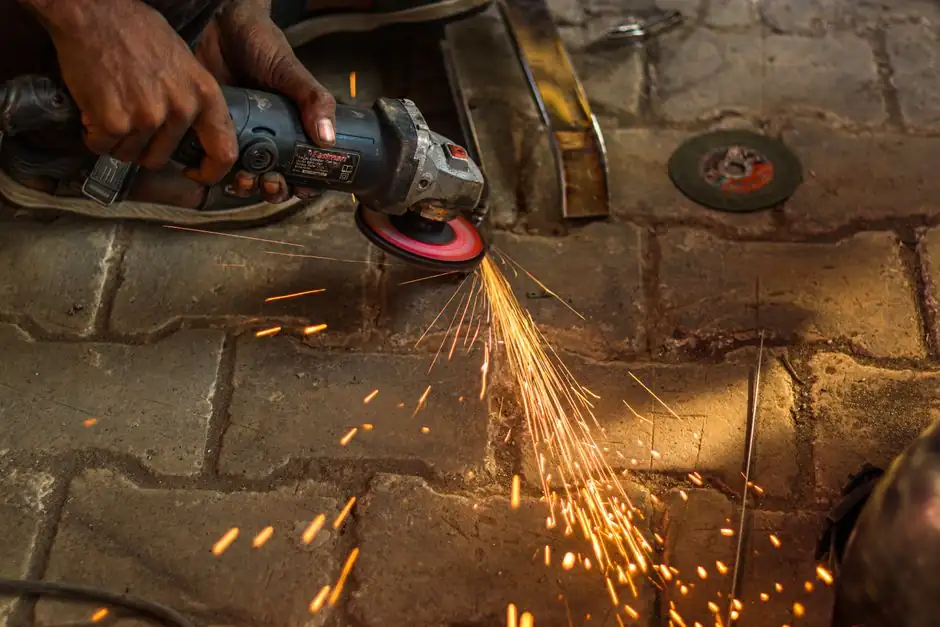
Bonded abrasive buyers face a 2026 supply curve shaped by three concurrent shocks: cumulative US IEEPA tariff refunds have hit $100 billion as struck-down duties flow back to importers [S5], a new 15% tariff on polysilicon imports tightens silicon carbide grain upstream [S5], and Transpacific frontloading out of China kept ocean carrier Matson at or above July capacity, with peak-season continuation signaled by CEO Matthew Cox [S5].
The 2026 Supply Chain Indonesia exhibition, scheduled for 25-27 November 2026 at the NICE (PIK 2) complex in Jakarta, is positioning itself as the regional procurement and automation venue for the ASEAN manufacturing footprint that consumes a growing share of grinding wheels, cut-off wheels, and coated discs [S3]. For specifiers, the question is no longer whether abrasive supply is constrained, but which abrasive families carry the most concentrated risk and which are merely repriced.
Tariff stack on abrasive inputs: polysilicon, steel, and derivative goods
The polysilicon tariff is a 15% duty applied to imports feeding both chip and solar supply chains, with downstream effects on silicon carbide (SiC) abrasive grain production because metallurgical-grade silicon is the precursor for SiC synthesis [S5]. SiC grain is the dominant abrasive in vitrified grinding wheels for hard ferrous alloys above 55 HRC and in non-woven floor-pad substrates, so a precursor duty propagates into the bonded wheel catalog within one or two quarters.
Separately, the US Commerce Department on August 9, 2026 proposed derivative tariffs covering brass wind instruments, floor safes, tanker trailers, and semi-trailers, indicating the administration's pattern of widening the base of goods subject to metal-content duties [S5]. Abrasive products with steel or aluminum cores (cut-off wheels with reinforced hubs, depressed-center grinding wheels, flap disc backplates) sit inside this derivative scope and can expect duty stacking once the rule finalizes. Procurement teams should track the Federal Register notice for the exact HTS lines touching grinding wheel cores and resin-bonded reinforced products.
For buyers that import as the importer of record, O-Reilly Automotive's earnings call disclosure is a useful benchmark: the auto parts retailer reports that suppliers typically carry the importer-of-record role, so tariff incidence does not always flow to the brand buyer but does flow through invoice pricing [S5].
Silicon carbide vs aluminum oxide: substitution matrix under a polysilicon shock
When SiC precursor costs rise, the first commercial response is to substitute aluminum oxide (Al2O3, both white and brown fused) for non-ferrous and lower-hardness ferrous applications. SiC retains a performance edge on cast iron, non-ferrous metals, and stone, where its friability and thermal conductivity outperform Al2O3; Al2O3 dominates on mild steel, tool steel below 50 HRC, and weld grinding, where its toughness is preferred. [S5]
The comparison matrix is straightforward and ties to verifiable application criteria:
SiC vs Al2O3 for bonded wheels: hardness/friability (SiC higher friability, Al2O3 higher toughness), ferrous compatibility (SiC for cast iron and non-ferrous, Al2O3 for carbon and tool steel), thermal conductivity (SiC roughly 120 W/mK vs Al2O3 roughly 30 W/mK in dense grain form), and cost exposure (SiC tied to polysilicon/SiC grain, Al2O3 tied to bauxite and electricity). Procurement teams under a 15% polysilicon tariff should bias toward Al2O3 specifications wherever the workpiece and surface finish permit.
Cubic boron nitride (CBN) and diamond remain unaffected by the polysilicon duty but carry a different constraint: CBN grit supply is concentrated among a small number of Western and Japanese manufacturers, and the duty environment makes single-source grit dependencies more expensive to hold. Diamond wheel pricing tracks natural and synthetic diamond output, with synthetic diamond makers in China, Ireland, and the US.
Logistics reality: Transpacific frontloading, ports, and rail diversions

Matson's China services ran at or above capacity in July 2026 and the carrier expects that pattern to persist through peak season, a direct consequence of Chinese exporters shipping ahead of further US duty actions [S5]. For abrasive buyers, frontloading is a double signal: container slots are tight and short-term pricing is firm, but the inventory hitting US West Coast ports in August-November 2026 will rebuild bonded wheel and coated disc stocks that were deliberately drawn down through Q2 2026.
The Port of Virginia added a CSX rail service to Indianapolis effective August 4, 2026, allowing containers to move by rail directly into the Midwest rather than routing through Chicago and trucking south, which reduces inland transit variability for Ohio, Indiana, and Kentucky metalworking buyers [S5]. For abrasive specifiers running kanban into Midwest OEM plants, this routing change is operationally meaningful: rail transit times from Hampton Roads to Indianapolis typically fall in the 3-5 day window, versus 5-7 days via the Chicago gateway with drayage and intermodal handoff.
FedEx Network 2.0 closures and layoffs, tracked through July 23, 2026, continue to compress the small-parcel network that some abrasive distributors use for MRO replenishment of small-pack sanding discs and shop rolls; buyers should validate carrier diversification if their distribution model relies on small-parcel economy services [S5].
AI tooling, inventory targets, and the abrasives MRO shelf
Starbucks has set a 24-hour inventory replenishment target after pulling an AI-powered inventory tool after nine months, an outcome that illustrates the failure mode of automating replenishment without cleaning SKU master data first [S5]. The lesson travels directly to abrasive MRO: an MRO closet running 400+ SKUs of flap discs, cut-off wheels, and mounted points cannot sustain 24-hour replenishment until the SKU count is rationalized to the top decile of consumption.
SourceForge's 2026 supply chain analytics category lists platforms that combine supplier risk scoring, what-if analysis, and demand sensing, the building blocks that a bonded abrasives buyer needs to model duty scenarios before issuing POs [S6]. The SourceForge 2026 free-trial ranking for supply chain risk management software similarly lists Z2Data-style risk scoring and supplier-site what-if analysis as core capabilities, useful for stress-testing the SiC grain supply base against polysilicon price moves [S4].
For China-region planning, the SourceForge 2026 ranking of supply chain planning software in China is the most current public index, and buyers running bonded wheel assembly inside China should expect to see demand-sensing and multi-echelon inventory optimization as the two most-marketed modules through year-end [S1].
Automation in distribution and the 2026 procurement floor
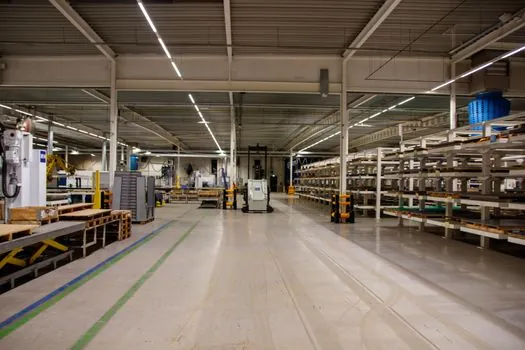
FedEx has deployed trailer loading robotic arm systems at a Maryland hub while Amazon has stated a target of doubling its robotic arms fleet during 2026, a signal that parcel and pallet automation continues to compress distribution costs in the abrasive channel [S5]. Buyers should expect distributor pricing power to shift toward automated 3PLs because labor arbitrage is no longer the binding constraint.
The Ahold Delhaize decision to wind down plans for two automated frozen warehouses is a counter-signal: automation rollouts that cannot be justified by unit economics or labor scarcity are being paused, and the same discipline will eventually reach abrasive distribution [S5]. Specifying teams should not assume that every distributor they rely on will complete its automation roadmap, and dual-sourcing policies should include at least one non-automated regional distributor as a continuity option.
Standards, verification, and the 2026 spec gate for bonded abrasives
The international standards framework for bonded abrasives is stable and does not change with the 2026 tariff cycle. FEPA grit designation (Fepa Standard 42-1 for macrogrit, 43-1 for microgrit) and ANSI B74.1 remain the operative specifications for grit size and grade; ANSI B74.2 covers wheel marking of bonded abrasive products. Buyers should continue to require these designations on certificates of conformance because grit sub-substitution (for example, a P36 wheel that tests at P40) is a known quality issue under tight supply. [S3]
For high-speed applications, ANSI B7.1 and OSHA 29 CFR 1910.215 govern wheel guarding, machine protection, and ring-test protocols, and the duty environment is not a reason to relax compliance. For superabrasive wheels (CBN and diamond), ANSI B74.3 and B74.13 apply and should be specified separately from conventional bonded wheel standards.
Use cases and who benefits vs who is exposed
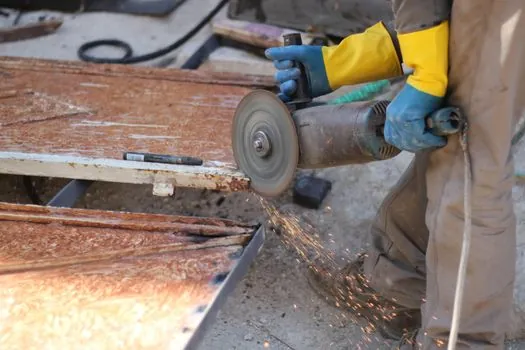
Heavy users of SiC grinding wheels (foundries running cast iron machining, shipyards, stone and masonry processors) are the most exposed segment under the 15% polysilicon tariff; their substitution options are limited and they should negotiate long-term grain supply contracts rather than spot-buying in 2026. Al2O3-heavy users (general metal fabrication, weld grinding, automotive MRO) are repriced rather than constrained and can shift between white and brown fused alumina to optimize on the cost-performance axis. [S5]
Buyers with low import exposure (regional grinding wheel assemblers using domestic grain, distributors carrying Al2O3-only catalogs) are net beneficiaries and should use 2026 to lock annual contracts at 5-10% below 2025 spot pricing. Mid-tier OEM shops running mixed-mode grinding will absorb moderate cost increases but gain from frontloaded inventory and improved rail routing into the Midwest [S5].
For buyers also selecting rebar cutters and other demolition-grade consumables, the duty stack on steel and aluminum cores is the binding constraint rebar cutter selection for masonry sites: 2026 spec gates. The AMR and warehouse automation buildout documented through 2026 reshapes how abrasive MRO reaches the shop floor, and specifiers should review AMR selection criteria if they are planning distribution-side automation AMR selection for warehouse automation: 2026 spec gate map.
Trackable signals through Q4 2026: (1) the Federal Register publication of derivative metal-content duties and the HTS lines that catch grinding wheel cores and flap disc backplates; (2) Matson's Q3 2026 capacity update and any post-peak-season return to standard transit windows; (3) the Starbucks 24-hour replenishment program results, which will set the bar for MRO automation claims in adjacent industries; and (4) the Federal Reserve and ISM services PMI prints for August 2026, which will frame the Q4 demand picture for grinding consumption in fabricated metal products.
For the relevant spec sheets and selection criteria, see power supply, dc power supply, and switching power supply.