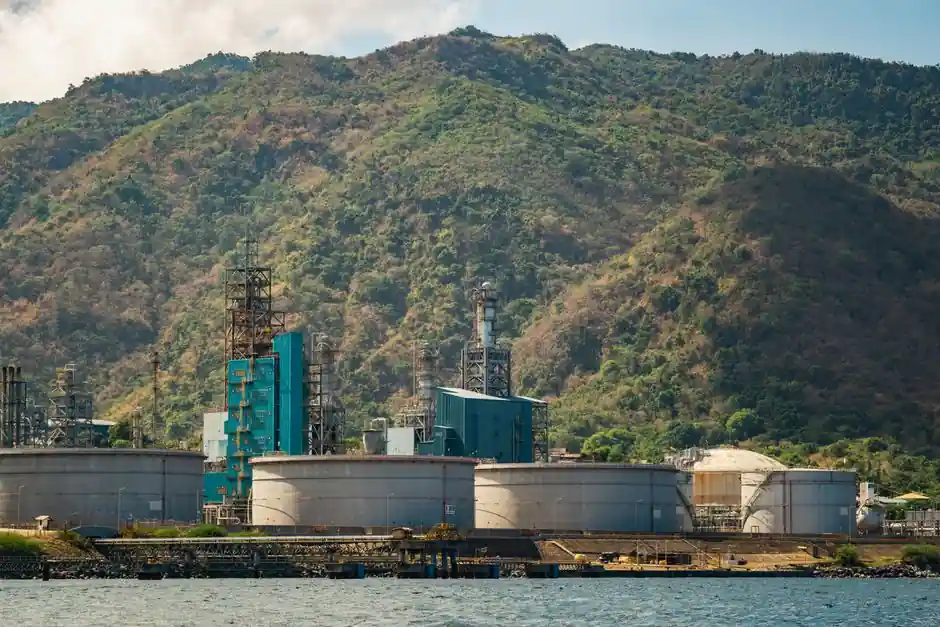
Modern abrasives sit inside a 5,000+ node industrial map, with Wind's Product Chain Database tracking 160,000 upstream and downstream relationships across A-share, H-share, and major US-listed firms [S4].
The chain runs from bauxite, petroleum coke, and phenolic resin feedstock through fused-aluminum-oxide and silicon-carbide grain plants, into bonded wheels, coated belts, and superabrasive tooling, terminating in metalworking, automotive powertrain, construction cutting, electronics CMP, and wind-turbine blade finishing lines [S4].
Upstream Raw Materials and Mineral Feedstock
The upstream of the abrasives chain starts with metallurgical-grade bauxite, calcined petroleum coke, silica sand, and phenolic or epoxy resin systems; China is the dominant fused-aluminum-oxide producer, while specialty SiC grain is concentrated in a smaller number of European, Chinese, and US plants [S4]. Synthetic graphite electrodes and metallurgical silicon also feed SiC smelting, and any tightness in Chinese bauxite or in calcined petroleum coke supply directly cascades into grain FOB prices and lead times [S4].
For cubic boron nitride (cBN) and synthetic diamond, high-pressure high-temperature presses consume iron, nickel, and catalyst metals; the abrasive grain itself is then a feedstock input to bonded wheel and coated disc manufacturers, with Wind's supply chain layer tracking 20,000+ listed-company supplier-customer disclosures that surface these dependencies [S4].
Midstream Grain, Bonded, and Coated Converters
Midstream, fused aluminum oxide (typically brown Al2O3 with 94.0–97.0% Al2O3 content) and black or green silicon carbide (SiC above 98.0% for refractory-grade) are crushed, sieved to FEPA or ANSI grit sizes (e.g. F24, F60, F120, F400), and either pressed with phenolic resin bonds into grinding wheels or bonded to paper, cloth, or fibre backing with resin-over-glue coats for coated abrasives [S4].
Wind's dual-chain database covers 5,154 industries and explicitly aggregates midstream abrasive converters alongside upstream grain suppliers and downstream end-users, which makes it possible to trace a single wheel manufacturer back to its grain and resin inputs in one query [S4].
Downstream End-Use Industries and Consumption Split
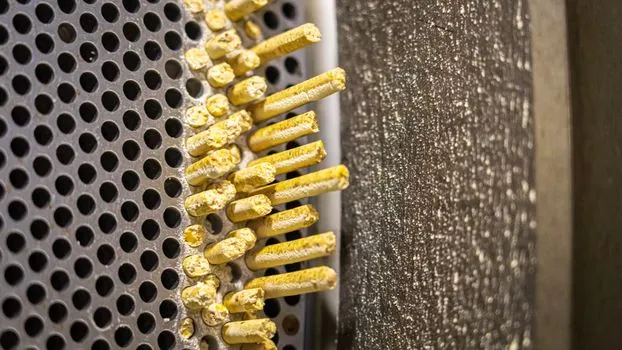
Downstream, abrasives are consumed across metal fabrication (cut-off wheels, flap discs), automotive (gear grinding, camshaft finishing), construction (diamond blades for concrete), shipbuilding (rust and scale removal), electronics (CMP slurries, dicing blades), and wind energy (blade surface sanding and tower weld finishing) [S4]. The same chain analysis that traces new-energy vehicle supply into battery, electric-pile, and electronic-control segments in adjacent industries also flags abrasives as an enabling input to drivetrain and structural finishing [S3].
In high-volume metalworking, coated abrasives (belts, discs, rolls) account for the largest tonnage of abrasive grain consumed, while bonded wheels dominate precision and heavy-stock-removal applications, and diamond or cBN superabrasives take the high-value share in hardened-steel and aerospace-alloy grinding [S4]. For related process flow logic in another material system, see the Industrial Coatings upstream and downstream: resin-to-substrate flow in 2026 piece, which uses the same chain-mapping lens on a parallel industry.
Selection Criteria for Abrasive Grain and Product Type
Selecting the right abrasive depends on four core criteria: workpiece material hardness, stock-removal rate, surface-finish target, and operating temperature, with grain type, grit size, bond hardness, and structure (density) as the dials an engineer turns [S4].
A practical comparison:
For bond systems, vitrified bonds suit high-precision, high-velocity operations, resin bonds absorb vibration and tolerate lower speeds, and metal bonds are required for superabrasive wheels in profile grinding [S4].
Who the Abrasives Chain Is For, and Where It Fails
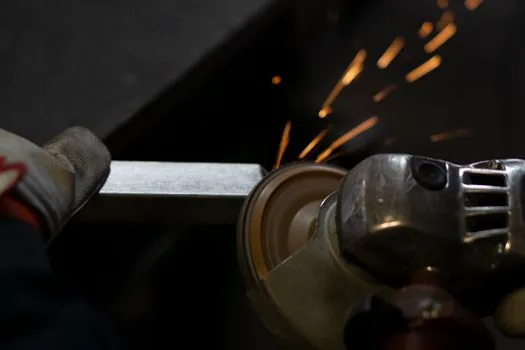
This chain map is built for process engineers specifying grinding wheels or coated products, procurement teams hedging fused-alumina or SiC supply, and CNC shops matching wheel specs to workpiece alloys; it is not a fit for general-consumer sandpaper or polishing compound buyers [S4].
Common failure modes sit at chain boundaries: a coarse-grade mismatch between grain friability and bond hardness causes wheel glazing or rapid breakdown; a phenolic resin batch with elevated free-phenol content shortens coated-disc life under high-heat grinding; and a downstream plant assuming consistent SiC grit distribution will see workpiece burn when upstream lot-to-lot variation slips through QC [S4]. Standard references such as FEPA grain-size standards, ANSI B7.1 wheel safety, and ISO 603-series coated-abrasive designations are the gates that keep these failure modes out of production, and any sourcing decision should be cross-checked against them [S4].
Standards, Safety, and Sourcing Gates
FEPA 42-GB and FEPA 43-F define fused-alumina and silicon-carbide grain-size macrogrit standards, while FEPA 44 covers micron-sized powders used in lapping and CMP slurries; ISO 603 series addresses coated-abrasive geometry and marking, and ANSI B7.1 governs abrasive wheel safety, with OSHA 29 CFR 1910.215 binding on US shop floors [S4]. For resin-bonded wheel integrity, the maximum operating speed (m/s) and a ring-test before mounting are non-negotiable safety checks, and coated disc burst thresholds are tested under ISO 13942-equivalent procedures [S4].
Sourcing teams should map any new abrasive vendor to its grain and resin inputs in a structured database, since Wind's 20,000+ disclosed supplier-customer records in A-share and H-share filings make it possible to spot single-source resin or coke exposure before it becomes a production line stop [S4]. A side-by-side read of feedstock and logistics pressure in another raw-material-heavy chain is laid out in Industrial coatings supply chain: 2026 feedstock, logistics, and AI signals, which applies the same discipline to resin and solvent flows.
2026 Sourcing Signals and Watch Items
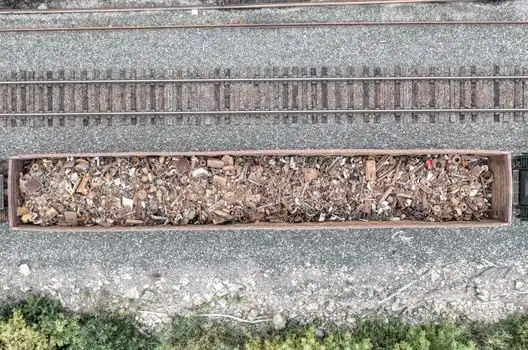
Three signals worth tracking through the rest of 2026: the spread between Chinese fused-alumina FOB and European SiC FOB as a lead-time proxy; any specialty chemicals supply shortage and risk map: 2026 spec gates for sourcing update touching phenolic resin and epoxy flow into bonded wheels; and the wind-energy fabrication build-out, which is a direct downstream pull on coated-abrasive discs for blade sanding and tower weld finishing [S4].
For engineers weighing abrasive performance against processing cost, the durable rule is to specify grain type, grit, bond, and structure against workpiece hardness and finish target, then validate the chain behind the certificate using a transparent supply database, and treat the abrasive value chain as a single procurement object rather than a list of independent SKUs [S4].
The underlying component specifications are covered under lighting equipment and electric lamps, pressure transmitter, and flow meter.