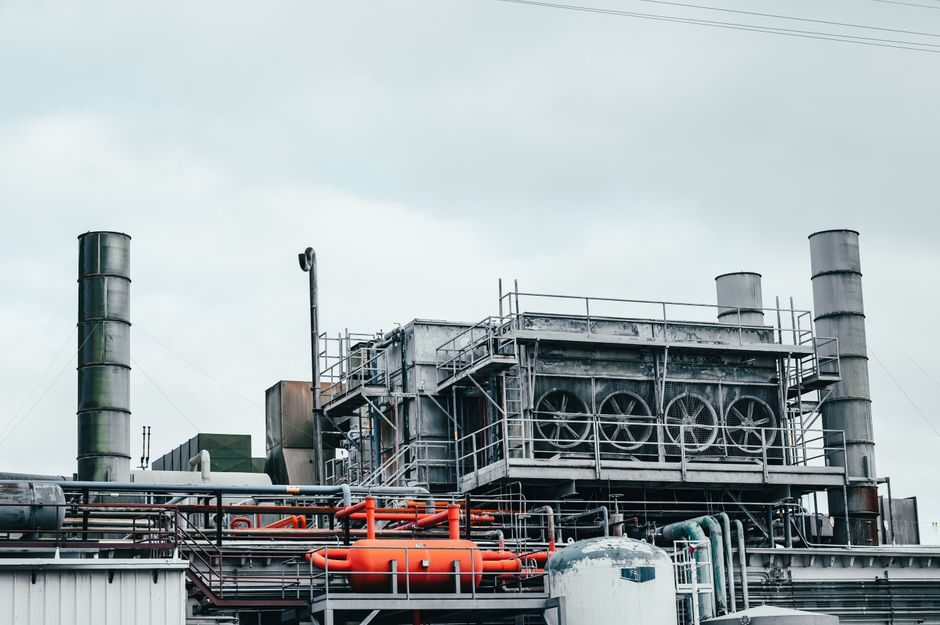
The dominant signal in additive manufacturing through mid-2026 is the move from prototype-only use to qualified serial and repair work, with Pratt & Whitney expanding AM-based repair of critical Geared Turbofan (GTF) engine components and a peer-reviewed literature base in the journal Additive Manufacturing (ISSN 2214-8604, IF 10.3, 6 issues/year, Q1 JCR) [S6][S3].
On the demand side, electric motors are identified as the largest single application pulling AM into electrification programs, accounting for 53% of global electricity consumption in the cited analysis, while Formnext Frankfurt (17-20 November 2026) is positioned as the year's central industry gathering for metal, polymer, composite and hybrid 3D-printing systems [S4][S2]. Software buyers comparing build-prep, simulation and monitoring tools in 2026 are working from a list of dedicated AM platforms curated by independent software directories [S1].
Process Map: Metal PBF, Polymer, Composite and Hybrid Lines in 2026
Formnext Frankfurt 2026's exhibit categories confirm a four-lane process map that procurement and process engineers should treat as the default taxonomy: metal AM (laser powder bed fusion, directed energy deposition, binder jetting), polymer AM (material extrusion, vat photopolymerisation, powder bed fusion, material jetting), composite AM (fibre-reinforced thermoplastics and continuous-fibre layup), and hybrid machines that combine additive heads with subtractive spindles [S2]. Buyers cross-referencing the additive manufacturing material page will recognise the same family split in feedstock form (metal powder, pellet, filament, resin, tape).
Material-feedstock breadth at the show spans metal powders, high-performance polymers, bio-based and sustainable feedstocks, and supports software and process-monitoring solutions plus end-to-end production services [S2]. The journal Additive Manufacturing (Elsevier, ISSN 2214-8604, 6 issues/year, JCR Q1, IF 10.3) [S3] is the canonical peer-review venue for new process work; recent technical notes in the same publication include piezo on-demand jetting work demonstrating single-drop volume control from 0.61 pl to 83.7 pl — a max/min ratio above 130, roughly an order of magnitude beyond prior published capability [S3].
Software Stack: Build Prep, Simulation and Process Monitoring
AM software in 2026 is treated by independent buyers' guides as a stack of three functions: design/forgiveness and lattice generation, process simulation (thermal, residual-stress, distortion), and in-process monitoring (melt-pool sensors, layer imaging, closed-loop control) [S1]. A 2026 software comparison from an independent directory positions the leading platforms against this stack rather than as single-feature tools [S1].
Buyers comparing industrial valve and pressure transmitter castings against AM equivalents typically build their case around lead-time elimination, not unit cost, since metal AM part cost remains dominated by machine-hour depreciation and powder handling.
End-Use Pull: Electrification, EV Motors and Engine MRO
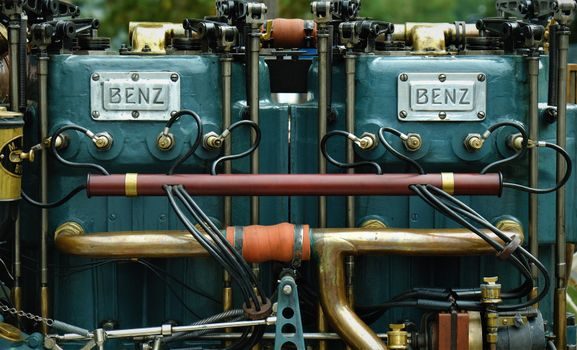
Electric motors are the largest single electrification end-use driving AM adoption, given that motors account for 53% of global electricity consumption in the referenced analysis; this is reshaping where foundries and AM bureaus are investing in copper and soft-magnetic alloy printing [S4]. The same trend is visible in the wider EV and semiconductor capital-equipment build-out covered in adjacent 2026 industrial buyer briefs on Top Electric Vehicle Companies 2026: OEMs, Cargo Fleets and Sourcing Bands and Semiconductor Industry Trends 2026, both of which share electrification as a common demand driver.
Aerospace MRO is the second concrete 2026 pull: Pratt & Whitney, an RTX business, is using AM to repair critical GTF engine components, framing repair — not just new-build — as a strategic growth lane for qualified metal AM shops [S6]. The implication for MRO planners is that AM-qualified repair schemes must be developed in parallel with new-part qualifications, not as a follow-on. For shops evaluating which work to bring in-house, the 3D Printing Market 2026: Size, Technology Mix and Industrial Printer Demand brief gives the demand-side numbers that an in-house capacity case has to beat.
Tooling and Short-Run Production: Automotive and Process Plants
Automotive tooling is the historical anchor use-case for polymer and metal AM, with published work on additively manufactured tooling for stamping and short-run production showing the value proposition as tool-up time compression rather than per-part cost, particularly for facelifts and low-volume derivatives [S5]. Process-plant buyers weighing AM for flow meter bodies, pressure sensor housings or custom jigs should use the same logic: compress lead time and enable geometry that casting cannot, then price the unit cost separately.
For control-panel builders, brackets and small manifolds destined for PLC cabinets and skid wiring, AM has become a default for one-off and short-run (1-50 piece) parts, while production runs beyond roughly a few hundred units still fall back on injection moulding or machining. The crossover point depends more on the part's geometric complexity than on raw size.
Buyer Comparison: When to Choose AM Over Conventional Processes
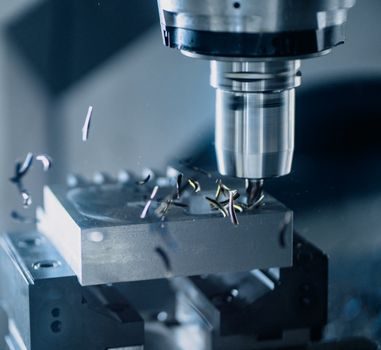
A practical 2026 decision matrix lines four conventional options against AM on three criteria: lead time, unit cost at 1-50 pieces, and unit cost at 500+ pieces. Sand casting wins on cost above ~500 pieces for simple geometries; injection moulding wins on cost above ~1,000 pieces once tooling is amortised; CNC machining wins on tight tolerances under ±0.05 mm; AM wins on lead time (days, not weeks) and on internal lattices, conformal cooling channels and part consolidation that the other three cannot produce economically [S2][S5].
For engineers auditing a specific AM part, the verifiable checkpoints are: declared material grade and powder reuse policy (for metal), build chamber atmosphere control (for reactive alloys), declared post-processing sequence (HIP, heat treatment, surface finish), and — for serial parts — a process-capability statement tied to the relevant aerospace or automotive qualification (e.g. Nadcap for heat treatment and NDT). Shops that cannot produce those four documents should be treated as prototype-only suppliers in 2026.
Limits, Failure Modes and Qualification Gaps
AM's 2026 limits remain real and process-specific. Metal PBF parts are anisotropic by default; designers must orient for the loading direction and specify HIP where fatigue is a concern. Polymer FDM parts have layer-line stress concentrations that rule them out for pressure-bearing service in most process-plant work, which is why the AM value in pressure transmitter and flow meter applications sits in housings and brackets, not in wetted pressure boundaries. [S1]
Qualification is the slowest step: a new metal AM part typically needs 6-18 months of mechanical testing, process window development, and (in aerospace) Nadcap or OEM-specific qualification. Buyers who quote AM lead time without the qualification tail are not comparing the same part. For process engineers watching capacity in 2026, the verifiable signals are: new ISO/ASTM AM standard revisions landing in the journal Additive Manufacturing [S3], Formnext Frankfurt 2026 machine launches (17-20 November 2026) [S2], and the next Pratt & Whitney GTF MRO milestone [S6].