
Powder metallurgy (PM) can hold 500-ton press cycles at high production rates and net-shape tolerances that eliminate most secondary machining, but practical part size tops out near 40-50 sq.in. of planar area on the largest 1,500-ton presses [S1].
For buyers comparing routes, the decision pivots on volume, geometry, and mechanical envelope: PM dominates ferrous small-part production, additive manufacturing (AM) handles complex low-volume aerospace/medical builds, and forgings remain the gating choice where impact and fatigue dominate [S1][S2].
PM vs Forging: Where the Process Window Splits
PM sintering runs at high temperature, delivering substantial gains in tensile strength, bending fatigue strength, and impact energy versus cast iron baselines, while maintaining a level of control over electrical, magnetic, density, damping, toughness, and hardness that forging cannot match [S1]. The trade is raw mechanical performance: PM parts are generally not as strong or as ductile as cast irons or forged parts, and that gap widens for high-impact applications [S1].
Grain flow is the dividing line. Forging alters the grain flow of the material so that it flows with the shape of the part, which is why forged gears, connecting rods, and crankshafts remain the safer spec for safety-of-function components like automotive drivetrain [S1]. PM is the better answer when the part is small, complex, high-volume, and the failure mode is not catastrophic — think stainless exhaust flanges, soft-magnetic pole pieces, and self-lubricating bearings where controlled porosity is the feature, not the bug.
Size, Shape, and Ductility Constraints
The biggest presses in the PM industry sit near 1,500 tons, capping practical part area at roughly 40-50 sq.in.; average press capacity lands closer to 500 tons, so most production parts are designed well below that ceiling [S1]. Anything larger than this envelope — large gear blanks, long shafts, big flanges — has to move to forging, casting, or AM with build-volume planning.
Complex shapes are workable in PM but demand high-skill tool design; net-shape capability removes most downstream machining, but the as-sintered ductility penalty means PM is rarely the right pick for parts that see high strain rates or sudden overload [S1]. This is where the metal powder types and classifications map matters: pre-alloyed grades, sintering aids, and double-press/double-sinter routes move the ductility and density numbers significantly, but each step costs money.
AM Powder Grades: Sandvik Osprey Line as Reference Set
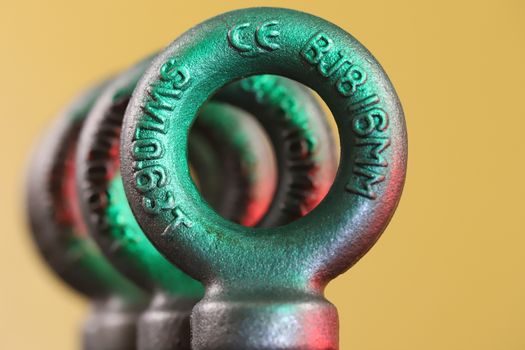
Gas-atomized metal powder tailored for additive manufacturing targets aerospace, medical, and rapid tooling applications, with alloy coverage that maps directly to the engineering trade [S2]. Sandvik's published Osprey AM portfolio runs the full matrix: austenitic stainless (Osprey 316L, 904L, 254N-60 type grades), duplex stainless (2205, 2507, 2707, 3207), low-alloy steels (4140, 4340, 4605, 8620, 52100), maraging steels (18Ni300, MAR-50 Co-free, MAR-60), martensitic stainless (410, 420, 440B/C), cobalt-chromium (Co212, Co502, Co90), titanium, nickel superalloys, copper alloys including GRCop-42, and binary alloys like Fe-Co, Fe-Ni, and Fe-Si [S2].
For spec work, that breadth is the point: AM powder buyers match alloy chemistry to weldability/printability, not just to corrosion or strength. Cobalt-chromium for medical implants, GRCop-42 for rocket thrust chambers, 18Ni300 for tool inserts, and Ti-6Al-4V-class grades for aerospace brackets each carry a documented application envelope, and the metal powder reference entry remains the working anchor for cross-process comparison.
Process Comparison: PM vs AM vs Forging on Four Decision Criteria
Across four decision criteria, the routes line up as follows:
1) Mechanical performance (impact, fatigue, ductility): forging wins, with PM trailing and AM tied with PM when hot-isostatic pressing (HIP) is in the build chain; the as-built AM part typically needs HIP or heat treatment to close residual porosity [S1][S2].<br/>2) Geometry and part size: AM has the widest envelope on complexity but the tightest on build volume per cycle; PM handles small complex shapes economically; forging handles large simple shapes with the best grain flow [S1].<br/>3) Material utilization and waste: AM typically buys you 90%+ buy-to-fly improvement on aerospace brackets, PM is near-net-shape with minimal flash, forging carries the highest buy-to-fly penalty.<br/>4) Unit cost at volume: PM is the lowest at high volume on small parts; AM remains the highest per-gram and is only justified when complexity, lead time, or part consolidation outweighs powder and machine cost [S1][S2].
This is why buyers running high-volume small ferrous parts stay with PM, designers of lattice-structured orthopedic implants stay with AM, and safety-critical rotating parts stay with forging.
Standards, Sourcing, and 2026 Supply Reality
China-based metal powder manufacturers such as Chengdu Jinchun Metallic Materials (founded 2012) and industrialmetalpowders.com continue to scale ferroalloy, non-ferrous, and rare-earth powder production, signaling that the 2026 sourcing map is no longer North America-and-Europe-only [S4][S6]. For AM specifically, buyers can pull stock Osprey grades direct from webshop channels rather than RFQ-only [S2].
Spec discipline still matters: powder size distribution, flow rate (Hall flow, ASTM B213 family for AM), apparent density (ASTM B212), and oxygen/nitrogen content are the gating tests, and any change of supplier requires re-validation rather than a paperwork update. For processes adjacent to PM — surface prep, finishing, weld overlay — the same documentation discipline applies, and the anti-static equipment installation gate reminds buyers that powder handling zones need controlled grounding before any new line is qualified.
Who PM/AM Is For — And Who Should Walk Away
PM is the right pick for high-volume small ferrous or stainless parts under ~40-50 sq.in. planar area, with controlled porosity as a feature, where net-shape reduces machining cost, and where failure mode is not catastrophic [S1]. AM is the right pick for complex low-volume aerospace brackets, medical implants with lattice structures, and rapid tooling where lead-time matters more than per-part cost [S2]. Forging remains the right pick for safety-critical rotating or impact-loaded parts, large geometry, and any spec calling for through-thickness grain flow [S1].
Walk-away signals: if ductility, impact, or part size exceed the PM envelope, or if the AM part cannot justify powder + machine cost against the design freedom gained, the answer is forging or casting — not a forced fit on a powder route. Buyers who treat powder processes as a universal solution end up over-spending on parts that should have been forged, or under-spec'ing parts that should never have left the wrought family.
Track these signals through 2026: AM powder price-per-kilogram trends on Osprey-grade maraging and Ti-6Al-4V, press-tonnage announcements above 1,500 tons in the PM segment, and revised ASTM/ISO powder characterization methods — any of these will shift the cost/performance crossover for PM-vs-AM-vs-forging in the next design cycle [S1][S2].
Detailed specification references: metal curtain wall panel, and pressure transmitter.