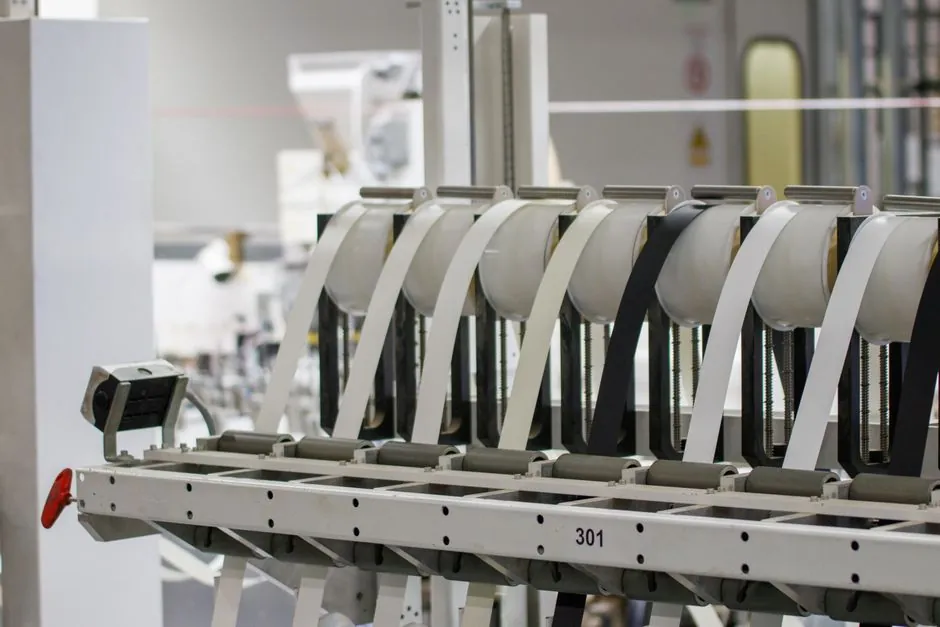
An additive manufacturing (AM) qualification data package is the controlled Technical Data Package (TDP) that ties a specific machine, feedstock lot family, build layout, and post-processing recipe to a verified set of mechanical and dimensional properties for a production part [S4][S1].
For production parts serving aerospace, defense, and medical roles, the package must answer three gating questions: is the process window bounded, are the design allowables derived from that window, and is every change flagged as a re-qualification trigger [S1][S7].
Why the QDP Exists, and Why It Is Different from a Conventional MBD
AM lacks the decades of handbook allowables that support wrought or cast metals, and the Navy's NSWCCD briefing notes that "because they are highly process sensitive, a handbook allowables approach is not preferred" for AM structural components [S4]. The Air Force therefore routes AM under a welding-style standards model (AWS D17, AWS D20) rather than a metallic-materials model, even though the chemistry is metallic [S4]. A QDP substitutes for the missing handbook by anchoring every allowable to a documented process window.
The NSWCCD briefing defines the goal as "the ability to acquire AM parts using competitive sourcing from a Technical Data Package (TDP) enabled by common standards", with the TDP required to be "usable across machines, processes, and companies employing a neutral build file" [S4]. That neutrality rule drives the package's structure, because the data must be replayable on a different LPBF or DMLS unit than the one that generated it.
Mandatory Content Blocks Inside a Production QDP
A production-grade QDP must carry six blocks: (1) machine input and capability report, (2) design of test coupons, (3) feedstock pedigree and powder reuse envelope, (4) post-processing recipes (HT, HIP, surface finishing), (5) pedigree mechanical property tables tied to build orientation, and (6) part-specific acceptance criteria and NDE thresholds [S1][S4]. NIST's AM Part Qualification project explicitly lists D8 (Machine Input and Capability Report) and D14 (Design of Test Coupons) as AMSC roadmap gaps that the package must close [S1].
Powder chemistry and powder reuse are the single most under-documented blocks in practice. The NSRP slide deck flags "pedigreed materials properties" and "post-processing" as named impediments, and notes that even minor process changes have historically required complete re-qualification [S1][S4]. A QDP therefore has to define the number of reuse cycles, the sieve cutoff, the oxygen-pickup ceiling, and the blending rules, because each of those is a process change that re-opens qualification [S7].
Material Allowables vs Process Allowables, and Why Coupons Matter
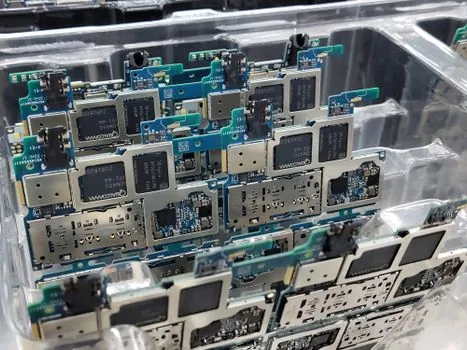
Mechanical property tables inside a QDP are process-specific, not material-specific in the handbook sense. The AIA 2020 AM Best Practices report shows material data generation staged across the AM workflow, with witness coupons attached to the production build and tested in the same heat lot as the parts [S7]. The EOS part-qualification discussion reinforces that design allowables must be qualified per build theme, not per alloy alone, because residual stress, scan strategy, and thermal history dominate scatter [S3].
A typical QDP will carry tensile, fatigue, fracture toughness, and creep data across at least three orientations (0, 45, 90 degrees) on witness coupons built in the same job, with HIP-treated and as-built variants documented separately [S1][S3]. The OpenStax AM Essentials textbook on qualification treats fixed-design/fixed-process scoping as the only credible base for production certification, with change-management governing any deviation [S5].
Three Main AM Process Routes and Their QDP Differences
Three process families dominate production QDPs today, and each has a different qualification cost structure. Laser powder bed fusion (LPBF) for metals, electron beam melting (EBM) for metals (typically Ti-6Al-4V aerospace brackets and orthopedic implants), and polymer powder bed fusion or VAT photopolymer for production plastic parts [S3][S8].
LPBF qualification cost is driven by HIP and stress-relief recipes plus powder reuse rules; EBM qualification is driven by hot build-chamber thermal history and powder conductivity [S8]. Polymer AM qualification is driven by moisture-conditioned mechanical data and UV-ageing, which the welding-style AM standards do not directly cover [S4]. The Dordlofva 2020 EBM aerospace repair study (Aerospace 7(3):25) is a useful template for any aerospace repair pathway because it documents each qualification test batch, witness coupon placement, and post-repair NDE acceptance [S8].
Validation vs Qualification, and How They Sit Inside the Package

Validation proves the process runs inside its window, qualification proves the part meets its design intent under that process, and certification is the customer acceptance step on top of both. The StratasysDirect March 2026 article on production AM validation and qualification draws the line as: "validation and qualification in additive manufacturing ... how OEMs can ensure scalable, production-ready" parts, treating validation as the machine-and-process envelope and qualification as the part-specific evidence [S2].
The America Makes "Best Practices for AM Part Families Relating to Product Qualification/Certification" document pushes the same idea further: similar parts can be qualified using shared/common material data, which "will allow similar parts to be qualified using shared/common material data whilst reducing both time and cost" [S6]. A part-family QDP therefore needs a parent part envelope plus a delta-document rule for variant parts, with the delta document named in the TDP [S6].
Change-Control Rules and Triggers That Re-Open Qualification
A QDP is only as durable as its change-control table. OpenStax AM Essentials (Chapter 6) lists process changes, machine changes, and feedstock changes as the three primary re-qualification triggers, with fixed-design/fixed-process scoping treated as the qualification boundary [S5]. NIST's AMSC-aligned gap list adds powder lot, post-processing parameters, and design-of-coupon changes as named P1-P4 triggers [S1].
The practical rule most OEM QDPs now write into the package is: any change to laser power beyond a defined percentage band, any change in build-chamber atmosphere above a defined oxygen or moisture ceiling, or any change in powder supplier or atomization batch requires a partial re-qualification coupon run, not a full re-qualification [S1][S7]. Powder reuse is also tracked as a process variable, with each reuse cycle incrementing a counter on the part's build record.
Limitations, Open Gaps, and Trackable Signals
Three limitations are still unresolved in public QDP guidance as of 2026. First, the AMSC v2.0 roadmap gaps D26, D28, FMP1, FMP4, and FMP5 (surface finish specification, dimensioning and tolerancing for AM features, material properties, design allowables, and microstructure) remain open items that NIST's project is designed to close, but no dated completion signal has been published [S1]. Second, lattice and topology-optimized structures still lack a defensible mechanical-property derivation method, so a QDP that covers them typically falls back on bounding coupons and application-specific NDE, not on standardized allowables [S1]. Third, the rapid-qualification track via the Additive MES digital thread is being adopted unevenly, and most OEM TDPs still mix PDF coupons with MES data instead of running a single signed dataset.
Trackable signals for the next 6 months: (a) any new America Makes or NIST publication closing AMSC v2.0 gap items D8, D14, or FMP1; (b) any OEM QDP revision that explicitly cites AWS D17 or AWS D20 sections as the qualification anchor, replacing SAE AMS7000-series allowables; (c) any powder-reuse envelope revision (typical ceiling: 10-30 reuse cycles depending on alloy and sieve cutoff) being added to a public QDP template rather than treated as proprietary [S4][S6].
Component reference pages worth checking: data logger, and pressure transmitter.