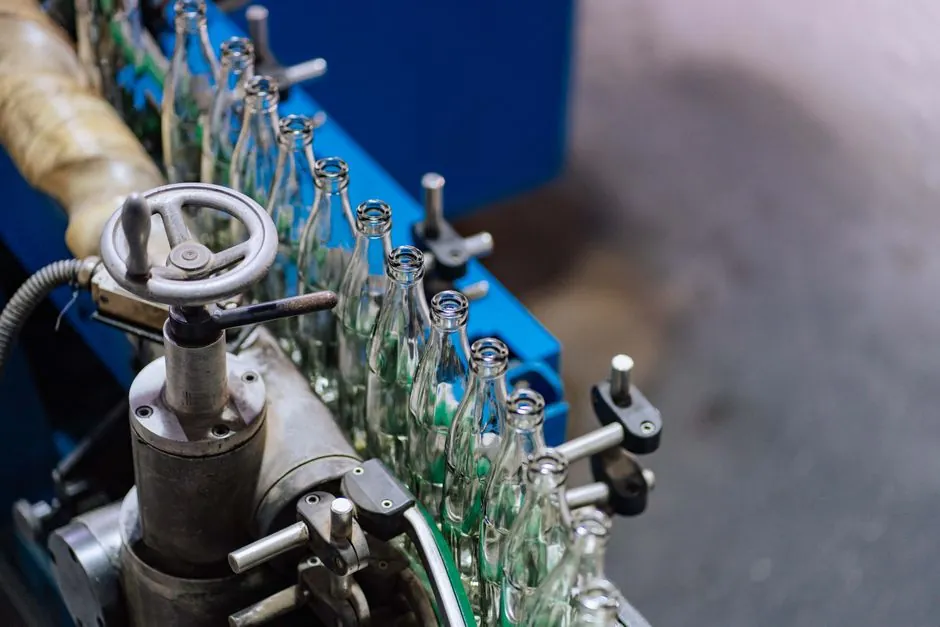
For pharmaceutical processing skids, OEM (you design, they build) keeps validation ownership with the brand owner, while ODM (they design, you rebrand) compresses time-to-market but cedes design IP to the manufacturer [S1][S2].
The pharmaceutical context hardens the trade-off: GMP, 21 CFR 820 / EU GMP Annex 11 documentation, and process-validation effort scale with how much of the design is new, which is exactly where OEM and ODM diverge [S2][S3].
Defining OEM and ODM in Process-GMP Terms
Under OEM, the brand owner keeps full design authority: drawings, BOM, performance specs, software, and validation protocols; the manufacturing partner executes against that spec, often supplying process-engineering support, supply-chain logistics, and regulatory documentation back to the owner [S2]. In a tablet-press or filling-line project, that means the pharma company signs off on the URS, the FRS, and the IQ/OQ, and the contract site merely produces evidence.
Under ODM, the manufacturer owns the design outright, including tooling, firmware, and the underlying platform, and the pharma buyer rebrands and may make limited cosmetic or feature changes before market release [S1][S3]. The reference platform may already be a certified pharmaceutical machine, but the buyer typically does not own the design file or the right to commission derivative variants [S4].
Decision Criteria That Actually Drive a Pharma Equipment Buy
Five criteria dominate the call: (1) IP and design control, (2) validation cost and timeline, (3) customisation depth (process fit, CIP/SIP integration, materials of construction), (4) regulatory filing exposure, (5) total cost of ownership across the asset life [S1][S2][S3].
OEM scores best on criteria 1, 3, and 4 because the brand owner writes the URS, controls the software/firmware, and owns the design history file; ODM scores best on criteria 2 and 5 because the platform is pre-engineered, often pre-validated, and amortised across many buyers [S1][S3][S4]. The trade-off is binary in practice: gain control, pay in time and engineering; gain speed, pay in flexibility and differentiation [S2].
OEM vs ODM Comparison for Pharma Process Skids
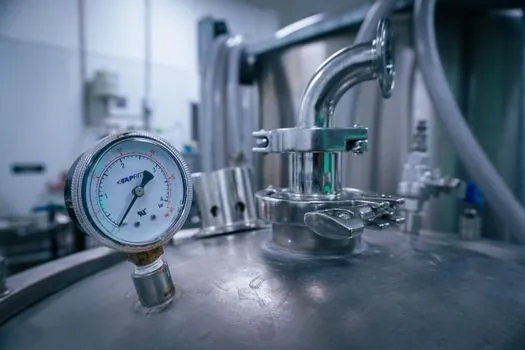
The same comparison table that applies to consumer electronics maps onto pharma, with harder regulatory edges: under OEM, design and IP stay with the brand, customisation is fully open, time-to-market is slower, and upfront engineering investment is high; under ODM, design and most IP sit with the manufacturer, customisation is bounded by an option list, time-to-market is the fastest, and per-unit cost benefits from scale [S1][S3].
On the manufacturing capability axis, OEM sites typically run dedicated build cells for the customer's SKU and hold surface-mount and precision-assembly equipment configured for repeat builds; ODM sites run a platform across many customers, so changeover is light and unit economics dominate [S5]. For process equipment specifically, the OEM pattern reads as project-based engineered-to-order fabrication, while ODM reads as catalogue-platform with limited configuration, similar to how a pressure transmitter program is sold as fixed ranges with option codes rather than built-to-print per order.
Where OEM Fits: Validation-Heavy, Customised Skids
OEM is the right call for a sterile filling line with a custom isolator, a bespoke bioreactor control system, or any unit operation where the URS includes proprietary process steps, novel single-use assemblies, or a specific software recipe the brand must protect [S2][S7]. The pharma company carries the validation burden, but it also keeps the design history, the source code, and the right to move production to a second source if the relationship sours [S1].
Capital projects where GMP documentation must reference the design owner (e.g. a combination product device, an ATEX/IECEx-rated process module for solvent handling, or a PUPSIT-integrated filtration skid) lean OEM because the regulator expects a single design authority of record [S7]. For adjacent plant hardware like a custom lighting equipment and electric lamps specification inside a cleanroom, the same logic applies: spec the brand, then choose the manufacturing partner.
Where ODM Fits: Standardised Modules and Fast Market Entry
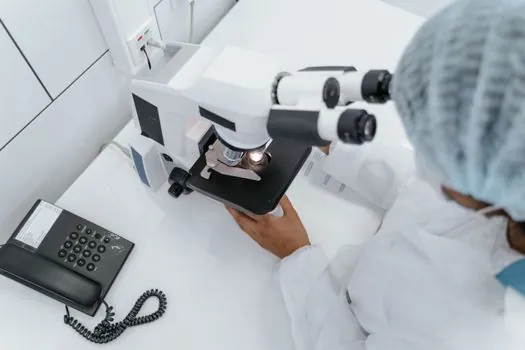
ODM fits where the underlying platform is mature, the regulatory classification is well established, and the buyer is willing to live with a defined option set. Examples: standard bench-top tablet hardness testers, off-the-shelf visual inspection modules, and generic labelling systems for non-sterile secondary packaging [S1][S3][S4].
For a startup launching a generic solid-dose line, or a contract manufacturer adding a secondary packaging cell, ODM cuts months off the schedule because the design, software, and tooling already exist; the buyer re-labels, optionally tweaks enclosure colour or HMI skin, and runs the validation against a known platform [S4]. The catch: the ODM often retains the right to sell the same platform to competitors, which directly limits differentiation in tenders [S1][S3].
Limitations, Risks, and Failure Modes
OEM's failure mode is schedule and budget overrun on a one-off design, compounded by the fact that the pharma brand owns every deviation, not the manufacturer [S1][S2]. ODM's failure mode is post-launch rigidity: a process change requested 18 months after delivery may be refused or priced as a new project, because the ODM will not alter a platform that other buyers depend on [S1][S4].
IP leakage risk is asymmetric: under OEM, the brand's design can leak through the contract manufacturer's second-customer pipeline if NDAs and segregation are weak; under ODM, the brand effectively has no design IP to leak, but it also has no legal lever to stop a competitor buying the same base unit [S3][S5]. Quality-system audits should verify segregation clauses, software escrow, and change-control rights on every order, regardless of model [S2][S7].
Selecting a Model: A Practical Flow for Spec Engineers
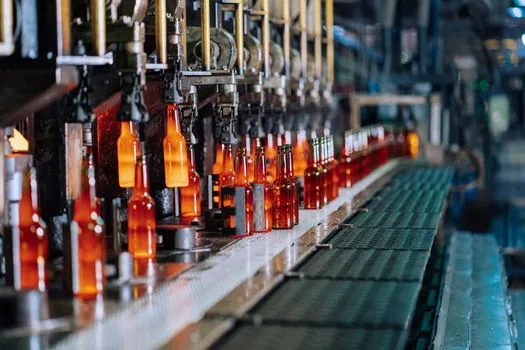
Step 1: classify the unit operation. If it is a commodity platform with a stable regulatory precedent (e.g. standard construction machinery and equipment-grade ancillary gear, or generic inspection modules), ODM is a defensible first call [S1][S3]. Step 2: list the design inputs that must be brand-owned (process recipe, software algorithm, single-use path geometry); if the list is non-empty, the model tilts back toward OEM [S2]. Step 3: build the cost case on a like-for-like basis, comparing OEM NRE plus per-unit against ODM per-unit including any platform licensing fee; typical OEM timelines run 9 to 18 months for a process skid, while ODM platforms can ship in 8 to 16 weeks once the order is placed [S1][S3]. Step 4: write the contract to lock the regulatory exposure: design-history ownership, change-control, software escrow, second-source rights, and post-delivery engineering hours.
The downstream SEO/operational signal to track: a hybrid model is increasingly common, where a brand-owned URS is executed by an OEM partner that also offers a small ODM option catalogue for non-critical subassemblies, blending control with speed [S4][S5].
For related coverage, see Spiral Duct Installation: Connection Methods, Support Spacing, and Leakage Control.