
An Additive Manufacturing Execution System (MES) is a workflow-software layer purpose-built for 3D printing, replacing paper travelers, disconnected spreadsheets, and email hand-offs with one digital record spanning quote, build, post-processing, and release [S3][S5].
Where general-purpose MES platforms were designed for repetitive discrete or batch lines, additive MES handles the realities of layer-based production: high-mix jobs, complex geometries, iterative design revisions, reused powder batches, and mandatory traceability for aerospace and medical end-parts [S2][S3].
Build preparation: from CAD to qualified build file
Build preparation inside an additive MES automates the steps that used to sit on an engineer's desktop: importing CAD, orienting parts on the print bed, generating supports, slicing, and writing machine-specific build files with parameter sets tied to material batch and machine ID [S1][S2]. The same source documents that feed printer preparation (CAD, simulation results, revision) are versioned and stored against the production order, so every build is reproducible from the MES record rather than from a folder on a workstation [S2][S6].
Scheduling is then driven by job priority, machine availability, order date, material availability, and build-envelope size, with algorithms replacing manual load balancing across the printer fleet [S3]. Real-time remote access to live printer status, build progress, and exception alerts lets a planner shift jobs between sites without standing at the machine, a capability called out directly in OEM product literature as a headline pain-point fix [S1].
Practical data points buyers should anchor against: the workflow should produce a digital traveler for every part, capture the qualified parameter set per material-machine combination, and reject builds when a powder lot is not yet released to the line [S6][S9].
Traceability: material batch, machine, parameters, operator
Regulated end markets, particularly aerospace (Nadcap/AS9100) and medical (ISO 13485), require a per-part record answering four questions: which material batch, which machine, which parameters, which operator built and post-processed the part [S2][S3][S6].
Additive MES enforces this by binding build-file revisions, material lot numbers, machine ID, parameter sets, in-process inspection results, and operator IDs into one digital record that travels with the part through every downstream step [S3][S6][S9]. The NIST material-traceability framework, summarized in industry coverage from June 2026, calls out "build logging" as the exact handover point where material traceability becomes part traceability, making the MES build log the single source of truth for any later deviation investigation or customer audit [S9].
Real-time anomaly detection, increasingly AI-assisted, is layered on top of the parameter and sensor stream to flag out-of-tolerance conditions mid-build rather than at final inspection [S1]. This is materially different from traditional MES, where quality is a downstream event; in additive MES, the build itself is a controlled process that the system is monitoring while it runs [S1][S2].
Post-processing: depowder, heat-treat, finish, inspect, release
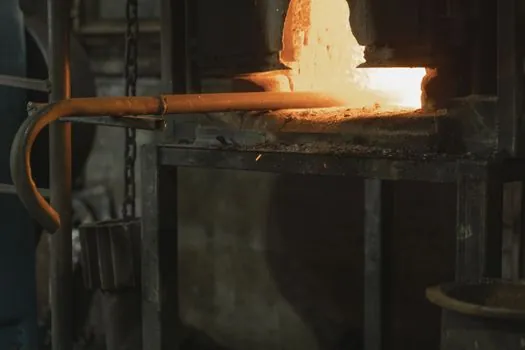
Post-processing is the step most often orphaned by general-purpose MES, because additive parts usually need depowdering, stress relief, HIP (hot isostatic pressing) for aerospace parts, machining of critical interfaces, surface finishing, dimensional inspection, and sign-off before release [S2][S4].
An additive MES extends the digital traveler into each of these steps with explicit routing, work instructions, and acceptance criteria per process, so a part cannot move from "print complete" to "powder removal" until the prior step is signed, and cannot move to "release" until CMM/CT data is attached [S2][S3]. A representative vendor blog frames this as "from design to post-processing, ensuring seamless transitions between stages," with the MES replacing the manual handoffs that have historically been where traceability records broke down [S2].
The post-processing module is also where material reuse loops close: powder that comes off a finished build is logged, sieved, blended with virgin material at a defined ratio, and re-issued under a new sub-lot identifier that the MES can trace forward into the next build, a workflow that directly supports the material traceability regime in [S9].
Comparison: full-stack additive MES vs lightweight AM scheduling tools
Not every shop needs a full additive MES; the right scope depends on whether end parts go to regulated customers or stay in prototyping. [S4]
Full-stack additive MES (Oqton, Authentise, AMFG, 3DPrinterOS-class platforms) [S1][S2][S4]: strong on integrated traceability, ERP/PLM connectors, post-processing routing, and audit-grade records; heavier to implement, priced per seat or per printer, and usually required where AS9100 or ISO 13485 audits touch the line. AM scheduling/planning-only tools (AMFG, Phasio, Nomuda, Rockwell Plex modules) [S1][S4][S5][S6][S8]: lighter footprint, focused on quote-to-print scheduling, machine monitoring, and basic traveler, with traceability as an add-on rather than the spine; fit prototyping cells and small job shops. DIY/ERP-only (spreadsheets plus manual travelers) [S1][S3][S6]: lowest cost, no per-printer license, but breaks down on material-traceability audits and multi-site scheduling; cited in OEM copy as the dominant starting point that additive MES displaces [S1].
Decision criteria a procurement engineer can score against: (1) per-part traceability depth (lot/parameter/operator), (2) post-processing routing coverage, (3) ERP/PLM/MES integration path, (4) implementation time, (5) total cost of ownership per printer or per part.
Who additive MES is for, and where it does not fit
Additive MES pays back fastest where production is serial, parts are qualified, and a customer audit can ask for a per-lot record on demand: aerospace structural and engine components, medical implants and instruments, defense spares, and regulated industrial gas or energy parts [S2][S3][S6].
It is a poor fit where the shop runs one-off prototypes for internal engineering only, where build files are still iterated per print and never reach a qualified parameter set, or where the printer count is below the threshold at which manual coordination still works; in those cases a lighter scheduling tool or even a maintained spreadsheet trail is more honest, and adding a full additive MES adds audit overhead the operation does not need [S3][S4].
Hybrid cells, where one site runs serial regulated parts and another runs prototype jobs, often deploy additive MES only on the regulated side and keep the prototype fleet on a simpler scheduler, a pattern documented in scaling guidance for industrial AM [S2][S4].
Standards, sourcing, and watch-outs for spec sheets
No single ISO or IEC standard prescribes "additive MES" as a product class, but the records it keeps feed compliance with AS9100 (aerospace quality management), ISO 13485 (medical devices), and Nadcap AC7110/12 (additive manufacturing audit criteria) for the parts themselves [S2][S3][S6]. Buyers should request evidence of bidirectional ERP and PLM connectors, role-based access control, immutable build logs, and powder-lot genealogy before signing.
Two recurring claims in vendor copy are worth pressure-testing on a demo: (a) "real-time anomaly detection" usually means threshold-based sensor monitoring, not a learned model, unless the OEM names the model class and data source [S1]; (b) "full traceability" should be checked against the four-record test above, not just the existence of a serial number field [S2][S3][S9].
For context on how MES layers sit inside broader factory digitalization, the additive manufacturing material reference page summarizes the material property data the MES must be able to attach to each build record, while the lamps and light fittings and lighting equipment and electric lamps references cover the UV-curing and process-light sub-systems that an additive MES may also have to schedule on a hybrid line.
Trackable signals through the rest of 2026: vendors releasing tighter ERP connectors (SAP S/4HANA and Oracle Cloud Manufacturing), more shops passing Nadcap AC7110/12 audits with MES-only evidence packs, and a clearer split between regulated-serial additive MES and prototyping-scheduling tools, a pattern already visible in scaling guides for industrial AM [S2][S4]. Buyers evaluating platforms should also watch how MES links to the broader construction machinery and equipment ERP rollouts on shared factory floors, where shared scheduling constraints are becoming common.
Background reading: LiDAR for Industry 4.0: spec-driven adoption, mechanical vs solid state, and where the.