Two parallel tracks define advanced packaging in 2026: on the semiconductor side, glass-core substrates with through-glass-via (TGV) interconnects are moving from R&D into volume at Intel, Samsung, NVIDIA, and TSMC, with the global IC packaging substrate market expected to reach USD 31.54 Bn by 2029 and glass-substrate penetration projected above 50% within five years [S2].
On the consumer-goods side, the global bioplastic packaging market is estimated at USD 11.99 Bn in 2026 and is forecast to grow to USD 27.69 Bn by 2033 at a 12.7% CAGR, driven by growing consumer demand for eco-friendly packaging and regulations banning single-use plastics [S3].
Glass-Core Substrates and TGV: Replacing Organic Boards in Advanced Packaging
Glass substrates are positioned as the next-generation chip substrate because they deliver higher temperature stability, finer interconnect density, and flatter surfaces than the organic substrates used in mainstream advanced packaging [S2]. The enabling technology is TGV (through-glass-via) interconnects, valued for high-frequency electrical behaviour, lower cost on large thin panels, simpler process flow, and stronger mechanical stability; applications named in 2026 industry coverage include 2.5D/3D wafer-level packaging, chip stacking, MEMS sensor and semiconductor 3D integration, RF components and modules, CMOS image sensors, and automotive RF and camera modules [S2].
Corning currently holds 48% of the global glass substrate market, while China's domestic market reached RMB 33.3 Bn in 2023, and Chinese suppliers are using cost advantages to accelerate localisation [S2]. Process equipment around glass-core advanced packaging breaks into laser micro-machining, PVD/PECVD/ALD vacuum coating, glass etching and cleaning, CMP chemical-mechanical polishing, wafer thinning, photolithography, RDL and via-filling tools, plus AOI and X-ray inspection for full TGV process control [S2]. Engineers specifying equipment for these lines should weigh the pressure sensor and flow meter instrumentation used on CMP slurry and etchant chemistry loops, where thermal and chemical resistance decide mean-time-between-service.
Bioplastic Packaging: USD 11.99 Bn in 2026, 12.7% CAGR to 2033
The bioplastic packaging market is estimated at USD 11.99 Bn in 2026 and projected to reach USD 27.69 Bn by 2033, equating to a 12.7% CAGR over the 2026-2033 window, per Coherent Market Insights' April 2026 outlook [S3]. Growth is driven by consumer preference for renewable feedstocks (sugarcane, corn starch, cellulose, vegetable oils), corporate sustainability mandates, and regulation banning single-use plastic in the EU, Canada, China, and India [S3].
Restraining factors are also quantified: bioplastic production cost remains higher than conventional plastic and the global legislative regime is non-uniform, which complicates cross-border SKU planning [S3]. The same UNEP statistic, that global plastic output rose from 1.5 million tons in 1950 to roughly 380 million tons in 2015 with under 10% recycled, frames the regulatory pressure behind every bioplastic substitution decision [S3]. In injection-moulded and thermoformed bioplastic lines, pressure transmitter selection on the hydraulic clamp circuit is a recurring specification pinch point, because bio-resin shear behaviour differs from fossil-based polymer.
Smart Labels and Anti-Counterfeit: Schreiner MediPharm, Asteria, Pregis
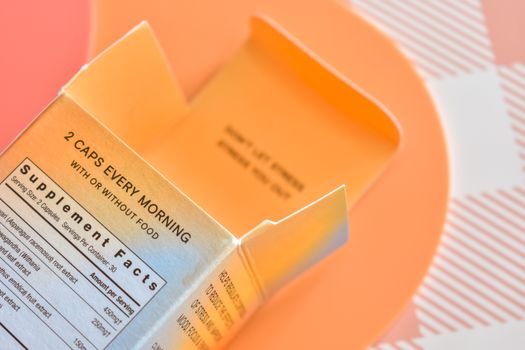
Schreiner MediPharm won the FINAT 2026 Innovation Award for a smart anti-counterfeit security seal, and Schreiner Group also collected two honours at the FINAT Label Competition 2026 [S1]. In parallel, Asteria strengthened its UK footprint by acquiring Mercian Labels on 1 July 2026, and Pregis opened Customer Experience Centers in Atlanta and Los Angeles on 3 July 2026 to broaden US customer access [S1].
These moves indicate that label-converting capacity for pharmaceutical and high-value consumer SKUs is being consolidated regionally rather than greenfield-built, a pattern that tends to lengthen qualification cycles for buyers. Blue Ocean Closures' June 2026 launch of a paper-plug fibre closure for integrated carton packaging adds a fibre-based primary-pack option on the same trajectory, and the Pumpkin-peel anti-microbial research published on 10 July 2026 is an early signal that food-contact biocoatings are entering the pilot stage [S1]. The same regional-consolidation logic is playing out in industrial sealing, as the gland packing buying guide 2026 walks through, so procurement teams should treat supplier-qualification timelines as a leading indicator.
Barrier Coatings and Fibre-Based Primary Packaging
Amcor partnered with Kelpi on 1 July 2026 to develop next-generation barrier materials for fibre-based packaging, and SIBUR introduced a new polyethylene grade for beverage packaging on 28 June 2026 [S1]. These two announcements share a common engineering objective: replace aluminium foil and multi-layer barrier films with mono-material or fibre-based structures that retain oxygen and moisture barrier performance while remaining recyclable.
On the regulatory side, EU, Canadian, Chinese, and Indian bans on single-use plastics, plus UNEP's under-10% global recycling rate, are forcing converters to redesign barrier stacks around thinner gauges and bio-based coatings [S3]. A practical knock-on effect: extrusion and coating line PLC retrofits for tighter recipe control and faster grade-changeover, since multi-resin runs become the norm rather than the exception. For resin and downstream converter economics, the same logic that drives the plastic pipe buying guide 2026 applies: resin choice, pressure class, and certification tier drive total cost more than headline unit price.
Advanced Packaging Technologies: Gas Scavenging and Shelf-Life Extension
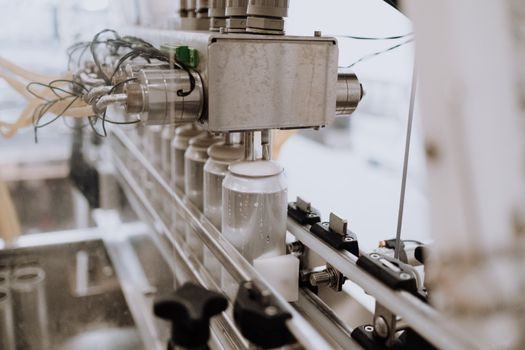
Active and intelligent packaging systems using gas absorption and scavenging to extend shelf life of packaged food are a 2026 product-development focal point, with converters investing in R&D to embed these functions into consumer SKUs [S4]. The same report frames advanced packaging technologies as a driver of customer acquisition and competitive advantage in packaged food, because the differentiation is functional (longer shelf life, freshness indicators) rather than purely visual [S4].
Logistics-side tailwinds reinforce this: DHL's November 2025 logistics outlook for 2026 highlights AI-driven route optimisation and sustainability mandates as the year's two dominant themes, which directly raises the value of shelf-life extension and tamper-evident features per shipped pallet [S5]. Sourcing managers should track FINAT innovation-award entries, Schreiner Group's anti-counterfeit portfolio, and OEM announcements of TGV-tool orders as the three leading indicators of where 2026-2027 capital is being deployed.