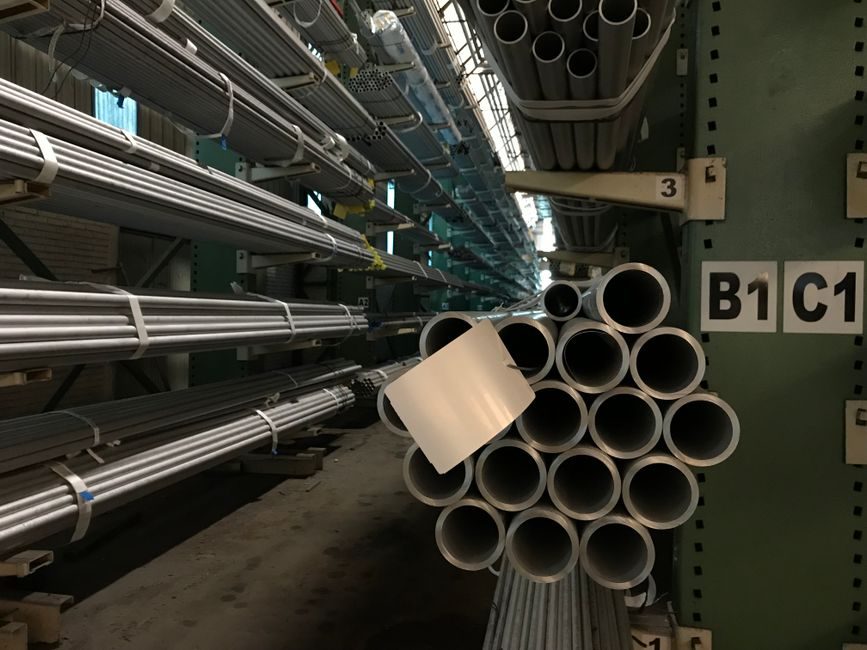
Buyers in 2026 face a fragmented plastic-pipe market where resin grade, pressure class, and certification drive cost more than diameter alone, with Chinese OEM listings showing PE extrusion lines at US$23,000–600,000 per set and finished PVC/HDPE pipes at US$0.049–0.24 per meter [S3][S4].
The shortlist starts with four resin families — PVC/UPVC, HDPE/PE, PEX-Al-PEX composite, and flexible PP/PA/PE corrugated — each tied to specific duty envelopes defined by PN pressure ratings, temperature limits, and media compatibility, as visible across current Made-in-China catalogs [S4][S6][S7].
Resin-to-Duty Mapping: Which Plastic for Which Service
PVC/UPVC pressure pipe carries the bulk of cold water and irrigation duty, with PN10/PN16 classes on Made-in-China listed at US$0.049–0.095 per meter in 5-carton MOQ tiers from Zhejiang Tianye-ertified suppliers [S4]. HDPE covers larger diameters and higher pressure, with 20–40 inch HDPE pressure pipe at US$0.22–0.24 per meter with 200-meter MOQ, and HDPE large-diameter hollow-wall winding extrusion lines reaching US$450,000–600,000 per set [S4][S3].
For hot-water, underfloor heating, and gas, aluminum-plastic composite (PEX-Al-PEX / MLP) is the listed default, priced US$0.20–0.25 per meter at 100–1,000 meter MOQ from Zhuji Fengfan Piping [S7]. For cable protection and flexible routing, PP/PA/PE corrugated conduit lists at US$18.40–19.00 per roll, while PTFE SS304-wire-braided convoluted hose lists at US$2.10–2.50 per meter at 200-meter MOQ for chemical service [S6]. The full plastic pipe taxonomy by resin is a foundational reference for any specifier.
Selection Criteria: Pressure, Temperature, Media, and Standard
Selection starts with four numbers: nominal pressure (PN), continuous service temperature, media (water, gas, chemical, cable), and governing standard. PVC/UPVC PN10/PN16 dominates cold potable water and irrigation under DIN/GB per the Zhejiang Tianye listing [S4]. HDPE PE100/PE80 extends to municipal water, mining slurry, and drainage, with 20–40 inch variants above PN16 for high-pressure water mains [S4]. PEX-Al-PEX is rated for hot-water heating loops and low-pressure gas, leveraging its aluminum core for oxygen-barrier and form-stable bending [S7].
For chemical or high-temperature flexible service, PTFE with SS304 braid (US$2.10–2.50/m) outperforms PP/PA corrugated conduit (US$18.40–19.00/roll) on thermal and chemical resistance, but at the cost of larger bend radius and higher unit price per linear meter [S6]. Cable protection only needs mechanical robustness and flexibility, so PP/PA/PE corrugated is the cost-effective default; chemical plants should pay the premium for PTFE braid. A cross-material engineering plastic overview helps frame creep, fatigue, and chemical-resistance trade-offs across these resin families.
Comparison: PVC vs HDPE vs PEX-Al-PEX vs Corrugated
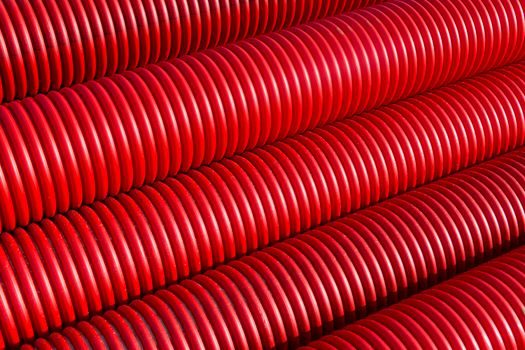
Lining the four mainstream options against four decision criteria clarifies the shortlist: (1) cost per meter — PVC UPVC PN10/PN16 sits at US$0.049–0.095, HDPE 20–40 inch at US$0.22–0.24, PEX-Al-PEX at US$0.20–0.25, and PP/PA/PE corrugated at US$18.40–19.00 per roll [S4][S7][S6]; (2) max continuous temperature — PVC ~60 °C, HDPE ~80 °C, PEX-Al-PEX ~95 °C, PTFE braid up to ~260 °C; (3) pressure class — PVC PN10/PN16, HDPE up to PN25 in 20–40 inch, PEX-Al-PEX typically PN10 for heating/gas; (4) media fit — potable water (PVC/HDPE), hot water and gas (PEX-Al-PEX), cable protection (PP/PA/PE corrugated), aggressive chemicals (PTFE SS304 braid) [S4][S6][S7].
The pattern is clear: cheapest per meter goes to PVC/UPVC, but the moment the duty exceeds 60 °C or requires gas certification, the spec must shift to PEX-Al-PEX or HDPE. Buyers chasing low price on hot-water or gas service and trying to substitute PVC are a common failure mode — the resin softens above its glass-transition and the joint fails.
Who Plastic Pipe Is For — And Where It Is Not
Plastic pipe is the right call for cold potable water distribution, irrigation, drainage, cable conduit, low-pressure gas, and underfloor heating — the duty envelopes where its corrosion resistance, light weight, and low joint labor outweigh its temperature and creep limits. Municipal water authorities, residential developers, agricultural irrigation projects, and cable installers are the primary user base, all served by current Made-in-China OEM capacity [S3][S4][S6].
Plastic pipe is the wrong call for high-temperature steam, refinery hydrocarbon service above the resin's pressure-temperature derating, and any application requiring bare-metal fire rating such as sprinkler risers unless the specific listing carries the relevant FM/UL/LPCB certification. Process plants handling strong solvents should also default to lined steel or PTFE hose, not commodity PP/PVC — a steel-plastic composite pipe reference clarifies where the hybrid design earns its premium over either pure plastic or pure steel. Specifying plastic where a metal system is required is the single most common field failure I see; the joint passes pressure test at ambient, then softens when the line sees its first process upset.
Failure Modes and Field Constraints
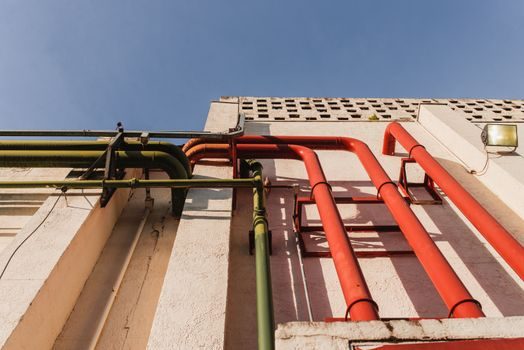
UV degradation is the silent killer of above-ground HDPE and PE runs — unprotected black HDPE weathers slowly, but PE and PEX exposed to direct sunlight without paint, wrap, or carbon-black stabilization lose impact strength and pressure rating within 24–36 months. Joint method must match resin: PVC uses solvent cement (cold weld), HDPE uses butt-fusion or electrofusion, PEX-Al-PEX uses crimp or press fittings, and corrugated conduit uses snap-in gland connectors. Mixing a PVC solvent-cement schedule onto an HDPE pipe is a guaranteed leak path, and the failure will not show on the hydrotest at 23 °C — it shows up months later under thermal cycling [S4].
Tooling is also a constraint: a standard ratcheting plastic-pipe cutter (US$21–33 retail, e.g., the carbon-steel/straight-handle Xintylink model at US$31.77–32.59) suits PVC and thin-wall PEX up to ~42 mm, but HDPE and larger-diameter corrugated conduit require a rotary cutter or wheel-style cutter to avoid crushing the wall [S1]. Buying the cheapest cutter and then forcing it onto a 4-inch HDPE run is the second common field failure — the jaw deforms and the cut goes oval, which then refuses to fuse or socket-fit cleanly.
Sourcing, Standards, and Capital Equipment
For buyers building their own production rather than purchasing pipe, PE pipe extrusion lines on Made-in-China list at US$23,000 for a CE-certified HDPE/PE/PP/PPR/PVC water-pipe and cable-conduit line, up to US$450,000–600,000 for large-diameter hollow-wall winding lines from Qingdao Huashida [S3]. Most listings carry a CE certificate dated 2023–2025, with one HDPE line certified since 2023-10-25 and one Zhejiang Tianye PVC pressure-pipe supplier certified since 2025-03-18 [S3][S4].
On the standards side, PVC/UPVC pressure pipe listings explicitly cite DIN and GB pressure-pipe schedules (PN10/PN16), while aluminum-plastic composite listings reference multilayer composite tubing for water heating and gas plumbing under PEX-Al-PEX designations [S4][S7]. Fittings and joining accessories from Taizhou Zhuoxin and Zhenjiang Jingyu list at US$0.20–0.40 per piece at 100–1,000 piece MOQ, both Diamond Member audited suppliers [S5]. When matching pipe to pumps in a packaged system, the inline pipeline pump buying guide 2026 covers the mating hydraulic envelope, while plastic pipe joints vs flame-arrester seating walks through the two most common leak paths a specifier has to defend against.
2026 Shortlist Logic: A Buyer's Decision Path
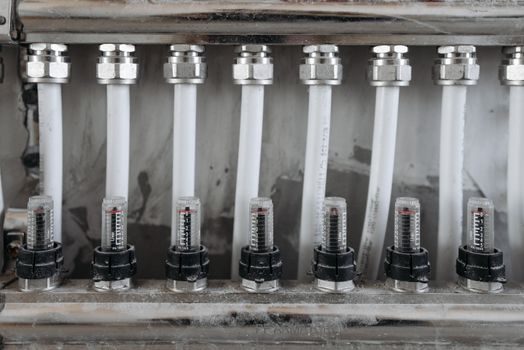
Step 1: lock the duty — temperature, pressure, media, and standard. Step 2: pick the resin — PVC for cold water/irrigation to PN16, HDPE for larger water/drainage mains, PEX-Al-PEX for hot water and gas, PP/PA/PE corrugated for cable, PTFE braid for chemical. Step 3: verify the cutter fits the OD and the joint method matches the resin — a US$22–33 ratcheting cutter handles small PVC/PEX, while HDPE above ~63 mm needs a rotary cutter [S1]. Step 4: confirm certification — DIN/GB for PVC pressure pipe, CE for extrusion lines, and PEX-Al-PEX listing for hot-water/gas duty [S3][S4][S7].
Trackable 2026 signals to watch: PEX-Al-PEX pricing stabilizing around US$0.20–0.25 per meter at 100-meter MOQ [S7]; HDPE large-diameter (20–40 inch) pressure-pipe pricing holding US$0.22–0.24 per meter at 200-meter MOQ [S4]; CE re-certification cycles for HDPE extrusion lines anchored to 2023–2025 reference dates [S3]. For a process engineer, the cheapest way to lose money on a plastic-pipe job is to treat the four resin families as interchangeable — the data above is the basis for keeping them separate.