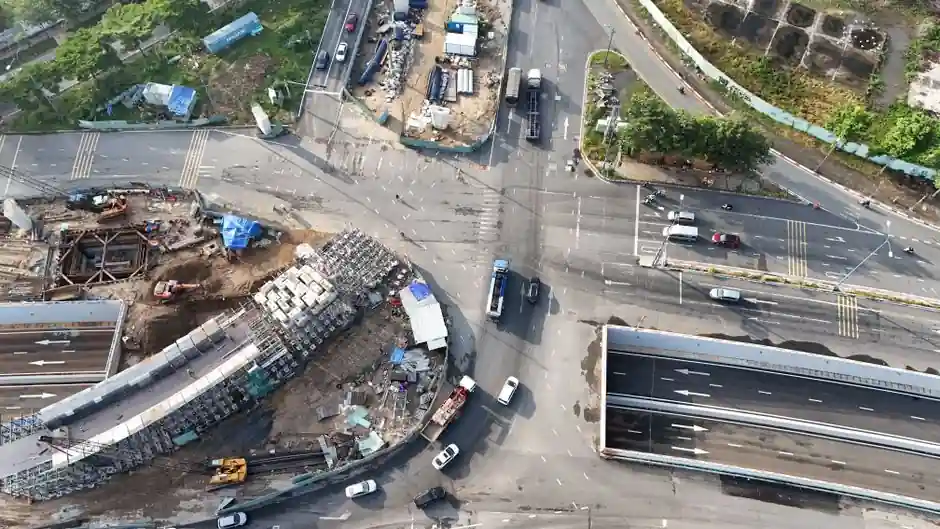
For urban-infrastructure work (streetlight replacement, facade maintenance, transit-station canopy repair, EV-charger install on multi-storey decks) the platform choice collapses to four engineering gates: working-height envelope, indoor/outdoor drivetrain, ground-pressure and footprint envelope, and the certification pack on the data plate [S1][S2][S3].
The market itself is split between three distinct product families. Vertical mast lifts (single- or dual-mast, push-around or self-propelled, working heights typically 6–12 m), scissor lifts (electric or rough-terrain diesel, deck capacities commonly 250–450 kg), and boom lifts (articulated 8–26 m or telescopic 14–55 m). Each dominates a different urban task, and a wrong family choice is the most common and most expensive specification error a procurement engineer makes [S2][S3].
Drivetrain and Working-Height Envelope
Electric scissor and mast lifts are the default for indoor or noise-restricted urban sites, and full-electric scissor lifts with zero hydraulic components are explicitly sold for data-centre and indoor critical-facility work where zero leak risk and non-marking tyres are mandatory [S1]. On outdoor urban sites, rough-terrain diesel or bi-energy scissor and boom lifts carry the duty, typically specified when deck capacity above 350 kg or working heights above 14 m are required [S3].
Vertical mast lifts in the AMWP and GTWY series run working heights around 6–11.65 m with single-mast or forklift-style twin-mast configurations, and the manufacturers explicitly position them as a smaller, lighter alternative to scissor lifts for tight indoor spaces [S2]. For a complete primer on platform categories, the aerial work platform reference page lays out the family tree; the aerial work truck page covers the truck- and van-mounted branch that dominates fleet-vehicle deployment.
Footprint, Ground Load, and Indoor Compatibility
Urban sites constrain the machine before they constrain the task. Lift footprint and point-load on the deck or slab decide whether a 14 m scissor or a 10 m vertical mast is even deliverable to a transit concourse or a podium deck. Push-around GTWY1 single-man units weigh in the lightest class of the family and fit through single standard doorways, a hard requirement for retrofit work inside operational buildings [S2].
Self-propelled AMWP1100 single-mast units add drive without sacrificing the compact envelope, and are sold specifically for indoor finish, M&E, and facilities-management work where the lift must move under its own power between rooms [S2]. When the job lives on the vehicle rather than the deck, aerial work truck configurations and the broader aerial work platform taxonomy define what is roadable versus what must be trailered.
Boom Lifts: Articulated vs Telescopic vs Spider
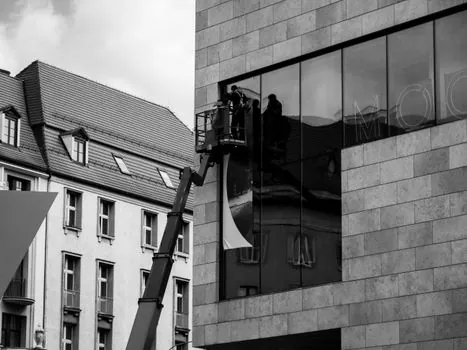
Articulated boom lifts dominate urban facade work where the platform must reach up-and-over obstacles (balconies, signage, canopies, tree canopies) rather than straight up. Telescopic boom lifts are the right pick where maximum horizontal outreach at height matters, common on bridge and stadium projects. Spider lifts add tracked outrigger footprints for soft ground or interior courtyards where a wheeled machine would damage the surface [S1].
Rental suppliers stock all three because the urban-infrastructure mix demands it: one Middle East-based rental group's published fleet mix includes articulated, telescopic, scissor, spider, and vertical lifts, with an international fleet of 20,000 aerial work platforms across 60 depots in 14 countries [S1]. For ports and coastal urban infrastructure, the salt-spray duty and reach envelope are tighter and worth a separate look at the port AWP selection guide.
Vehicle-Mounted Platforms: Van, Truck, and Chassis
When the work moves between streetlight runs, signage contracts, or telecom-site visits, a vehicle-mounted platform on a 3.5 t van, a truck, or a chassis-cab cuts mobilisation cost. One European manufacturer publishes an annual production capacity of 2,200 vehicle-mounted platforms across those three mounting classes, all built in France and offered with a Green Pack option that lets the platform operate with the van engine switched off to cut noise and emissions in dense urban cores [S3].
The same manufacturer is an early developer of 100% electric vehicle-mounted platforms and offers natural-gas carrier options, and the company's environmental management system holds ISO 14001 certification [S3]. Mobile maintenance and 24/7 parts dispatch with same-day shipping is part of the value proposition that distinguishes a vehicle-mounted platform from a self-propelled unit in the urban-infrastructure cost model. For adjacent outdoor site work, quarry AWP selection covers terrain-specific drivetrain gates, while agricultural AWP selection covers lighter-duty rural applications.
Compliance, Training, and Documentation
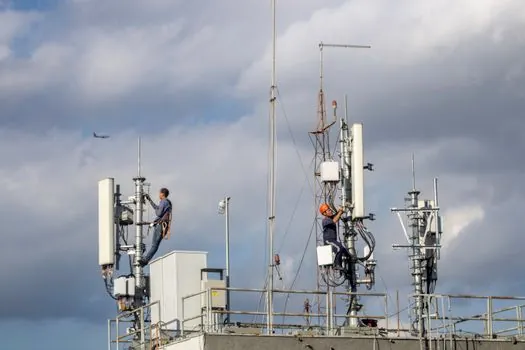
CE marking under the Machinery Directive and ANSI A92.20 / CSA B354 in North America are the baseline data-plate requirements on every modern AWP; one Chinese-Singapore vertical-lift manufacturer explicitly publishes CE / ANSI / CSA triple certification across its range [S2]. Operator training falls under IPAF (mobile boom and scissor categories) or PASMA (tower), and large rental groups run both programmes in-house rather than relying on third parties [S1].
Documentation discipline separates a working urban-infrastructure contract from a paperwork dispute: pre-delivery inspection, LOLER / local-equivalent thorough-examination records, and operator-card evidence should all be on file before the first lift cycle. For procurement engineers who need a wider look at platform-category spec data, the aerial work platform page is the canonical entry point; the suspended platform reference covers the rope-access-adjacent branch used on long facade runs where a wheeled MEWP cannot physically reach.
Selection Criteria in One Frame
Lining the three families against the four gates gives a single decision matrix: vertical mast lifts (AMWP / GTWY) score on footprint and indoor compliance but cap out around 11.65 m working height [S2]; electric scissor lifts win on deck capacity and indoor zero-leak operation but lose on horizontal outreach and over-obstacle reach [S1]; articulated and telescopic boom lifts take the heights above 14 m and any reach-over-obstacle work, with spider lifts splitting the difference on soft ground [S1][S3].
For urban-infrastructure procurement, the working rule is: pick the family that passes the tightest gate first, then verify the others. A streetlight contract that needs 9 m of reach under a tree canopy fails on a scissor, passes on a vertical mast or articulated boom, and the rest of the spec (drivetrain, certification, training) flows from that first decision. Trackable signals through the rest of 2026: vehicle-mounted electric platform rollout in European municipal fleets, expansion of 100% electric boom-lift SKUs, and tightening of low-emission-zone access rules in city centres that increasingly disqualify diesel MEWPs from inner-city jobsites [S3].