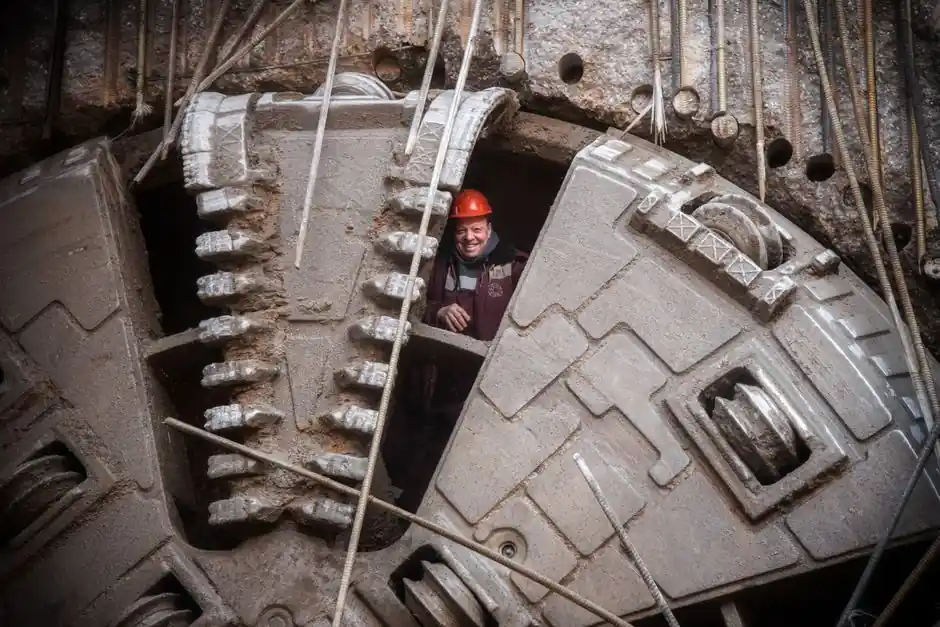
Underground construction and metro fit-out projects are the fastest-growing niche for compact aerial work platforms, with Ewellix calling out oil-free linear actuation and integrated safety functions as the two design gates that matter most in mobile elevating work platforms [S1].
Tunneling presents three constraints that rule out most general construction AWP fleets: tight cross-sections (typically 4-6 m radius), zero-tolerance for diesel particulate inside the bore, and uneven shotcrete or rock floors. A typical metro-station fit-out spec calls for a working envelope of 4-14 m, platform capacity of 200-300 kg, and electric drive only, per OEM product lines such as Sanjin's scissor and articulating boom ranges [S2].
Why diesel is excluded, and what replaces it
Diesel particulate and NOx accumulation in tunnel bores is a hard stop for most underground authorities worldwide, and battery-electric drivelines have become the default replacement on mobile elevating work platforms [S1].
Ewellix specifies that battery-electric AWP designs must deliver the same power rating as the diesel units they replace, with oil-free linear motion components to eliminate hydraulic-oil contamination of the tunnel environment [S1]. Typical tunnel-rated battery packs run 48-80 V DC at 200-400 Ah, sized for one full shift of intermittent duty (roughly 6-8 hours of lift cycles). Ewellix highlights adaptability to different electrical circuits as a key mobile-machinery requirement, which matters when tunnel temporary power ranges from 400 V three-phase at the portal to 230 V single-phase at the face [S1].
Platform type vs tunnel geometry
For a 4-6 m finished diameter tunnel, the practical choices collapse to three families: low-level scissor lifts, vertical mast lifts, and compact articulating booms, all detailed in OEM product lines such as Sanjin's 4-category range (scissor, low-level access, vertical mast, articulating, telescopic) [S2].
Selection comes down to working height, horizontal reach, and stowed footprint. The table below lines the three options against the criteria a tunnel engineer actually weighs:
Comparison: Scissor lift vs vertical mast vs articulating boom for tunnel fit-out. Scissor lifts win on platform area (typically 2.3 m x 1.2 m deck) and 200-300 kg capacity but lose on working height (8-10 m max in compact form) and on outrigger footprint in tight bores. Vertical masts reach 6-9 m from a 1.0 m x 0.8 m footprint, ideal for cable-tray and MEP installation along the tunnel wall. Articulating booms deliver 10-14 m working height with 5-7 m horizontal reach, the only option for vault inspections and crown work, at the cost of higher purchase price and longer stow length (roughly 5.5-6.5 m for a 12 m unit) [S2]. For a typical metro fit-out fleet, two scissor lifts per face plus one articulating boom covers cable tray, signage, and crown inspection without the cost of a truck-mounted platform.
Ground conditions, outriggers, and tire choice
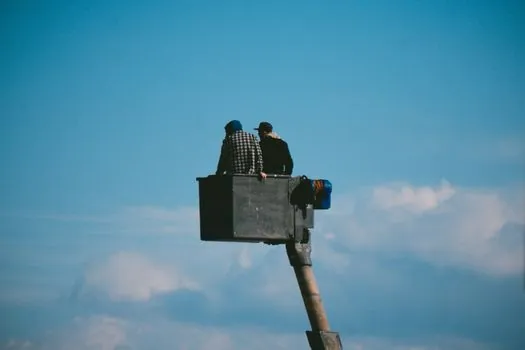
Shotcrete, rock shards, and rail-mounted muck cars make solid pneumatic tires unusable; non-marking solid rubber or foam-filled turf tires are the default on tunnel-spec scissor lifts. [S1]
Leveling jacks or hydraulic outriggers compensate for the 5-10% side-slope common on invert slabs before the final concrete pour. Blumenbecker's AWP service protocol covers visual inspection of all safety-related components and functional testing of the hydraulic and electrical systems on every scheduled service, which directly maps onto the weekly inspection cadence most tunnel contractors apply to their AWP fleet [S3]. The same protocol calls for inspection of brakes, emergency lowering, and control interlocks, items that tunnel dust and water ingress degrade faster than open-air construction would [S3].
Inspection regime and service network
Tunnel projects cannot tolerate an AWP out of service for two weeks waiting on a factory technician, so manufacturer-independent service coverage is a selection gate as much as the machine spec itself. [S1]
Blumenbecker runs 12 service centers across Germany with stocked spare parts for major AWP brands, and the company's published service description matches what a tunneling contractor actually needs: on-site repair, hydraulic and electrical fault diagnosis, and a digital inspection report uploaded to a customer portal for audit traceability [S3]. The German model runs on DGUV Principle 308-002 (annual inspection by a qualified person) plus a pre-shift visual and functional check by the operator; shorter intervals apply under intensive or adverse conditions [S3]. Most European tunneling projects mirror this cadence, and Chinese-sourced fleets shipped for Southeast Asia metro work typically receive a quarterly service contract from a regional OEM agent rather than a vendor-tied workshop.
Safety functions and operator protection
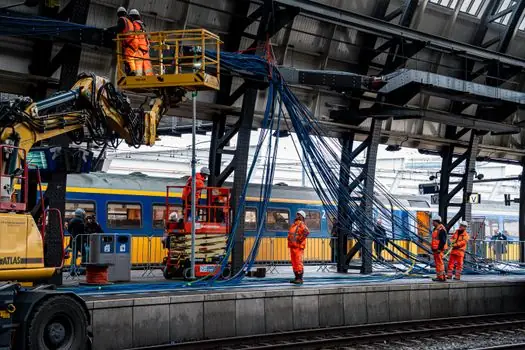
Tunnel-rated AWP cabins and platforms are typically equipped with pothole protection, tilt sensors (5-7% cutoff), overload cutoff at 110% rated capacity, and an emergency lowering valve that operates without battery power. [S3]
These align with the improved operating performance and key safety features that Ewellix calls out as the design priorities for next-generation AWP linear-motion systems, including overload protection on the lift actuator and redundant position sensing on the scissor stack [S1]. Operator-side PPE for the same work-at-height tasks is covered in a separate spec map, where face-shield selection for confined-space entry gates the PPE side of the same job Face shield selection for confined space entry: 2026 spec gates.
What to skip, and common spec traps
Do not specify a truck-mounted AWP for a tunnel with a 5 m clearance limit: the outrigger spread alone blocks one lane of muck-car traffic. Do not specify a diesel or dual-fuel AWP for any tunnel longer than 200 m without a forced-ventilation plan: the carbon-monoxide buildup from a 19 kW diesel lift idling for 20 minutes can exceed 50 ppm at the face. [S3]
Skip telescopic booms above 16 m working height: the stow length exceeds 8 m and the unit will not navigate a 4 m radius TBM-launch chamber. Skip pneumatic-tire options on any tunnel spec: sidewall cuts from rebar and rock turn a 6-month tire into a 6-week tire. Buyers also need to weigh load-class on the bore invert; a 4-ton scissor lift concentrates 10 t/m² through its outrigger pads, which is fine on finished concrete but punches through unhardened shotcrete. For cost benchmarks, a 10 m electric scissor lift typically lands in the US$8,000-15,000 ex-works range, a 12 m articulating boom in the US$25,000-45,000 range, and a compact vertical mast under US$6,000, per China-made OEM listings on Made-in-China [S4][S5].
Procurement signals worth tracking
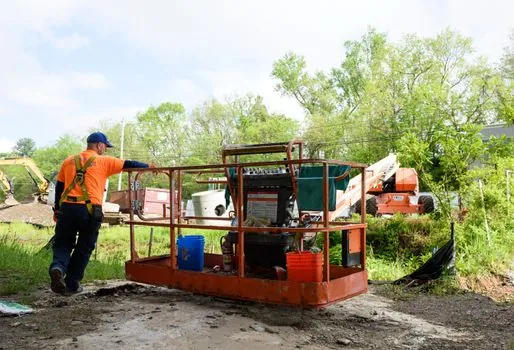
Two signals make this a watchable spec into 2026-2027: a tightening of diesel-exclusion rules in Asian metro tenders (most new specs already require BEV or hybrid AWP for tunnels beyond 150 m), and the slow migration of telematics into AWP fleets, with Blumenbecker-style digital inspection portals being adopted by contractors who need to demonstrate equipment condition to the project owner rather than to a regulator [S3]. Track the next round of metro-station fit-out awards in Q4 2026 for confirmation of these shifts.
The underlying component specifications are covered under aerial work platform, aerial work truck, and platform scale.