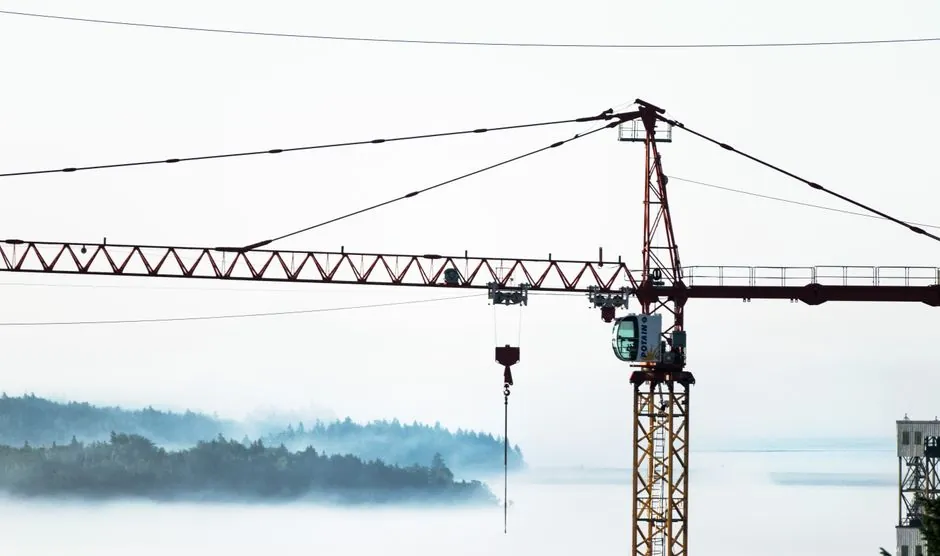
The maximum design wind speed for an outdoor-rated MEWP is 12.5 m/s, or 28 mph, with wind force assumed to act horizontally at the centre of pressure area of the platform [S6].
On every compliant machine, that figure is printed on the data plate as either 0 mph (indoor only) or 28 mph (12.5 m/s) (indoor/outdoor), per the ANSI A92 and CSA B354 standards that were aligned with ISO in June 2020 [S1]. For related access-equipment context, see the aerial work platform reference page and the aerial work truck entry.
Two parallel limits: design rating vs regulatory trigger
The machine's design wind rating (28 mph / 12.5 m/s) and OSHA's regulatory trigger (20 mph / 8.9 m/s) are separate numbers that an operator must track together [S1][S3]. OSHA regulation 1926.1431(k)(8)(i) states that when wind speed, sustained or gusts, exceeds 20 mph at the personnel platform, a qualified person must determine if it is not safe to lift personnel, and if not, the operation must not begin or must be terminated [S3]. Reaching 28 mph without a stop-work decision typically means a rule was already broken several minutes earlier, because the OSHA 20 mph line sits about 8 mph below the equipment's design ceiling [S1][S3].
The 20 mph figure is also repeated in OSHA's general criteria for aerial lifts under 1926.1431(c)(2)(ii) where wind velocity is identified as a condition that may render the lift unsafe, and scarlet-tech's 2025 regulatory summary restates the same 20 mph trigger unless a qualified person evaluates and authorises continued work [S8]. Operators should treat 20 mph as the action threshold, not 28 mph, because the lower number is where the legal duty to evaluate re-fires.
Where the 28 mph number comes from
ISO standards for mobile elevating work platforms fix the maximum design wind speed at 12.5 m/s, with the wind force vector modelled horizontally at the centre of the platform's projected area [S6][S9]. Haulotte's engineering blog confirms that today's ISO 16368-family standards use 12.5 m/s as the explicit cap, and IPAF's FAQ on the same question echoes the figure to one decimal place [S6][S9]. The ANSI A92 suite (A92.20 design, A92.22 training, A92.24 operator) and the Canadian CSA B354 series were harmonised with ISO in their June 2020 revision, which is why a US-built boom lift and a European-built scissor lift now show the same 28 mph rating on the data plate [S1][S5].
A useful internal cross-check: the 28 mph design rating matches Beaufort Scale Level 5 (fresh breeze, 19-24 kt, 29-38 km/h), and most manufacturer manuals cited by ACRT training material restrict platform work to below Beaufort 5 [S3]. If a jobsite anemometer reads 25 mph sustained, an operator is still inside the equipment envelope but already past the OSHA evaluation line, and a gust to 32 mph puts the machine outside its structural design case entirely [S1][S3].
Who the 28 mph rating applies to, and who it does not
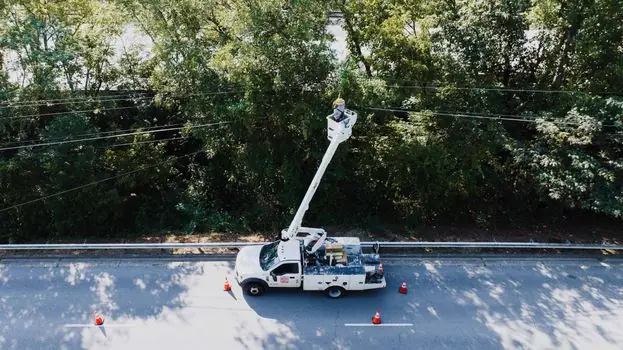
The 28 mph (12.5 m/s) stamp is granted only to machines the manufacturer has designed, type-tested, and documented for outdoor service under the ANSI/CSA/ISO wind protocol [S1][S5]. Self-propelled boom lifts, rough-terrain scissor lifts, telescopic booms, and truck-mounted aerial work platforms commonly carry the 28 mph rating when ordered in outdoor trim [S2].
The 0 mph rating covers indoor-only stock: electric slab scissor lifts, low-level vertical masts, and order pickers that have not been wind-tested, and these are explicitly banned from open-construction sites and warehouses with open overhead doors where wind can enter the work envelope [S5]. Putting a 0 mph machine on a partially enclosed loading dock with a 15 mph cross-draft is treated by ANSI A92 as a misuse, not a marginal call, because the chassis, tyres, and outriggers were never structurally validated for that load case [S5]. For a deeper look at how indoor-only versus dual-rated chassis differ in selection, the suspended platform reference lays out a comparable indoor/outdoor split for building-façade equipment.
Reading wind correctly at the platform
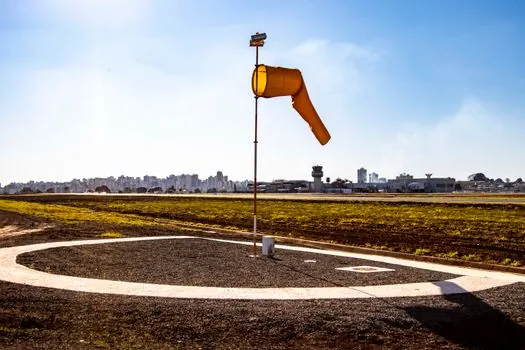
Wind speed at platform elevation is almost always higher than at ground level, and surrounding structures can either shield the platform or funnel wind into a Venturi-like acceleration that defeats the 28 mph rating [S1][S4]. Three measurement variables are called out by JLG's guidance: platform elevation, surrounding structures, and local weather events including approaching storms, and the same three are repeated by aerial-life-equipment.com as the field variables that drive a real-time reading [S1][S5].
The recommended instrument is a handheld anemometer held at the platform, not a weather-app reading for the nearest airport [S5]. A CRT-styled 50 mph gust event on a Notre Dame film shoot, captured in the OSHA aerial-lift case study, shows the failure mode: an untrained operator on a raised scissor lift, no platform anemometer, gusts well past the 28 mph design ceiling, and the chassis overturned at roughly 40 ft of platform height [S4]. OSHA 1926.1431 also lists a 10 ft clearance from the widest arc of any live power line, a separate lateral buffer that does not relax when wind drops, because lines swing under load [S3].
Side loads, surface area, and what voids the rating
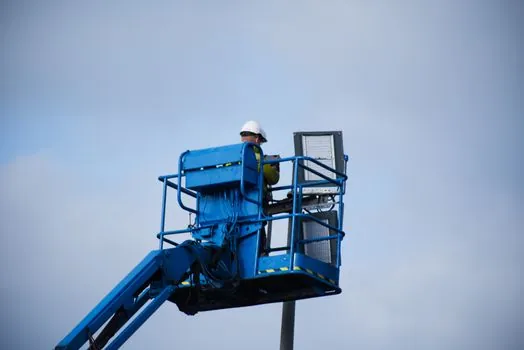
The 28 mph figure assumes a clean platform with no banners, signs, plywood sheets, or unauthorised deck extensions, because every square foot of added sail area multiplies the overturning moment and erodes the rated wind margin [S1]. JLG's Operations & Safety manuals forbid carrying large-surface items, covering the platform, or increasing platform size with unauthorised modifications, and the same prohibition appears in Haulotte's wind guidance for outdoor work [S1][S9].
Wind direction also matters asymmetrically: a tail wind shifts the load centre, lifts the rear axle, and inflates the turning radius, while a side wind adds a lateral component and pushes the load off the vertical, and a wind-tunnel effect between two adjacent structures can double the apparent speed at platform level even when the open-field anemometer reads 15 mph [S4]. For operations that routinely run close to the limit, the variable-speed drive entry explains how chassis drives are derated when boom functions are gated by wind interlocks, a related but distinct spec on modern electric booms.
Comparison of the two limits at a glance
The two wind numbers do different jobs: one is structural, one is procedural. The table below lines them up on the criteria that matter at lift. [S1]
28 mph (12.5 m/s): structural design ceiling per ANSI A92.20 / CSA B354 / ISO 16368; applies to outdoor-rated MEWPs only; measured as sustained 3-second wind at the platform; exceeding it is a structural over-load and a stop-work event without a qualified-person decision [S1][S5][S6]. 20 mph (8.9 m/s): OSHA 1926.1431(k)(8)(i) regulatory trigger, plus 1926.1431(c)(2)(ii) general duty; applies to all aerial lifts on US construction sites; measured as sustained or gust at the platform; crossing it forces a qualified-person evaluation, and if unsafe, the lift must not begin or must be terminated [S3][S8]. 0 mph: indoor-only stamp for non-wind-rated MEWPs; the platform is excluded from any open-area or open-door environment; structural design never validated for wind loading [S1][S5].
Engineers writing lift plans should treat 20 mph as the planning line, instrument the platform with a calibrated anemometer, and reserve the 28 mph number for the structural margin that disappears the moment a banner goes up.
What to track after 2026-10-11
Two signals are worth watching. First, the OSHA final rule on cranes and derricks in construction, which historically has driven 1926.1431 amendments, is the most likely vehicle for any future revision of the 20 mph trigger, and the 2025 scarlet-tech summary shows the 20 mph line still standing as the regulatory baseline [S8]. Second, IPAF's US FAQ and Haulotte's engineering blog both still cite 12.5 m/s as the ISO design figure, and a coordinated ANSI/ISO/CSA revision would be the only path to a change in the 28 mph stamp on the data plate [S6][S9]. Until either moves, an aerial work platform selection checklist should default to 20 mph OSHA, 28 mph structural, and a 0 mph indoor-only exclusion.
Related analysis: Expansion anchor selection for industrial facilities: wedge, sleeve, drop-in, and the.