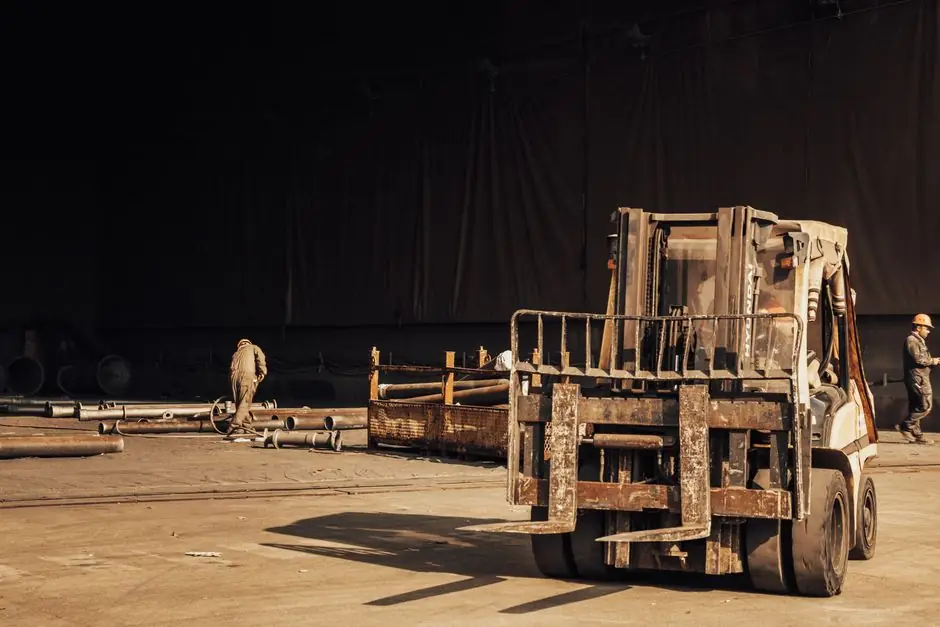
AC traction motors have largely replaced DC units on Class I electric counterbalance forklifts sold for warehouse and manufacturing duty, driven by three measurable differences: roughly 15 to 30 percent lower energy draw per shift, brushless construction that removes the commutator service item, and the ability to hold rated tractive effort at stall indefinitely without the thermal trip that ends a DC motor's day [S1].
DC traction motors remain in service in legacy fleets, in light-duty walkie / pallet jack models, and in some three-wheel electrics where first cost still trumps efficiency, so the spec decision is not whether AC is "better" in the abstract but whether the duty cycle, shift count, and battery size make the AC premium pay back inside the truck's economic life [S3].
Why AC Wins the Heavy-Duty, Multi-Shift Warehouse
AC induction traction motors convert battery DC to variable-frequency AC through a controller, so the same stator and rotor package can be commanded to deliver full torque at zero shaft speed without the current-spike heating that limits a DC motor [S1]. Under a real loading dock duty cycle (constant plug reversals, ramp starts with a 4,000 lb load, and long creep segments at 1 to 3 mph), the AC truck keeps tractive effort flat while a comparable DC truck will throttle back to protect brushes and armature windings from sustained high current [S1][S3].
The corollary, observed on heavy-tonnage rail service but transferable to forklift reasoning, is that an AC drive of a given nameplate horsepower can move more weight at low speed for longer than a DC drive of the same horsepower before either the motor or the inverter reaches a thermal ceiling [S2][S3]. For a forklift buyer that translates into a 1.5 to 2.0 kW AC traction package routinely doing the work a 2.2 to 3.0 kW DC package was specced for five years ago, with the smaller battery pack required to feed it [S1].
Why DC Still Shows Up on the Buy Order
DC series-wound traction motors are cheaper to manufacture, simpler to control with a basic MOSFET or contactor steering, and easier to field-repair in facilities that still have a motor shop, so they dominate the bottom of the price list [S3]. Operators running a single 8-hour shift on a 24 V or 36 V walkie, or fleets that already own a DC spares pool, see a real dollar case for staying on DC rather than re-tooling battery chargers and controller cards [S3].
Where DC has lost the argument is anywhere the truck is asked to climb a ramp loaded, brake hard, or feed current back into the pack. A DC motor dissipates braking energy as heat through a resistor bank, while an AC system can run the traction motor as a generator and push that energy back into the battery, which is the single largest reason fleet energy bills on AC trucks run 15 to 30 percent under comparable DC trucks in published OEM material [S1].
Side-by-Side Decision Matrix: AC vs DC Traction on Class I/II Forklifts
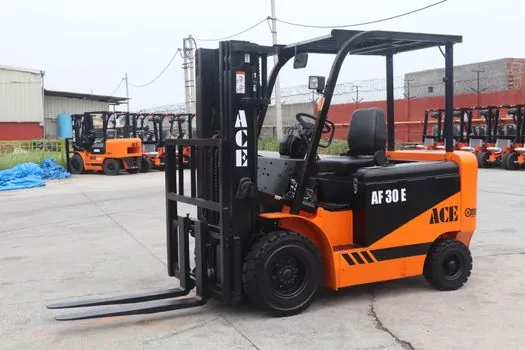
Four selection criteria line the two technologies up for a spec engineer: energy efficiency per shift, low-speed continuous tractive effort without thermal derating, maintenance hours per 1,000 operating hours, and first cost of a new 80 V 5 kW class truck. AC traction wins the first three outright, with regenerative braking and brushless rotor construction the two largest contributors [S1]. DC traction still wins the fourth, and that single line is what keeps DC in the catalog at the low end [S3].
For duty-cycle fit, AC is the right pick for multi-shift distribution, cold storage with frequent regen to recover heat-generated capacity loss, and any application where the truck climbs a grade above 5 percent under load for more than a minute at a time [S1][S2]. DC is the right pick for light-duty walkies, single-shift orderpickers under 3,000 lb capacity, and buyers whose total cost of ownership model is dominated by acquisition cost rather than energy and labor [S3].
Failure Modes and Constraints a Spec Sheet Hides
AC traction packages add a controller, IGBT inverter section, and encoder or resolver feedback, and each of those is a new failure surface that a DC truck with a simple contactor panel does not carry [S1]. When an AC traction motor does fail, the repair path usually goes back to the OEM or a specialist because the stator windings and rotor laminations are not field-rebuildable the way a DC armature can be re-commutated, so the fleet needs a stocked exchange motor rather than a bench rewinds schedule [S3].
AC traction also depends on the battery being healthy enough to accept regen current. A sulfated or aged lead-acid pack will not absorb the braking energy the controller is trying to push back, and the controller will fault to protect itself, which can look like a drivability problem until the battery is load tested [S1]. For operators running lithium-ion conversions on legacy trucks, this is one of the quieter but real reasons the traction motor upgrade and the battery chemistry upgrade need to be specced together.
Battery, Braking, and the electric-actuator Connection
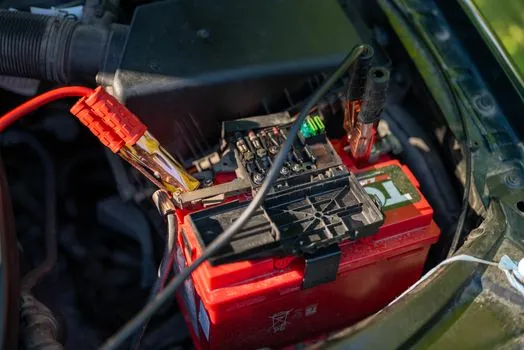
Regenerative braking on an AC traction system depends on the motor controller being able to reverse power flow through the same inverter section that drives the motor, which is why an AC truck can recover a measurable share of the energy that a DC truck dumps through a resistor bank as heat [S1]. That same inverter also feeds the hydraulic pump motor on most modern electric forklifts, and the controller architecture is shared with the electric-ball-valve and proportional valve drivers on the hydraulic manifold, so a single AC drive upgrade typically cascades into better pump control and smoother fork speeds at no extra hardware cost [S1].
The deeper system analogy is with stationary drives: the AC motor on a forklift traction axle and the VFD feeding a conveyor or fan in the same plant are the same fundamental technology, and a maintenance team that already services VFDs on HVAC or pump duty will pick up AC forklift traction service much faster than a team whose only motor background is DC series-wound truck motors. That workforce overlap is, in practice, a hidden line item on the AC side of the spec.
Spec Checklist Before You Sign the PO
Five items belong on the comparison sheet: nameplate tractive effort in lbs at 1 mph loaded, continuous run time at rated load on the chosen battery, regen current limit and battery acceptance at end of shift, controller IP rating (IP54 minimum for food and cold storage, IP65 for washdown), and the cost of a stocked exchange motor versus a DC armature rebuild [S1][S3]. If the AC truck wins four of those five and the operator runs two or more shifts, the AC premium typically returns inside 18 to 36 months through energy and maintenance savings.
Track these signals before the next fleet refresh: published OEM efficiency deltas between AC and DC on the same truck chassis (most major makers publish this in their 2025/2026 spec sheets, with figures commonly in the 15 to 30 percent range) [S1], the lithium-ion retrofit pipeline in your facility (an AC traction truck on Li-ion captures regen that a DC truck on flooded lead-acid cannot), and the cost of a stocked AC exchange motor for the truck class you operate [S3].
See also our earlier report, Selecting a Tower Crane for High-Rise Height and Load: A 2026 Spec Engineer's Workflow.