Aerospace procurement is a risk-management discipline tied to flight safety, not a cost-control function: micron-level deviations in component precision can compromise structural integrity, so qualification cycles run 6–12 months under AS9100 and AS9102 first-article inspection rather than the 4–8 week automotive PPAP loop [S1][S9].
The scope covers three distinct buying environments: traditional primes building tens to hundreds of airframes per year, new-space programs (Starlink-class constellations, rocket launch, autonomous systems) producing hundreds to thousands of units annually, and aftermarket MRO spares where an Aircraft-On-Ground (AOG) event runs $10,000–$20,000 per hour and exceeds $150,000 once downtime stretches past two hours [S1][S2].
Spec Gates: AS9100, AS9102, and Nadcap as the Qualification Filter
AS9100 is the baseline quality management system for the aerospace supply chain, while AS9102 first-article inspection (FAI) and Nadcap special-process accreditation (heat treat, NDT, surface finishing, welding) gate higher-risk parts [S1].
The China sourcing map shows why this gate matters: SourcifyChina's 2025 supplier audits report AS9100 compliance in roughly 40% of Guangdong tier-1 vendors and 60% of Zhejiang tier-1 vendors, with Nadcap coverage notably thinner in both regions, so a procurement team pulling landing gear brackets or fuel-system housings must verify process-specific credentials before issuing an RFQ [S4]. For pre-qualification, screening against financial stability, technical capability, and prior aerospace track record is the minimum; deeper audits confirm AS9100 scope statements and any OEM approvals on the certificate [S5].
Auto-to-Aerospace Transition: What Transfers, What Breaks
Four skills transfer directly from automotive procurement: should-cost modeling, high-volume production thinking, NPI velocity, and supplier development; AS9100 + AS9102 FAI replaces IATF 16949 + PPAP, ITAR/EAR replaces minimal export controls, and the 6–12 month sourcing cycle replaces 4–8 weeks [S1].
For buyers moving from Tesla, Rivian, Lucid, or legacy OEMs into SpaceX, Rocket Lab, Anduril, or Relativity, the cost discipline is the draw, while the friction is regulatory: cost-plus defense contracts historically had weaker cost rigor, so new-space firms hire auto procurement specifically to inject should-cost decomposition, annual price reduction targets, and VA/VE into a supply base used to cost-plus [S1]. New-space sourcing cycles compress to 2–4 months with a truncated FAI, sitting between the automotive pace and traditional aerospace [S1]. NPI muscle, moving from spec to source to supply in months rather than years, is the single most bankable transfer for high-cadence programs [S1].
China Sourcing Map: Regional Clusters by KPI

Four Chinese clusters dominate aerospace component sourcing, each with a distinct price-quality-lead-time profile: Yangtze River Delta (Shanghai/Jiangsu) for high-precision CNC and avionics; Pearl River Delta (Guangdong) for rapid prototyping and UAV parts; Sichuan/Shaanxi (Chengdu, Xi'an) for state-led AVIC airframe and engine work; and Zhejiang for precision tooling, casting, and forging [S4].
On SourcifyChina's relative price index (100 = baseline), Guangdong scores 85 and Zhejiang 88 for a standard 500-piece batch, with Guangdong lead times of 4–6 weeks versus Zhejiang's 5–7 weeks; both regions carry AS9100 in a majority of tier-1 vendors but limited Nadcap, while Sichuan/Shaanxi offers OEM-approved AVIC subsidiaries for structural airframe and engine parts at the cost of slower commercial responsiveness [S4]. Two structural risks apply across the map: dual-sourcing across regions is recommended to dampen geopolitical and logistics shocks, and ITAR-affected components require export licensing regardless of cluster [S4].
AOG Economics and Spare-Parts Inventory Posture
AOG-driven inventory is the single highest-leverage procurement decision in airline MRO: stocking too little grounds aircraft at $10,000–$150,000+ per hour, while overstocking ties up working capital in parts with long shelf-life but slow turnover [S2].
Procurement teams must balance three variables simultaneously: FAA/EASA regulatory traceability on every installed component, unpredictable demand from unscheduled maintenance events, and globalized supply chains where lead times vary by part type and country of origin [S2]. Cloud-based platforms and aviation-specific software (SOMA-style systems) are now standard for automating order processing, surfacing real-time inventory visibility, and reducing the manual paperwork load that consumes procurement staff time [S2][S3]. Robust risk management for MRO includes supplier diversification, contingency planning, and selective stockpiling of critical long-lead components to absorb the next AOG event [S5].
Decision Matrix: Traditional vs. New-Space vs. MRO Sourcing
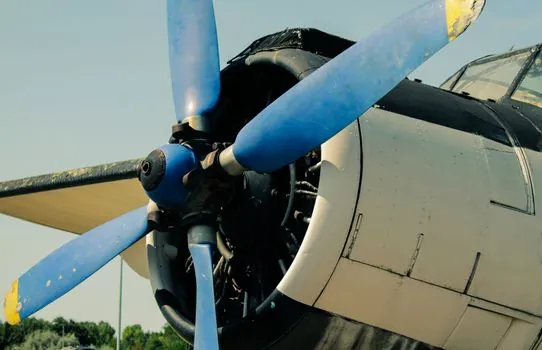
Three sourcing archetypes line up differently against five decision criteria: volume, quality standard, qualification cycle, cost model, and export-control burden [S1][S2].
Traditional aerospace builds tens to hundreds of units per year under AS9100 + AS9102 FAI + Nadcap, with 6–12 month qualification cycles, cost-plus contracts, and full ITAR/EAR exposure; new-space (SpaceX, Anduril, Rocket Lab-class) raises volume to hundreds-thousands per year, keeps AS9100 but compresses FAI to weeks-months, runs fixed-price with automotive-style cost discipline, and adds OTA contracting flexibility on top of ITAR/EAR; airline MRO spares sit in a different lane, focused on FAA/EASA-traceable rotable and consumable parts against unpredictable AOG demand at $10,000–$20,000 per hour of downtime [S1][S2]. Sourcing geography compounds the choice: traditional primes lean on ITAR-cleared domestic suppliers, new-space firms actively recruit from the automotive supplier base, and aftermarket MRO increasingly sources from the China clusters above where AS9100 scope matches the part risk class.
RFQ Structure, Compliance, and Where the Process Breaks
An aerospace RFQ is more structured than a commercial RFQ: suppliers must return firm pricing with escalation logic, capacity declarations with utilization data, quality performance metrics, lead-time breakdown by production phase, tooling and NRE assumptions, and warranty structure; a Tier 2 failure risk often hides inside that package and surfaces only during production ramp-up [S8].
Five process disciplines consistently separate the winners: data analytics to forecast demand and flag supply disruption early, long-term manufacturer partnerships to unlock preferential terms and early technology access, automation of repetitive procurement tasks (RPA, AI) to cut manual errors, cloud-based collaboration so engineering, quality, and supply chain see the same real-time data, and a diversified supplier base sized to the part's criticality [S3]. Regulatory compliance is not a checkbox: aerospace procurement touches FAA, EASA, and equivalent national authorities, with detailed traceability required for every component sourced and installed [S2][S5]. For deeper supply-chain risk methodology, see the Slewing Bearing Selection for Material Handling spec map, which applies a similar load-and-process qualification gate to a different component class.
Sourcing Standards Verification: ISO, CE, and the Cross-Check
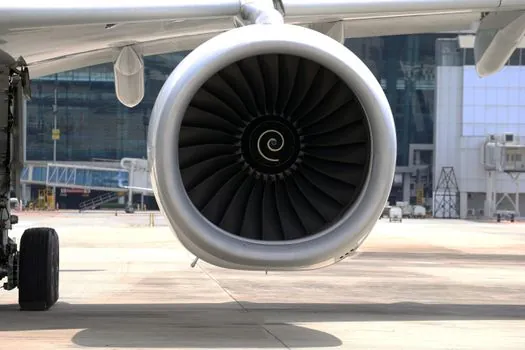
For precision aerospace components, ISO 9001 is the floor, AS9100 is the industry-specific standard, and CE marking applies where EU jurisdictions or European OEM end-use require it; procurement teams should cross-check certificate scope statements rather than rely on documentation alone [S9].
For procurement reference on adjacent spec-driven sourcing, the Stainless Steel Watch Signal Brief covers material-grade and certification discipline in a different product class, and the OLED sourcing from China playbook applies a comparable regional cluster map to a different commodity. Industrial control hardware sourcing follows a parallel pattern, and the Remote I/O Module Suppliers 2026 spec map is a useful cross-reference for protocol- and certification-gated electronics procurement, even though it sits outside aerospace.
Trackable next signals: the spread of AS9100 certification in tier-2 Chinese suppliers beyond the current 40–60% tier-1 band [S4]; adoption of compressed FAI cycles by traditional primes as new-space cost discipline bleeds across; and AOG-cost escalation as fleet utilization climbs into 2026–2027 [S1][S2][S4].
Spec-level background on the components involved: linear guide, crossed roller guide, and pressure transmitter.