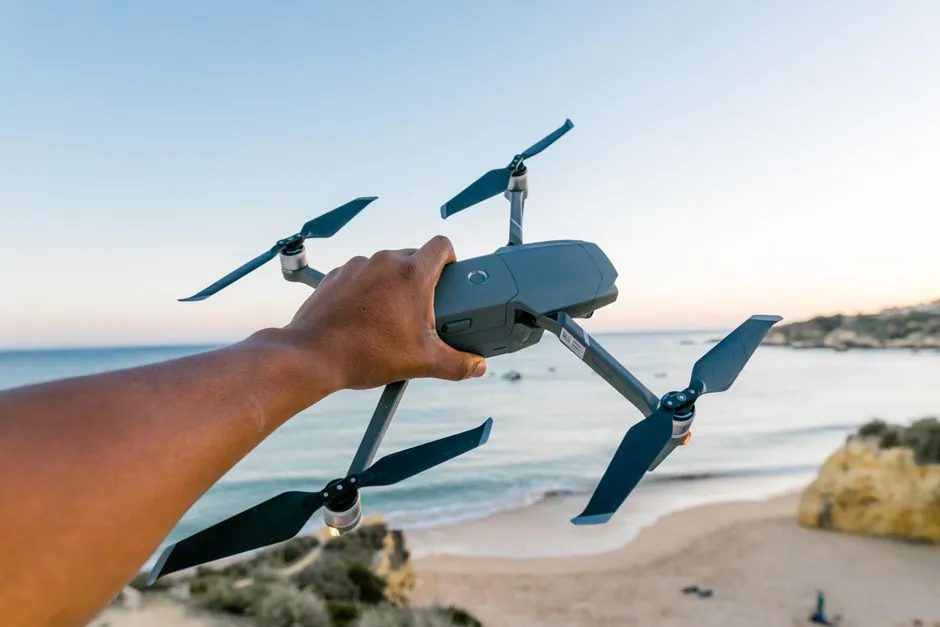
China remains the dominant global drone manufacturing base, with 2025 export volumes of 120,000+ agricultural plant-protection UAVs, 68,000 surveying and mapping units, 43,000 security inspection platforms, and 3.2 million+ small consumer aerial cameras, supported by integrated component clusters in Shenzhen, Guangzhou, and the Wuxi-Hangzhou corridor [S2].
Industrial-grade airframes built around CNC-machined 7075-T6 aluminum and titanium structural parts are now standard at tier-1 fabricators, with production tolerances of ±0.01mm and lead times of 7-14 days from quote to first article, per VMT's published 2026 capability table [S3].
FCC, Federal-Project, and Forced-Labor Gates
As of December 22, 2025, the US Federal Communications Commission no longer issues new equipment authorizations for Chinese-made drones, so any model intended for the US market must already carry an FCC grant dated before that cutoff [S1]. Buyers should verify the exact model name or FCC ID against fccid.io before placing a purchase order, and treat an FCC grant as the entry condition, not a guarantee of customs release [S1].
Chinese-made drones are fully prohibited from any project involving US federal funding, including government agencies, defense contractors, federally funded universities, and federally financed infrastructure work, with narrow exceptions only for units on the DoD Blue UAS list or those meeting the Buy American Standard (US-made components exceeding 60% of total component cost) [S1]. Under US forced-labor enforcement, the importer of record bears the burden of proving a clean supply chain, which means a full bill of materials with named battery-cell, camera-sensor, and component factories must be obtained before any order is placed [S1].
Cluster Map: Where the Supply Chain Actually Lives
China's drone production concentrates in three clusters: Shenzhen and Dongguan for finished consumer and prosumer quadcopters plus FPV systems, Guangzhou and Huizhou for motors, ESCs, and gimbal assemblies, and Wuxi-Hangzhou for industrial and agricultural platforms with carbon-fiber airframes [S2]. Tier-1 component suppliers deliver ±0.01mm tolerances on motor mounts and gimbal components in 7075-T6 aluminum, titanium, and carbon fiber under ISO 9001 and AS9100 quality systems, with no stated MOQ on prototype runs [S3].
The bill-of-materials depth is what drives the price gap: a Chinese industrial drone with equivalent specs to a Western brand lands at 35-50% of the Western price, consumer models run 50-70% cheaper, and spare parts price at roughly one-third of the original OEM's accessory list [S2]. This pricing structure is also visible in adjacent smart-hardware categories, where direct-from-factory sourcing of robots and drones commonly saves 30-60% versus Western resellers [S4].
Certification Stack: CE, FCC, RoHS, and UN 38.3
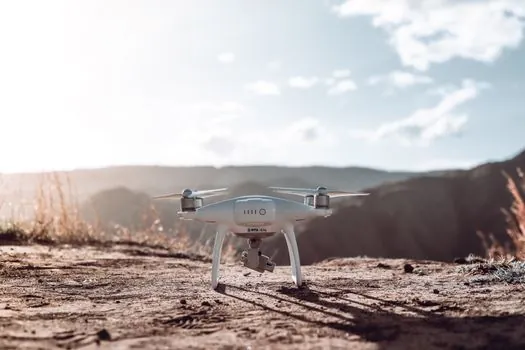
Baseline factory documentation for any destination market is CE, FCC, and RoHS, with no exceptions for US-bound product, and any supplier unable to produce all three is a customs-risk liability [S1]. Lithium batteries carried inside the airframe or shipped as spares must also satisfy UN 38.3 transport-test requirements, which feed directly into the IATA and IMDG dangerous-goods paperwork that airlines and ocean carriers now demand at booking [S1].
EU-bound buyers need CE plus EN 4709 series compliance for civil drones, and agricultural or surveying operators should additionally verify that the platform's RTK/GNSS module supports the correction services used in their target country, since this is a common spec the headline datasheet does not state. For buyers comparing options across the same drone category, a structured LED sourcing qualification map shows how the same document-pass-fail pattern applies to other Chinese electronics categories.
Air vs Sea: Lithium Rules Decide the Mode
Drones containing lithium batteries are dangerous goods under both IATA (air) and IMDG (sea) regulations, and carrier acceptance must be confirmed in writing before any booking, because not every airline or ocean line will accept DG cargo from a non-contract shipper [S1]. Air freight is the practical choice for orders under approximately 500 kg volumetric weight or any time-sensitive shipment, while sea freight in FCL suits bulk commercial orders with adequate lead time and predictable documentation windows [S1].
Spare batteries shipped separately face the strictest IATA limits, including state-of-charge caps and Section II packaging requirements, and a single misdeclared battery can hold an entire consolidation at the forwarder's DG screening station. For buyers also moving industrial control hardware on the same PO, industrial Ethernet switch sizing has its own packaging and labeling rules, and consolidating switches with DG drones is generally a poor idea because the higher hazard class governs the whole consignment.
Quality Verification and Payment Structure
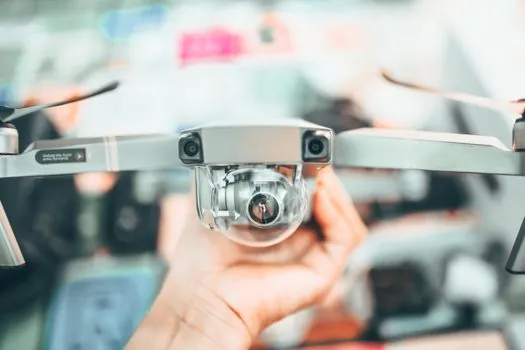
A working supplier-verification sequence for 2026 runs: factory video audit, ISO 9001 or AS9100 certificate check, sample-unit flight test with telemetry logs, pre-shipment inspection against an AQL 2.5 sampling plan, and escrow or Letter of Credit terms tied to the inspection report, mirroring the six-step pattern proven on 200+ robot and drone buyers [S4]. Tier-1 CNC fabricators publish ±0.01mm tolerance, named material grades (7075-T6 aluminum, titanium, carbon fiber), and free DFM review as standard, which is the right baseline to demand from any shortlisted motor-mount or frame supplier [S3].
Pricing structure typically separates FOB unit price, tooling or DFM charge, sample cost (often credited against the first production run), and a per-unit QA fee, with the factory's MOQ policy ranging from "no MOQ" on CNC prototype parts up to container-load commitments on finished consumer drones [S3]. For buyers new to China-direct procurement, the 30-60% savings band holds across most robotics-adjacent categories, but the same compliance failure modes apply, so the fieldbus gateway sourcing map is a useful cross-reference for vetting any Chinese industrial supplier on documentation depth rather than headline price.
Tariff and Landed-Cost Realities by Region
Import-tariff exposure on Chinese drones varies sharply by destination, with Southeast Asia (Vietnam, Thailand, Malaysia, Indonesia) absorbing 37% of export volume under the most favorable tariff band [S2]. US-bound cargo now faces the highest stacked-cost scenario: Section 301 tariffs, the closed FCC authorization window, and additional documentation around supply-chain provenance, which together can erode the headline 35-50% cost advantage by 10-15 percentage points if not pre-modeled.
For EU buyers, the calculation is dominated by CE conformity costs and 2024-era CBAM-related carbon reporting on imported electrical goods, while Middle East and African buyers generally face the lowest tariff friction but the highest logistics cost per kilogram. Across all regions, the avoidable cost is detention, demurrage, and re-export, which is what happens when a shipment arrives without a valid FCC grant, missing UN 38.3 battery paperwork, or a CE technical file that does not match the SKU on the commercial invoice [S1].
For high-power industrial drones sold into mining or energy inspection, buyers will often also be specifying rotary drilling or static-pressure-molding equipment on adjacent lines, where the same "verify the standard, then verify the cert" logic from rotary drilling rig selection for landfills applies to the drone sourcing workflow. The first trackable signal to monitor is whether the FCC reopens new authorizations for any Chinese-made drone category after December 22, 2025, which would materially change the US-bound sourcing math; the second is whether Chinese OEMs begin publishing dual SKU lines, one FCC-locked for the Americas and one CE/UKCA-only for the rest of world, to bypass the closed authorization window.
Spec-level background on the components involved: linear guide, crossed roller guide, and pressure transmitter.