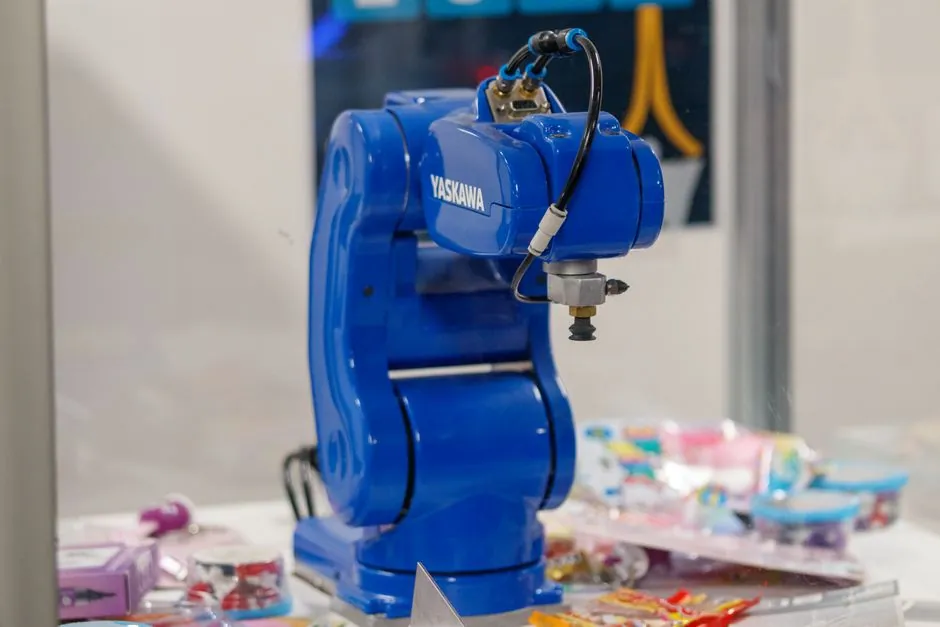
Automotive parts lines moving 1,000+ SKUs per shift are increasingly specifying autonomous mobile robots over fixed-path AGVs, with central fleet managers driving just-in-sequence delivery to takt-controlled workstations [S1]. The selection question is no longer "AGV or AMR" in the abstract; it is which navigation class, payload class, and dispatch interface match a given plant's line-side geometry and changeover frequency.
For a typical tier-1 supplier handling 50-1,500 kg totes, racks, and pallet stacks, the decision pivots on three measurable axes: route stability (fixed vs. reconfigured per shift), payload-to-footprint ratio, and integration depth with the WMS, MES, and AS/RS conveyor layer [S1][S2]. A pragmatic 2026 spec map treats magnetic-tape and laser-target AGVs as the baseline for greenfield lines, and SLAM/navigation-stack AMRs as the retrofit choice for brownfield plants with frequent model changeovers [S1][S8].
Navigation Classes and What They Cost You in Floor Space
Wire-guided, magnetic-strip, and laser-target AGVs require 50-100 mm-wide guide paths plus a buffer corridor of roughly 0.5 m each side, and any layout change forces re-laying the magnetic tape or re-mapping reflectors, a documented pain point for plants running model changeovers every 6-12 weeks [S1]. Free-range navigation using computer vision and onboard microprocessors removes the floor markings entirely, but the AMR typically costs more per unit and depends on a stable SLAM feature map of the facility [S4][S5].
VisionNav's VNP15 autonomous pallet stacker, deployed at a Chinese auto-parts logistics hub in 2024, navigated by a perception stack to handle three-layer stacked boxes inside a 64-slot temporary storage area with 1.6 m front-to-back spacing and 200-300 mm lateral tolerance, with the RCS bridging directly to the WMS and AS/RS conveyor handoff [S2]. The concrete slot dimensions matter: a 200-300 mm lateral slot tolerance is the practical minimum when AMRs dock against racking, and any AGV spec sheet below that figure should be rejected for pallet-stack handling.
Payload, Form Factor, and the 50-1,500 kg Band
AGVs in automotive parts work split into three payload bands that map directly to vehicle class: tow vehicles and under-ride carts below 500 kg for bins of fasteners and small components, forklift-class units at 1,000-1,500 kg for engine and transmission sub-assemblies, and heavy pallet stackers at 1,500-2,000 kg for full pallet loads at goods-in [S3][S4]. VisionNav's VNP15 sits in the pallet-stacker band and was spec'd to move three-layer stacked box loads between temporary storage, inbound buffer, and AS/RS conveyor zones, demonstrating the typical lineside-and-warehouse handoff profile [S2].
Mecalux notes that AGVs are commonly used "to move parts of different sizes to the assembly lines" in automotive and airline sectors, with kitting-station replenishment as a canonical use case where the same unit serves both heavy pallet moves and small-lot kit delivery [S5]. The trade-off is predictable: a tow vehicle costs less but cannot clear a pallet-stack task, so plants standardising on one form factor often need two AGV classes in parallel.
AGV vs AMR: Decision Criteria Lined Up
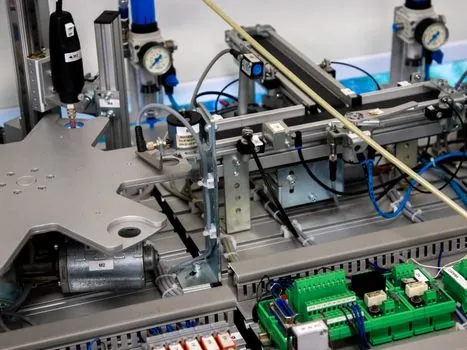
Comparing the two main mobile-robot categories on four selection criteria gives an answer an engineer can quote directly [S1][S4][S8]:
<b>Navigation infrastructure.</b> AGV: magnetic tape, painted lines, laser targets, or wire, fixed at install. AMR: SLAM with LiDAR/camera fusion, no floor markings, map editable in software. For plants retooling 2-4 times per year, AMR map edits take hours; AGV re-laying takes days and disrupts takt.
<b>Route flexibility.</b> AGV: predetermined paths, deviation triggers a stop. AMR: dynamic path planning around obstacles and people, with safety-rated sensors. TGW's 2026 guide and Pudu's 2026 automotive analysis both frame this as the headline divide [S1][S8].
<b>Integration depth.</b> AGV: typically a discrete dispatcher with WMS/MES handshakes. AMR: a fleet manager (RCS-class) plus a smart monitoring layer that tracks slot status in real time, as VisionNav demonstrated by alerting on improperly placed loads and personnel in the control zone [S2].
<b>Unit cost vs. changeover cost.</b> AGV unit cost is lower, but a single full-line re-lay can equal several AMR units. For high-mix plants the AMR TCO crossover typically arrives inside 24-36 months; for single-model lines over 10 years the AGV still wins on unit economics [S1][S8].
Safety Baseline: Forklift Fatalities Set the Bar
Mobile-robot safety cases in automotive plants are now benchmarked against the OSHA-recorded 84 forklift-related worker fatalities in the United States in 2024, a figure cited directly in the Pudu Robotics 2026 automotive analysis [S1]. AGV and AMR spec sheets should reference controlled speeds, obstacle-detection sensors, and standardised dispatch rules that visibly reduce pedestrian-vehicle interactions on the lineside aisle.
Autostore's 2026 overview reinforces that AGVs are designed for "controlled environment" transport without an onboard operator, which is the engineering basis for the S1 safety argument and underpins the SICK/Leuze/Keyence safety-scanner conventions used on most 2024-2026 lineside units [S3]. VisionNav's 2024 deployment added a real-time alert when personnel or forklifts entered the control zone around the temporary storage area, a concrete safety feature that any brownfield retrofit should require in writing [S2].
Integration Stack: WMS, RCS, and the AS/RS Handoff
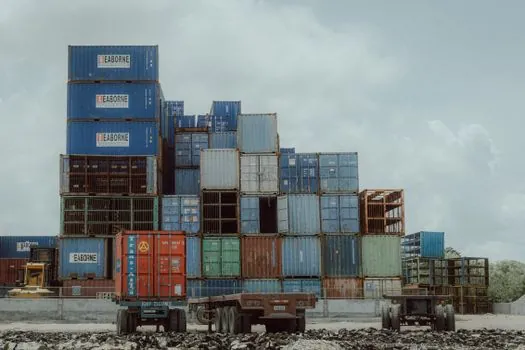
A 2026 spec should require a Robot Control System (RCS) that integrates with the plant WMS and exposes inventory state to the AS/RS conveyor, not just an M2M signal that a mission has started [S2]. The VisionNav case study is useful as a reference architecture: RCS dispatched the VNP15 to feed the inbound buffer, then updated buffer inventory and handed off to the AS/RS conveyor when the master pallet was detected at the end of the line, closing the loop without manual reconciliation [S2].
ifactoryapp's 2026 automotive playbook frames this as "AI fleet management" that "optimises lineside delivery routes" across the plant, with the open question still being the WMS/RCS interface contract and event schema, not the robot kinematics [S9]. For spec writing, pin the integration on three deliverables: a defined mission-state event API, a WMS-visible inventory delta per mission, and a fault-handling contract that re-queues stalled loads automatically [S2][S9].
Plant Retrofit Constraints and Brownfield Failure Modes
Brownfield automotive plants consistently underestimate three failure modes: aisle width vs. AGV turning radius, ceiling height vs. LiDAR mounting clearance, and pallet-rack slot tolerance vs. AMR docking repeatability [S1][S5]. The VisionNav installation handled the third by physically constraining slot spacing to 1.6 m front-to-back with 200-300 mm lateral tolerance, a workable but not generous envelope for existing racking [S2].
Mecalux's 2022 reference, still cited in 2026 spec work, is explicit that fixed-route AGVs "could prove insufficient in logistics centres with high flows of goods and fixed transportation routes" when the flow itself changes, which is exactly the conditions automotive tier-1 suppliers face during model launches [S5]. A defensible retrofit spec therefore caps fixed-path AGV share at the lineside where takt is stable, and assigns the brownfield variable-flow zones to AMRs with a free-range navigation stack.
Selection Rules of Thumb for 2026

For greenfield, single-model lines running more than 5 years with sub-weekly changeovers, specify magnetic-tape or laser-target AGVs in the 1,000-1,500 kg forklift or pallet-stacker form factor, integrated via an RCS to the WMS, with safety scanners and a documented pedestrian-aisle policy [S1][S3][S5]. For brownfield, multi-model plants with monthly or more frequent changeovers, specify SLAM-based AMRs with a fleet manager, slot-level smart monitoring, and a documented AS/RS conveyor handoff [S1][S2][S8]. For mixed fleets, expect to run both classes in parallel for at least 18-24 months during transition, with the AGVs owning the stable lineside and the AMRs owning the variable-flow warehouse-to-lineside leg.
For a wider view on how conveyor and storage subsystems are spec'd alongside mobile robots in mixed-handling plants, the Pneumatic Conveying System Selection for Electronics Handling spec map covers a different material class but the same WMS-side integration logic applies.
Component reference pages worth checking: agv robot, logistics packaging, and amr robot.