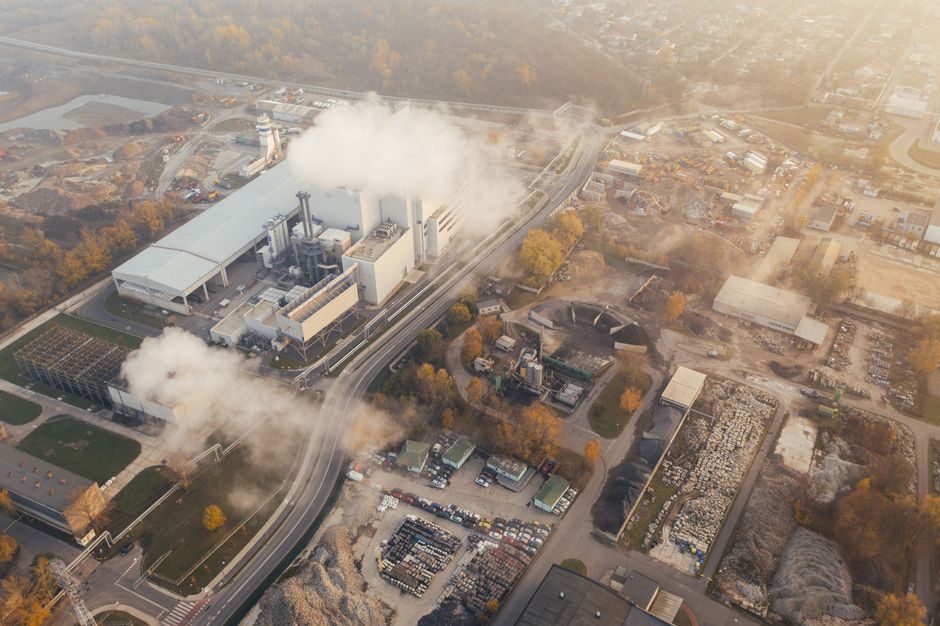
Global marketed natural gas production reached approximately 4,160 billion cubic meters in 2024, with the United States (≈ 1,030 bcm/yr), Russia (≈ 620 bcm/yr) and Iran (≈ 250 bcm/yr) holding the top three country positions on OPEC and BP-style aggregates referenced in industrial sourcing briefs [S1].
Indonesia, the largest Southeast Asian producer, posted 65,097.7 million cubic meters of OPEC-marketed production in December 2025, down from 65,190.0 million cubic meters in December 2024 — a 0.14% year-on-year contraction and well below the 1960-2025 series average of 54,190.0 million cubic meters [S1]. China, by contrast, scaled single-field capacity past 50 billion cubic meters per year at Changqing and added a 4 million cubic meter/day processing train at Dina-2 inside the Tarim Oilfield, lifting Tarim's daily gas-condensate handling to 20 million cubic meters [S2][S4].
Country Capacity Tiers and Where the Volumes Sit
Production capacity by country splits cleanly into four bands: tier-1 fields in the U.S. (Marcellus/Utica, Permian associated gas), Russia (Yamal, Nadym-Pur-Taz), and Iran (South Pars phase outputs) sit above 200 bcm/yr; tier-2 producers — Qatar, Canada, Norway, Australia, Saudi Arabia, China — operate between 100 and 200 bcm/yr; tier-3 producers such as Indonesia, Malaysia, the UAE, Nigeria and Egypt deliver 30-90 bcm/yr; and tier-4 producers (Vietnam, Thailand, Pakistan, the UK) sit below 30 bcm/yr, on the ranges aggregated by IEA and OPEC monitoring [S1][S5].
For sourcing context, single-gas-field capacity in China now exceeds 50 billion cubic meters per year at Changqing alone, while the Tarim basin's Dina-2 expansion added 4 million cubic meters/day to a prior 16 million cubic meters/day base — effectively a 25% lift in a single project phase [S2][S4]. Field-level unit capacity in the 2-4 million cubic meters/day range (≈ 0.7-1.5 bcm/yr) has become the typical incremental module in Chinese greenfield commissioning between 2018 and 2022, and a useful benchmark for a process engineer sizing a gas analyzer rack against inlet gas composition shifts.
Decision Criteria: Conventional vs Unconventional vs Associated
When triaging a country-capacity table for a downstream instrument spec, three criteria matter more than the headline bcm/yr number: deliverability variability, H2S/CO2 content, and whether the stream is conventional, shale, or associated with oil production. [S1]
U.S. shale output (Marcellus, Haynesville, Permian) is deliverability-volatile and high-pressure — relevant to selecting a fixed gas detector rated for outdoor Class I Div 1 service and to orifice-plate sizing under API 14.3 / ISO 5167 work. Russian and Central Asian conventional gas is more uniform and lower in H2S, which simplifies the gas chromatograph calibration window. Indonesian and Malaysian tier-3 fields carry high CO2 (Banyu Urip, Tangguh corridors), so amine-system engineering and combustible-gas gas detector placement have to assume CO2 displacement risk in confined spaces. The capacity-band choice is downstream of these specs, not a substitute for them.
Use Cases: Who the Country Capacity Data Is For
Country-level capacity tables are the first filter for EPC firms sizing LNG trains, for trading desks hedging Henry Hub vs JKM, and for instrument-engineering teams sizing custody-transfer and fiscal-metering skids. [S2]
For a buyer, the table points to where a combustible gas detector specification changes: a Qatari or Algerian feed needs IECEx/ATEX-certified detectors with low-temperature dew-point accommodation; a U.S. Permian feed needs detectors that handle rapid pressure-cycling and BTU swing. Sourcing in tier-3 producers — Indonesia, Vietnam, the UAE — also tends to surface more OEM-direct quoting for industrial gas analyzers, which lowers lead time but raises commissioning-spare-budget risk. Tier-1 country sourcing is dominated by EPC frame agreements and longer lead times on calibrated analyzers.
Real Constraints and Failure Modes Behind the Headline Numbers
Country production totals conceal three engineering hazards: decline-rate variability on shale (U.S. Permian wells can drop 70-80% in year 1), pipeline-quality swings (Wobbe index variability >10% on associated gas), and project slip on mega-projects (Iran South Pars phases 13-14 ran roughly two years late on multiple cycles). [S3]
Indonesia's 2024-2025 marketed-gas decline — 65,190.0 to 65,097.7 million cubic meters, or -0.14% [S1] — illustrates the tier-3 trap: aggregate volumes stay high, but mature-field decline forces the operator toward LNG-import and CCS capex that the spec table never shows. Engineers using country capacity as the single input to a custody-meter sizing exercise should pair it with the country's field-level decline curve and gas-quality history, not just the published bcm/yr number.
Standards, Sourcing Levers and Trackable Signals
Sourcing decisions downstream of the country table sit on a short list of standards: ISO 5167 for orifice and turbine metering, API 14.3 / AGA Report No. 9 for subsea and wet-gas fiscal metering, IEC 60079 series for hazardous-area detector certification, and ATEX 2014/34/EU plus IECEx for the European / Middle East EPC envelope. Pipelines crossing sanctioned jurisdictions (Iran, Russia) trigger additional export-control checks that have nothing to do with spec but everything to do with delivery [S3][S5].
For Chinese OEM clusters and project sourcing, the Tarim and Changqing scale-up is one of the most concrete 2024-2026 signals: single-field gas-condensate capacity at 20 million cubic meters/day, and individual gas fields clearing the 50 bcm/yr mark, both confirm that China is now a tier-1 supplier on field-size terms even if it remains a tier-2 country on aggregate output [S2][S4]. Two more signals worth tracking through the second half of 2026: the IEA's quarterly global gas demand update (the April 2019 reference trajectory had global gas demand rising 40% by 2040 and a primary-energy share near 25% [S5]), and Indonesia's December 2026 OPEC-marketed production number — if the series crosses back above 65,200 million cubic meters, tier-3 output has stabilized; if it slips below 64,500, the decline-curve is accelerating and EPC lead times in Southeast Asia will tighten [S1]. Engineers planning 2026-2027 fiscal-metering and analyzer skids should pin those two data points before locking the gas chromatograph calibration window.
For related coverage, see Linear Modules for Pulp and Paper: Spec Bands and Sourcing Logic 2026.