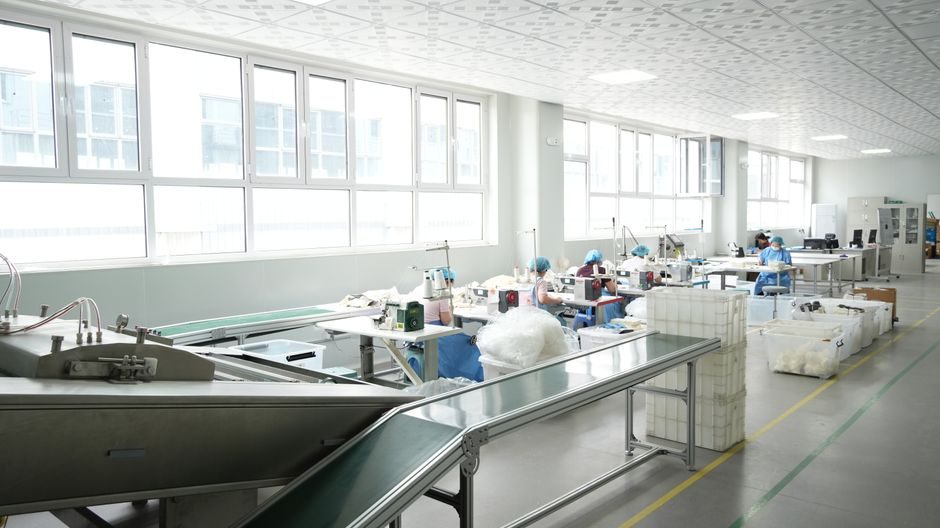
An AI server's build chain is structurally a six-level EMS stack, ending with a Level 6 motherboard-into-chassis integration that differs from a general-purpose web/network server build by the density of high-bandwidth GPU sockets, NVLink-class interconnects and direct-liquid-cooled cold plates that force an extra thermal-validation gate [S3].
Taiwan-based EMS providers — Quanta (2382.TW), Wistron (3231.TW), Pegatron (4938.TW), Compal (2324.TW), Inventec (2356.TW) and Foxconn (2317.TW) — collectively anchor the contract-assembly side of the AI-server wave, while firms such as Chenbro and InWin sit at the Level 5 chassis, FFC and backplane sub-assembly step [S3].
Six-level EMS process stack for AI servers
The assembly process decomposes into six discrete levels, each with a defined handoff [S3]. Level 1 covers collection and manufacture of the server's electronic components (resistors, capacitors, PCBA sub-units). Level 2 assembles components into functional modules. Level 3 mounts those modules into the bare computer chassis. Level 4 adds the power supply, flexible flat cable (FFC) and backplane to the Level 3 chassis. Level 5 connects all Level 4 shell parts plus the IDE/data cable and runs I/O tests — the station that chassis specialists such as Chenbro and InWin own [S3]. Level 6 — the most AI-distinctive stage — integrates the populated motherboard (CPU sockets, 8× HBM-equipped GPU sockets, NVLink/PCIe Gen5 switch fabric) into the Level 5 housing, followed by burn-in and rack-level validation [S3].
The architecture differs from a [pedestal/rack/blade general server] stack in that the multi-GPU baseboard typically uses a custom PCB with multiple 600 W+ accelerators, which raises connector pin counts, mezzanine card count and the number of high-current 48 V busbars — a structural reason AI-server integration and testing is more complex than general-purpose server build [S3].
AI server versus general server: where the build diverges
AI servers diverge from regular servers at the compute substrate: HBM-equipped GPUs, NVLink-class high-bandwidth inter-GPU links, and PCIe Gen5/Gen6 switch fabric replace the CPU-and-DDR memory hierarchy of a general server [S3]. Power and thermal hardware also diverges — AI racks routinely specify 48 V DC bus distribution and direct-liquid-cooling cold plates bonded to GPU and HBM packages, while a general rack server typically uses 12 V rails and air cooling [S3].
Functional density is the other divergence: 8-GPU baseboards are now routine, pushing Level 6 integration into the realm of high-pin-count BGA-attach and high-bandwidth cable harness work that general servers do not require. The TEJ source frames this as the reason some assembly factories — leveraging their technical expertise in chassis and thermal sub-assembly — have moved up the value chain during the AI infrastructure wave [S3].
OEM, ODM, OBM, EMS — where AI server build sits
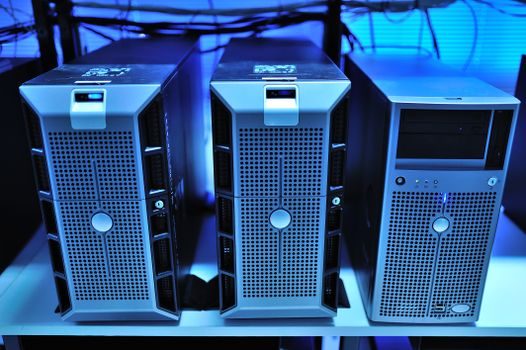
The four engagement models produce different value capture for the same physical server. OEM (Original Equipment Manufacturer) builds to customer-supplied design and brands the result; ODM (Original Design Manufacturer) adds design and development capability; OBM (Original Brand Manufacturer) owns the brand, design and full manufacture; EMS (Electronics Manufacturing Services) supplies end-to-end design-to-manufacture plus supply-chain services including inventory, transport and repair [S3]. AI-server build is dominated by ODM-EMS hybrids — the hyperscaler (CSP) supplies reference design and GPU allocation, the ODM owns the SKU and BOM, and the EMS line operates the Level 1–6 flow [S3].
Hyperscaler CSPs (cloud service providers) are the demand engine: their active data-center construction since the launch of ChatGPT drove the multi-year AI-server capex cycle that the TEJ analysis attributes to a structural growth opportunity for the EMS industry [S3]. The same EMS lines that built ODM general-purpose servers for years now run a more thermally dense, more connector-dense, more burn-in-intensive AI variant [S3].
Server form factor — pedestal, rack, blade — applied to AI
General servers ship in three form factors with a clear trade-off curve: pedestal (largest, lowest price, best heat dissipation, fewer cables) for low-demand firms; rack server (mid-size, mid price, mid scalability, more cables) for most enterprise rooms; blade server (smallest, highest density per U, highest performance per watt, most cables, easiest hot-swap maintenance) for high-density rooms [S3].
AI deployments tilt almost entirely toward rack and blade, and increasingly toward custom OCP ORv3 (Open Rack v3) chassis — a 21-inch-wide open rack standard designed for 48 V DC distribution and direct-liquid-cooling manifolds that general-purpose rack servers do not require. The Level 5 chassis/FPC/backplane step is therefore the most AI-differentiable cell in the line, and the cell that chassis specialists such as Chenbro and InWin compete on [S3].
Integration, test and yield gates on the AI line
AI-server build inserts extra test gates at every level versus a general server: Level 4 adds power-supply rail verification under GPU load profile; Level 5 adds I/O loopback and backplane high-speed-signal-eye validation; Level 6 adds multi-day GPU burn-in, NVLink/PCIe Gen5 link-training, and rack-level liquid-cooling leak and flow-rate acceptance tests [S3].
Yield and ramp economics drive the EMS-to-AI pivot: the higher ASP and tighter spec on AI units (versus general server ASP) compensate for the higher integration complexity and longer burn-in time per unit — the structural reason TEJ identifies AI infrastructure as a growth opportunity distinct from the prior general-server EMS cycle [S3]. For a peer-level process comparison, the battery pack manufacturing flow faces a similarly multi-level integration ladder, and the DRAM memory process map shows the equivalent metrology-gate density that AI HBM packaging inherits.
Who the AI-server EMS line is for — and who it is not
The six-level flow is built for high-volume hyperscaler-class orders, ODM-EMS hybrid contracts, and rack/blade form factors that need 48 V DC plus DLC. It is a poor fit for a sub-100-unit pilot run of a custom accelerator, for a customer that insists on a 12 V air-cooled pedestal, or for a brand that wants full OBM control and cannot share Level 6 burn-in data with the EMS partner [S3].
Buyers evaluating AI-server manufacturing should track three signals over the next two quarters: published 48 V / liquid-cooled rack-roadmap updates from the Taiwan EMS cohort, the ratio of ODM-EMS to captive OBM AI-server volume, and the level of Level 6 burn-in capacity addition at Quanta, Wistron, Foxconn and Inventec — all of which are public, searchable indicators of AI-server build pace [S3].
For component-level specifications, see additive manufacturing material, and multifunction process calibrator.