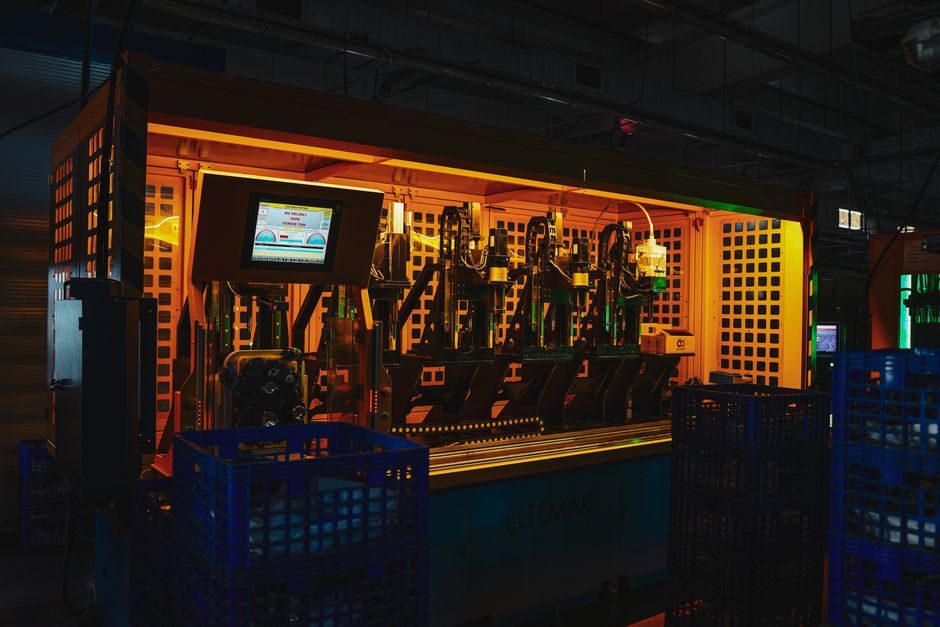
Back-end DRAM automation in 2026 is built around lot-level MES traceability, in-line e-test SPC at 1.5–3.0 GHz functional vectors, and autonomous-mobile-robot (AMR) handoff between the final test handler and JEDEC-tray pack-out, with the largest OEM/ODM DRAM supply base concentrated in Anhui, Guangdong and Beijing factories certified to ISO 9001:2015 [S2].
Smart manufacturing in this segment integrates networked sensors, AI-based yield analytics and cloud MES to replace manual sort, label and tray-load steps that historically dominated back-end labor cost, with cobots, PLC + remote I/O, and industrial Ethernet being the dominant control stack on new lines [S3].
Back-End Line Stages: From Wafer-Out to JEDEC Tray
A 2026 DRAM back-end line runs seven core stages after Known-Good-Die handoff: wafer dicing on UV-tape frames, die-attach to substrate, wire bond or flip-chip thermocompression, molding, laser mark, lead-singulation, and the handler-driven test-sort-pack loop [S3][S5].
Smart-factory upgrades are most aggressive at stages 5–7, where 4-axis SCARA cobots load handlers rated at 15,000–25,000 UPH per test site, and lot ID is read by RFID at every conveyor handoff to maintain full traceability in the MES database [S3].
Selection Criteria: Where Automation Pays Back in DRAM
The break-even rule of thumb is: automate any node that handles ≥5 million units per month per line, or any node where ESD-Event-of-Care (EoC) is the dominant failure mode, with handler integration, laser mark and tray pack as the top three ROI-positive targets [S3][S6].
Selection of the control layer typically favors PLC + remote I/O + EtherCAT or PROFINET over proprietary fieldbus, because DRAM back-end tools from multiple OEMs (handlers, testers, vision) must be synchronized to within ±2 ms per indexer cycle to keep the test floor at target OEE [S3].
Smart Camera and Flow Meter: Two Sensor Families the Line Cannot Skip
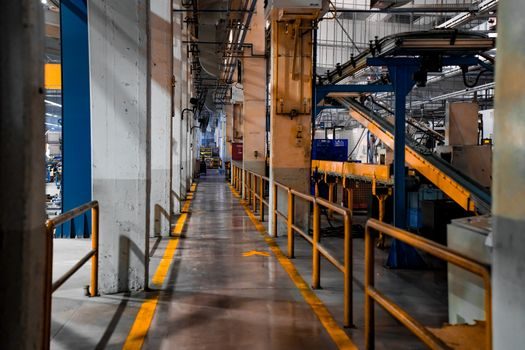
In-line machine-vision on DRAM lines now uses 5-megapixel smart camera modules with sub-pixel alignment to verify laser-mark OCR, lead coplanarity ≤0.05 mm, and substrate warpage before tray load, replacing human visual sort [S3].
Process-side, ultra-pure water (UPW) and clean-dry-air (CDA) distribution on a DRAM fab is metered by flow meter arrays with HART or IO-Link output, feeding the SPC historian and triggering auto-shutdown if resistivity drifts outside 18.2 MΩ·cm at 25 °C, since UPW quality directly drives die-yield and ESD risk [S3][S5].
Pressure Transmitter and Smart Meter: Utilities That Gate the Line
Compressed dry air, N₂ purge and vacuum for handler pick-and-place are monitored by pressure transmitter nodes rated for Class 1 cleanroom, with 4–20 mA + HART output into the line-side PLC for closed-loop control of vacuum cup lift [S3].
Facility-level energy and DI-water consumption are tracked by smart meter clusters on the back-end sub-fab, providing the kWh-per-DRAM-bit telemetry that audit teams and ESG reporting increasingly require for 2026 sustainability disclosures [S3][S5].
Comparison: Manual, Semi-Auto and Fully-Automated Back-End DRAM Cells
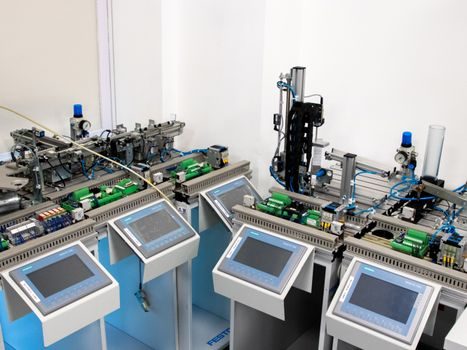
A useful selection grid: a manual cell at 1,000–2,000 UPH and ~3–5 ESD events per million handled; a semi-auto cobot cell at 5,000–8,000 UPH with ~1 ESD event per million; a fully automated AMR-fed cell at 15,000–25,000 UPH with sub-0.5 ESD events per million and full MES lot genealogy [S2][S3][S6].
Capex versus opex trade-off is sharp: a fully automated DDR5 module pack line typically needs 18–24 months and 8-figure USD investment, but trims direct labor by 60–70% and lifts OEE from ~55% on a manual line to ~80% on a connected line [S2][S3].
Standards, Security and Failure Modes That Must Be Designed In
Line-side, the dominant standard anchors are JEDEC JESD21-C for DDR4/DDR5 module configuration, JEDEC JESD220 for UFS packaging geometry where applicable, ISO 9001:2015 for the supplier QMS, and ISO 14644-1 Class 5–6 cleanroom for the handler bay [S2].
Cybersecurity for Industry-4.0 DRAM lines is now a first-class design input: published research identifies attacker paths through engineering workstations, MES SQL back-ends, and PLC firmware update channels, with mitigations including network segmentation, signed firmware, and unidirectional gateways between IT and OT zones [S6].
Common failure modes on a new back-end DRAM cell are substrate warpage out of spec at high temperature, handler indexer vibration drifting ±2 ms, ESD on ungrounded trays, and laser-mark OCR misreads on low-contrast black packages — each addressed by a specific sensor or recipe guard [S3][S5].
Who This Is For — and Who It Is Not For
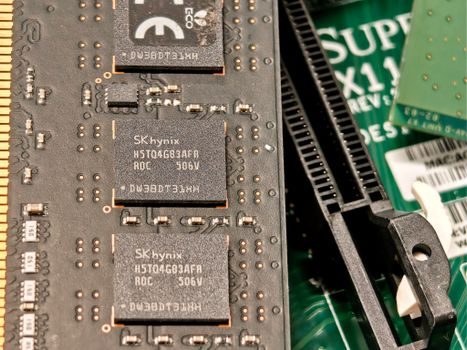
This automation map fits tier-1 and tier-2 DRAM IDM and OSAT fabs running DDR4/DDR5/LPDDR5X in volume, and OEM/ODM module assemblers in Anhui, Guangdong and Beijing that already hold ISO 9001:2015 certification and need a 6–9 month retro-fit window [S2][S3].
It is not a fit for low-volume legacy DDR3 niche runs under 1 million units per month, for R&D pilot lines where recipe changeover is daily, or for plants without a stable 18.2 MΩ·cm UPW supply — automation amplifies the upstream process, it does not fix it [S2][S5].
Trackable Signals to Watch Next
For a deeper read on the upstream process side — wafer probe, metrology gates and 2026 yield levers — see this DRAM process and metrology map; for the module-side PCBA and SMT line architecture that pairs with this back-end map, see the Smart Meter PCBA line reference and the EV Charger build-out specs which share the same PLC + cobot + AMR pattern. [S1]
Two trackable signals to monitor over the next two quarters: (1) the share of new DRAM back-end tools shipping with IO-Link Wireless instead of copper Ethernet for sensor backhaul, and (2) the number of OSAT lines publishing ESG-grade kWh-per-bit telemetry through smart-meter clusters at the sub-fab level [S2][S3][S5].