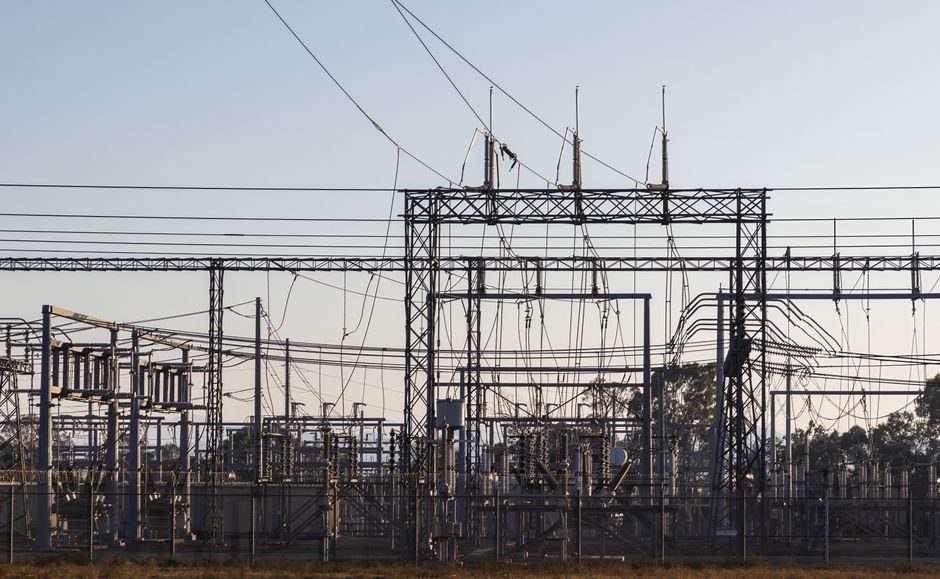
Air circuit breakers (ACBs) are the workhorse of low-voltage main switchgear from 630 A up to 6300 A, and selection reduces to four numbers on the nameplate: In (frame current), Icu (ultimate breaking capacity at the rated voltage), Icw (1 s short-time withstand), and the trip-unit protection curve [S3][S4].
Across current ABB SACE Emax 2 stock listings published in 2026-07, frame sizes E1.2 (630-1600 A), E2.2 (800-2500 A), E4.2 (up to 4000 A) and E6.2 (up to 6300 A) cover the LV main-incomer duty, with the E1.2 family alone offering 17 distinct Ekip Dip LI models from 250 A to 1600 A [S3]. For buyers comparing low-voltage options, this miniature circuit breaker price map covers the smaller moulded-case tier below 630 A that ACBs replace at the main bus.
Frame Size and Current Rating: Matching the Busbar
Frame size In is the first decision: pick a frame that brackets the design load current with 20-30% headroom so the breaker is not derated to its tripping threshold at full load. SACE Emax 2 E1.2 frames run 630-1600 A, E2.2 runs 800-2500 A, and E6.2 tops out near 6300 A for the largest LV mains [S3].
The ABB SACE Emax 2 datasheet also exposes a second tier labelled L (current-limiting), N (standard), S (high), and H (very high) — each tier is a different Icu/Icw pair at the same In, which is how one frame size covers multiple breaking capacities without changing the cubicle footprint. For the 250-1600 A duty, molded case circuit breaker price data shows MCCBs overlapping the lower ACB range, and the cutover point is usually where the Icw requirement exceeds 50 kA/1 s.
Icu and Icw: The Two Numbers That Define Safety Margin
Icu is the ultimate short-circuit breaking capacity (the breaker must safely clear the fault and may require service after), while Icw is the 1-second short-time withstand the breaker carries without tripping while a downstream device opens. The Terasaki TemPower 2 design philosophy published in 2026-07 states Icw equals Icu across all models, which means the frame is rated to carry the full short-circuit current through its short-time delay band [S3].
Common 415 V Icu bands seen in 2026 OEM literature are 42 kA, 65 kA, 85 kA, 100 kA, and 150 kA, with the E1.2B at the low end and E6 H-V at the high end of the SACE Emax family [S3]. Selection rule: Icu must be greater than the calculated short-circuit current Isc at the breaker terminals, with a 15-25% margin for fault-current contribution from large motor loads and generator paralleling.
Trip Units: Ekip Dip LI vs. Touch vs. Hi-Touch

The Ekip Dip LI is the entry-level thermal-magnetic trip unit in the SACE Emax 2 family, providing LI (Long-time delay + Instantaneous) protection only, with no metering or communication [S3]. Above it, Ekip Touch adds ammeter, trip logs, and Modbus/TCP communication, while Ekip Hi-Touch layers in power metering, protection for generators, and directional protections for paralleling schemes.
For a basic motor-feeder or transformer-secondary main with no energy-management scope, Ekip Dip LI is the cost-floor; for any data-centre or hospital LV main where discrimination with upstream MV relays and downstream MCCBs must be proven, the metering and event-log data from Touch/Hi-Touch is a real spec advantage, not a marketing line.
Withdrawable vs. Fixed Pattern: The Footprint Question
Withdrawable (draw-out) ACBs allow the body to be racked out for inspection or replacement without disturbing the cubicle wiring, and they are standard in data-centre and process-plant mains where downtime is measured in thousands of dollars per minute. Fixed-pattern ACBs are bolted into the cubicle and are 30-50% cheaper in first cost, with smaller footprints, but require a full cubicle shutdown for any trip-unit service.
Where the upstream transformer can be paralleled or a bypass switch is provided, fixed-pattern ACBs are defensible in commercial buildings. The air circuit breaker capacity guides on Alibaba list both formats, and most 2026 export offers default to withdrawable for any frame above 1600 A. The relevant circuit-breaker encyclopedia entry covers the broader LV/MV breaker family and is the natural reference if you are evaluating an ACB against a vacuum or SF6 alternative.
Selection Criteria Comparison: ACB vs. MCCB vs. MCB

ACBs cover 630-6300 A at 415 V with Icu from 42 kA to 150 kA, and they include full electronic trip units, communications, and zone-selective interlocking as standard [S3]. MCCBs (moulded case circuit breakers) cover 16-1600 A with Icu typically 10-85 kA, no draw-out option in the lower frames, and thermal-magnetic or basic electronic trips.
MCBs (miniature circuit breakers) sit below 125 A with Icu under 25 kA and are limited to final-distribution duties. If your feeder exceeds 1600 A, the Icw requirement exceeds 50 kA/1 s, or you need zone-selective interlocking for discrimination, ACB is the only correct tier. If the feeder is under 630 A with modest fault levels and no communication requirement, MCCB is the cost-correct choice and you will see the price bands detailed in the MCCB 2026 cost guide. The hard cut-off is fault duty, not preference: misapplying an MCCB above its Icu is the most common LV-switchgear failure mode in field reports.
Who Should NOT Specify a Standard ACB
Standard ACBs are the wrong choice when the system voltage is medium (3.6-36 kV), where vacuum or SF6 breakers apply, and when the available short-circuit current exceeds 150 kA at 415 V — the SACE Emax H-V tops out there [S3]. Marine and offshore applications usually require type-tested marine ACBs with DNV or ABS certification, not the standard IEC 60947-2 build.
For DC traction or battery-energy storage systems above 1000 V DC, a dedicated DC air circuit breaker or DC-specific moulded-case breaker is required because AC-rated arc-quenching designs will not safely interrupt DC. Buyers who specify a 415 V ACB for a 1500 V DC bus will pass acceptance at low current and fail catastrophically at the first bolted fault; this is the single most expensive wrong-spec error on the SACE Emax family.
Standards, Certification, and Sourcing
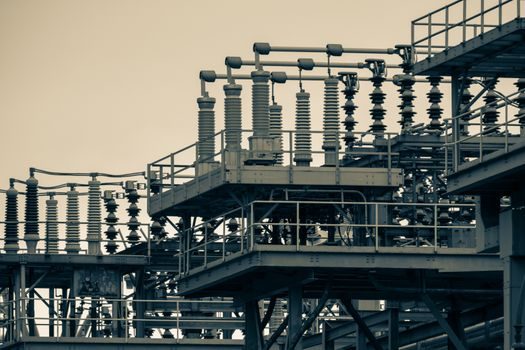
Low-voltage ACBs are governed by IEC 60947-2 for performance and testing, with regional variants including UL 1066 in North America and GB 14048.2 in China — the same breaker can carry all three certifications for global builds. Chinese OEM supply is concentrated in Zhejiang province, with suppliers such as Changcheng High-Tech Electric Group Co., Ltd. listing 10,000 sets/month capacity and exporting ACBs, contactors, and switchgear under mixed-payment terms (L/C, T/T, D/A, D/P, Western Union) [S2].
For volume orders, sourcing channels include Alibaba showroom listings, ECVV supplier pages, and made-in-China.com; the latter shows 2026-07 wholesale pricing on related Tuya Zigbee wireless smart remote-control single-phase 10-63 A ACBs in the $1.65-32.50 per-piece range depending on feature tier [S5]. Always require a type-test certificate for Icu/Icw, a coordination study with the upstream MV relay, and confirmation that the trip unit firmware is the current revision before accepting delivery. The next verification step on any ACB quote is to confirm the Icw value at the actual 1 s mark on the nameplate, not the 3 s value some manufacturers quote as a marketing number.
Spec-level background on the components involved: linear guide, and crossed roller guide.