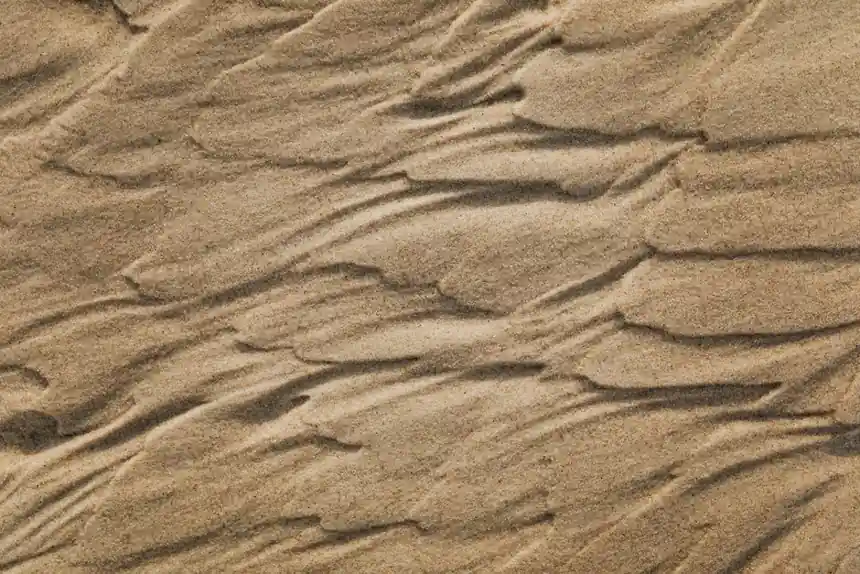
Air-assisted sand filling distributes molding sand more uniformly across a flask than a gravity sand drop, particularly on horizontal tight-flask molding systems [S5][S6].
The comparison applies to expendable green-sand and sand molds: aeration changes how the mold cavity is loaded, while gravity filling relies on sand falling under its own weight [S2][S8].
Why Air Filling Produces a More Uniform Sand Bed
Gravity filling has a relatively low filling rate because the sand depends entirely on gravity to enter and distribute through the mold cavity [S1]. In powder molding, free filling is a complex flow process whose uniformity and consistency directly affect the final quality of powder products [S1].
Aeration introduces compressed air into the sand stream or filling chamber, so moving sand is distributed across the full pattern-board area instead of falling preferentially into one region [S5]. Top aeration is specifically described as promoting uniform sand-filling density in the flask [S6]. That advantage is most relevant to wide, horizontal molds where the entire cavity must be covered before the pattern is withdrawn and the sand is compacted.
The result is not automatic. Air distribution, nozzle position, aeration pressure, sand moisture, and the sand mixer preparation all affect the bed that reaches the flask. Air filling can redistribute loose sand, but it cannot correct a sand system already carrying nonuniform moisture, poor flow, or contaminated grains.
Gravity and Air Filling Compared
Both methods use expendable sand molds, but they divide the equipment and operating requirements differently. The casting mold must still be formed, compacted, and handled after filling, regardless of how the sand arrives. [S3]
Gravity filling is mechanically simpler and generally suits conventional vertical flask molding, while air-assisted filling adds a compressed-air system and process controls. Aerated filling offers better lateral coverage of horizontal tight flasks, whereas gravity dropping remains practical where the sand falls directly into a cavity positioned below the pattern [S2][S5][S6].
The filling methods also differ in operating cost and environmental exposure. Warm or hot sand combined with compressed air can also produce condensation, creating a moisture-control requirement that a gravity drop does not create to the same degree [S2].
Process Requirements for a Uniform Aerated Fill
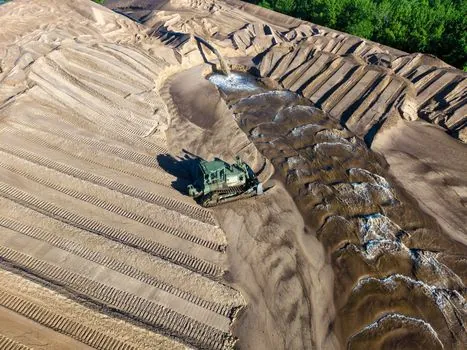
Uniformity depends on controlling the sand before air enters the mold, not on airflow alone. The sand cooler and mixer should control sand temperature and prepare a free-flowing mixture before the mold is filled. Warm sand plus compressed air can create condensation, while uneven moisture can produce local density differences that compaction may amplify rather than remove [S2].
Machine controls must distribute aeration across the mold width and avoid one-sided sand delivery. The documented operating distinction is clear: aeration fills the overall pattern-board area uniformly, while gravity filling depends on the falling stream and cavity position [S5]. On horizontal systems, the aeration sand tank provides low-pressure sand delivery designed to promote uniform flask density [S6].
Cycle time remains a separate selection criterion. Automated green-sand molding systems can exceed 400 molds per hour with little or no manual involvement, compared with the lower and more operator-dependent output of manual systems [S2]. The related automatic molding line cycle rate and cost analysis provides a useful framework for evaluating that equipment decision separately from fill uniformity.
Where Air Filling Is the Better Choice
Air-assisted filling is strongest when the mold is wide, horizontal, or otherwise vulnerable to uneven gravity distribution. Tight-flask and horizontal molding arrangements are the strongest application because the sand must cover the full pattern area before compaction [S5][S6]. Aeration is also relevant to automated green-sand lines where repeatability, flask coverage, and reduced manual handling are priorities [S2].
Gravity filling remains appropriate for small or moderate vertical flasks, simple mold equipment, and production plans that do not justify compressed-air infrastructure. It is less complex because no aeration pressure system is required.
Air filling is not the right selection for a foundry whose priority is minimum capital equipment, minimum energy use, or the simplest possible maintenance regime. It also does not replace sound pattern withdrawal, mold compaction, or sand preparation. The mold base and flask system still determine alignment, wall support, and resistance to distortion after the sand enters the cavity.
Limits, Failure Modes, and Practical Checks

Three failure paths should be monitored. First, insufficient aeration leaves the same weak lateral coverage that motivates the process. Second, excessive or uneven airflow can disturb the bed or create nonuniform sand depth, so airflow must be adjusted against sand condition rather than fixed for every flask. [S1]
Condensation is the third path. Because a blow-fill machine consumes 3 to 4 times the compressed air of a gravity-fill machine, warm sand can combine with moisture in the airstream and create condensation [S2]. Equipment planning must account for compressed-air capacity, drainage, temperature control, and maintenance access to aeration components.
Inspection should include sand depth across the flask, density near the pattern edges and center, compaction consistency, and defect trends such as sand inclusion or mismatch. Sand molds tolerate low filling speeds and pressures because they are relatively fragile, so the fill method must avoid impact loading that erodes the cavity or damages pattern geometry [S4]. A qualified sand blasting machine should not be confused with an aeration system: one prepares or cleans surfaces, while the other meters air to support sand distribution.
Practical Selection Basis
Choose air-assisted filling when mold geometry makes full-area coverage difficult, especially in horizontal or tight-flask production, and when the line can support 3 to 4 times the compressed-air consumption associated with gravity filling [S2][S5][S6]. Choose gravity filling when the vertical mold geometry permits direct fall, compressed-air capacity is constrained, or equipment simplicity outweighs improved lateral distribution.
No airflow pressure, fill time, sand moisture value, or density tolerance should be copied from a generic specification. Those values depend on the sand grading, binder system, flask size, pattern geometry, and machine configuration. The defensible comparison is process-based: aeration provides more uniform full-area coverage, gravity filling requires fewer pneumatic controls, and condensation management is the sharper operating constraint for the air-assisted route [S1][S2][S6].
The next verification step is a controlled flask trial: hold flask size, sand batch, moisture, pattern, and compaction constant, then compare full-area density and thickness between gravity drop and aerated filling while recording compressed-air consumption.