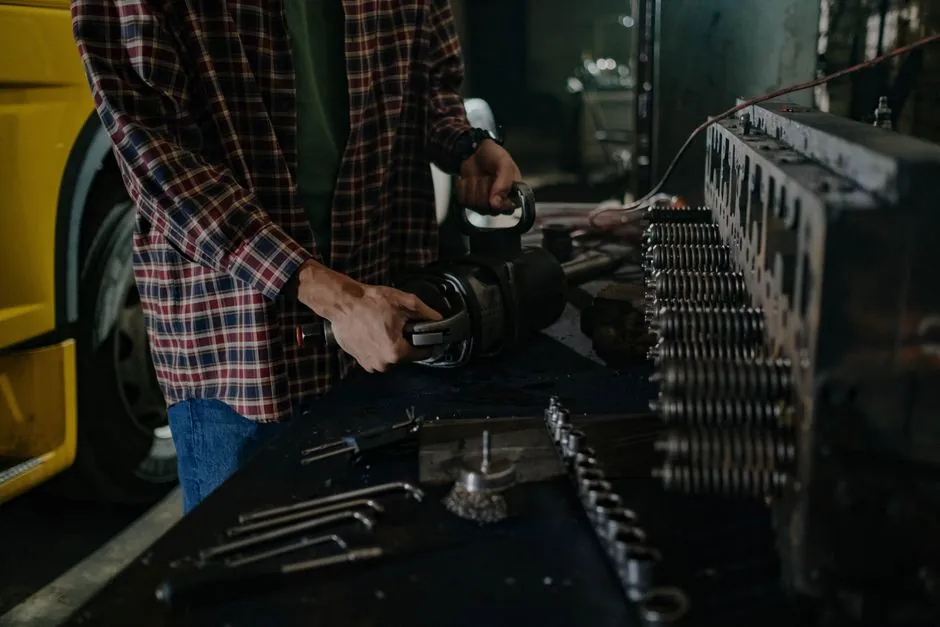
An air impact wrench on an HVAC install lives harder than the same tool in a repair bay: dust from sheet metal, moisture from rooftop condensers, and the temptation to skip teardown between trades all shorten service life. The fix is a defined lubrication interval, a clean air supply at 90 to 120 PSI, and separation between the air-motor lube path and the impact-mechanism lube path [S1][S4].
HVAC crews pull the wrench into sheet-metal screw, duct-flange bolt, condenser-fan mount, and refrigerant-line bracket duty in a single shift. Each of those tasks loads a different torque band, so a 1/2" drive 150 to 750 ft-lb class tool covers the bulk of work, while a 3/4" 750 to 1200 ft-lb unit is reserved for large condenser base and structural anchor bolts [S4]. Pipe and adjustable wrenches remain the workhorse for flare and threaded line joints, but the air impact wrench handles repetitive fastener cycles that a hand tool cannot.
Two Lubrication Paths, Not One
Pneumatic impact wrenches carry two independent lube circuits: the air motor through the inlet, and the impact mechanism through its own grease fitting, oil port, or hammer-case service [S1]. Treating them as a single oil point is the most common on-site error and leads to either dry-hammer failure or oil-saturated motor vanes. Manufacturer guidance for the motor side calls for pneumatic tool oil applied to the inlet, with one source specifying 2 to 5 drops per session and another recommending 10 to 15 drops for corrosion protection before storage [S1][S2][S6].
The impact mechanism typically takes a different lubricant, applied through a flush-mounted grease fitting with a hand grease gun, or via hammer-case removal for direct service [S1]. A field shortcut of spraying WD-40 into the inlet has been reported by users as a short-term recovery move for a sluggish tool, but it is a solvent, not a lubricant, and leaves the mechanism dry once it evaporates [S3]. Lube quantity and interval are model-specific, so the product manual, not tribal knowledge, is the controlling document [S1].
Air Supply: The Hidden Half of the Routine
Compressor air at 90 to 120 PSI with a 30 gallon minimum tank and a CFM rating at least 25% above the tool nameplate is the working envelope published for general industrial service [S4]. A moisture separator, an inline lubricator, and a correctly sized hose with quick-connect fittings sit between the tank and the tool; the goal is to keep water, rust, and particulates out of the motor [S1][S4]. A daily bleed of the tank drain is the cheapest preventive step a crew can take on a humid rooftop.
Hose and coupler inspection belongs in the pre-shift walk-around, not after a failure. Cuts, kinks, and contaminated couplings act as leak points that drop the wrench below stall pressure, forcing the operator to compensate with longer trigger time, which overheats the hammer case. Working through a torque wrench tester periodically, the same way a fleet shop does, is one way to confirm that a suspect tool is still inside its torque band before it strips a duct fastener on a live air handler.
Failure Modes Mapped to Their Root Cause
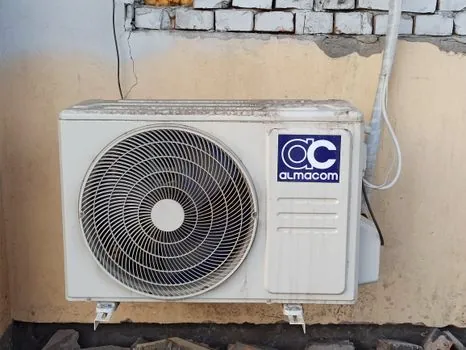
Symptom to root cause mapping is faster than guessing. A wrench that loses power under load usually traces to low supply pressure, an undersized hose, or a clogged inlet screen, not a worn hammer [S1][S4]. A wrench that runs but fails to impact is almost always a dry or gummed-up impact mechanism, fixed by the grease-fitting service path rather than more inlet oil. A wrench that leaks air at the handle has a failed seal or a loose housing screw and should come off the truck until the seal is replaced, not run on a regulator turned up to compensate.
Water in the exhaust is a supply-side problem and a signal to fit or service the moisture separator. Overheating after a few minutes of continuous use is a duty-cycle issue; most industrial 1/2" impacts are rated for intermittent duty, and a duct-hanging sequence with back-to-back fastenings pushes the tool into thermal limit. The corrective action is a 30 to 60 second cool-down, not more lubricant, which only adds to the oil carry-over that contaminates downstream regulators.
Comparison of Routine Options
Three routine options dominate HVAC field practice, and the choice hinges on crew size and tool count. First, an inline lubricator on every drop with manual greasing of the hammer case: lowest per-tool cost, highest consistency, best fit for a four-wrench crew. Second, manual inlet oiling per session with periodic hammer-case service: lowest hardware cost, but relies on the technician remembering the 2 to 5 drops before each use [S1][S6]. Third, no in-line lubrication, solvent flush only when sluggish: lowest compliance, shortest tool life, and the route that one DIY account credits for keeping an old tool alive while OEMs explicitly warn against the solvent-only path [S1][S3].
Selection criterion, in order of weight, is uptime, then lubricant cost, then labor cost of the routine itself. The inline-lubricator path wins on uptime because it never skips a cycle; the manual-oiling path wins on simplicity for a single tool used occasionally; the solvent path loses on every criterion except initial effort and is the one to retire.
When Not to Repair in the Field

A cracked hammer case, a bent anvil, or a seized motor is the end of a field repair and the start of a service-center or replacement decision [S1]. Continuing to run a tool with a known cracked housing turns a serviceable problem into an OSHA recordable the first time a fragment exits the case. Similarly, a tool that has been run on unfiltered, wet air long enough to show surface rust inside the motor is no longer a lubrication candidate; the vanes and rotor need inspection, and the line upstream needs a separator before any new tool is plumbed into it.
Acceptance criteria after any service are simple and testable: the tool reaches rated torque on a tester, the exhaust runs dry after the regulator is bled, and the housing temperature after a 30 second loaded run is below the threshold the manufacturer lists in the manual [S1]. A tool that fails any one of those three checks is a bench job, not a truck job. For crews building a maintenance program from scratch, the flange and torque-sequence workflow for HVAC duct work and the vibratory-feeder maintenance logic both follow the same symptom-cause-criterion pattern and are worth pairing with this routine.
The next trackable signal for any HVAC service manager is a per-tool run-time log tied to lube events: a wrench that asks for grease every 40 hours versus one that asks every 120 hours is telling you something about its air supply. Pair that log with monthly drain samples from the compressor tank, and the data is enough to spec a new air quality monitor or retire the wet-air source feeding the fleet.