
A wet-mix shotcrete pump that loses prime at the swing tube, a dry-mix gun with a worn rubber friction pad, and a blocked nozzle air ring all share one root cause: a maintenance task that was on yesterday's list and did not get done. Field practice, consolidated in the American Shotcrete Association's 2005 wet- and dry-mix checklists and reaffirmed in 2024 industry guidance, treats daily inspection, wear-part replacement, and hydraulic system service as three non-negotiable work cycles [S2][S4].
The work is not exotic. Crews who run a shotcrete machine at production rates are the same crews who grease the pump, swap a 50 mm hose gasket, and flush the wash box before the truck rolls. The payoff is mechanical: most of the items that shut a job down are inexpensive wear parts whose failure is visible in the half hour before it strands you [S2].
Daily Wet-Mix Inspection: Six Steps Before the First Pass
Wet-mix shotcrete pump manuals list grease points and engine service, but three high-cost items live in the troubleshooting section and must still be checked every shift: swing-tube-to-cutting-plate leakage, cement-paste accumulation in the wash box, and fitting looseness caused by vibration [S2]. Concrete pump service guidance published in March 2024 adds hydraulic-hose, fitting, and seal inspection for cracks, leaks, and corrosion, plus filter and fluid-level verification, to the same daily routine [S4].
The full pre-pour wet-mix checklist runs through eight line items: grease all daily lube points, scan the wash box for cement paste, top off engine, hydraulic, and fuel levels, tap the air-filter housing for excess dust, walk the machine for fluid leaks, confirm both faces of the radiator are clear of dirt (overheating is a leading cause of hydraulic pump failure on enclosed-hood shotcrete pumps), and lower the outriggers before pumping starts [S2]. Outriggers are a stability issue as much as a maintenance one; an un-level pump amplifies swing-tube wear on the downhill side.
Dry-Mix Gun Wear: Pads, Bowls, and the 5-Minute Parts Rule
For dry-mix guns, the operator's daily habit is a visual check of the bowl or barrel steel and the rubber friction pads during clean-up. Excess blow-by of material between pads and steel during operation points to one of three causes: an over-tightened clamping system, a bowl that needs shimming, or a barrel that has drifted off-centre [S2]. Each is a 30-minute field fix; ignored, the worn steel cuts a fresh rubber pad in a single shift.
Spare-parts logistics for dry-mix crews centre on wear items that fail without warning: rubber wear pads for the gun, bowl or barrel wear-steel plates, conical spout liners (for barrel-type rotary guns), goose-neck liners, two-inch (50 mm) hose gaskets for four-prong air fittings, water rings, and needle valves for the nozzle [S2]. The field rule of thumb from the ASA technical tip: if the work area is more than 5 minutes from the truck, trailer, gang box, or parts bin, carry spares on the platform. Job shutdowns waiting on a missing part are where margins die.
Hydraulic System and Lubrication: The Service-Interval Layer
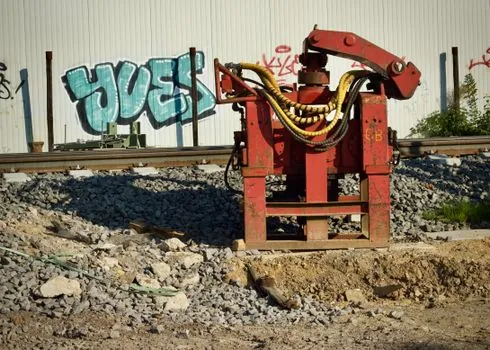
Hydraulic power is what separates a productive wet-mix pump from a stranded one, and the failure modes are predictable. Hydraulic hoses, fittings, and seals take the most punishment and need scheduled inspection for wear and damage; the hopper, boom, and pipeline get scanned for cracks, leaks, and corrosion on the same walk-around [S4]. Bearings, pistons, and cylinders need lubrication at the manufacturer-specified interval using the recommended grease, not a general-purpose substitute.
Filter and fluid service follows a running-hour counter rather than a calendar. Wet-mix pump manuals publish oil and filter change intervals that must be logged, not estimated. A concrete pump that runs hot from a clogged radiator face will derate the hydraulic system, and operators learn to read gauge behaviour as a leading indicator rather than waiting for an over-temperature alarm [S2][S4]. The same logic applies to air-filter dust load on diesel-driven pumps: a restricted filter starves the engine, which drops hydraulic flow, which slows the swing tube and starves the nozzle.
Cleaning, Storage, and Material-Line Care
Cleaning is preventive maintenance disguised as cleanup. After every pour, the hopper, pipeline, and boom need a water flush to clear residual concrete before it hydrates inside the line; the discharge chute and the area around the hopper lip are the spots that build up first and crack off into the next load [S4]. For shotcrete, the equivalent task is the wash-box paste check and the nozzle air-ring clean, both of which double as a wear inspection.
Storage conditions are specified by the pump OEMs and worth following: a dry, sheltered location out of direct sun, with the machine covered or tarped against dust and moisture [S4]. Freeze-thaw damage to trapped wash water inside the pump or material line is a common spring start-up failure that the September 2023 concrete maintenance guide ties directly to water infiltration through unsealed cracks and joints [S5]. Pump storage and concrete substrate storage share the same enemy: water left where it should not be.
Nozzle, Hose, and Air-System Wear Parts
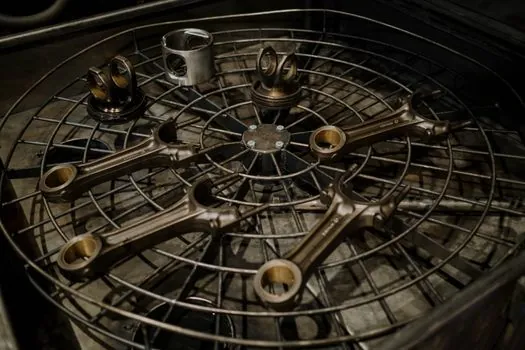
The nozzle is the part of the shotcrete machine that touches every square foot of placed cement concrete, and its consumables fail predictably. The wet-mix nozzle checklist runs 18 line items: air-hose grommets, hose bands, air-hose repair ends, whip checks, water-hose washers and repair ends, concrete clamps and gaskets, concrete-clamp safety pins, nozzle tips and tip clamps, pipe fittings, ball valves, nozzle body repair kits, nozzle air rings, hose adapters, fuel filters for the compressor and pump, and hand tools for hose and leak repair [S2].
The dry-mix equivalent is shorter but more material-specific: material-hose fittings and the screws that hold them, water-hose gaskets and repair ends, bull-hose whip checks, 50 mm hose gaskets for four-prong air fittings, hose bands, nozzle tips, water rings, nozzle body backup washers and backup, needle valves, rubber wear pads, bowl and barrel wear-steel plates, goose-neck liners, conical spout liners, spare nuts and bolts, hand tools, air-motor oil, and spare parts for the water trap and oiler on the gun [S2]. Crews who self-perform vertical and overhead shotcrete repairs, including those using small-format peristaltic pumps that handle up to 50 ft of material line, run a hybrid of these lists because the equipment family borrows wear parts from both wet and dry traditions [S3].
Comparison: Wet-Mix vs Dry-Mix Maintenance Burden
Four decision criteria line the two machine families up clearly. (1) Daily mechanical checks: wet-mix pumps are dominated by swing-tube and wash-box paste inspection, plus engine and hydraulic fluid levels; dry-mix guns are dominated by bowl, barrel, and rubber-pad visual checks during clean-up, with no engine or hydraulic system on a basic rotary gun [S2]. (2) Wear-part cost per shift: wet-mix parts (concrete clamps, gaskets, nozzle air rings) are higher unit-cost but lower frequency; dry-mix parts (rubber pads, wear-steel plates, water rings) are lower unit-cost but replaced more often. (3) Spare-parts inventory size: wet-mix crews carry roughly 18 line items; dry-mix crews carry roughly 20, but the dry-mix list skews toward small, low-cost consumables [S2]. (4) Operator skill profile: wet-mix maintenance leans on hydraulic and engine literacy; dry-mix maintenance leans on mechanical-fit and hose-coupling skills.
When to Repair vs When to Escalate
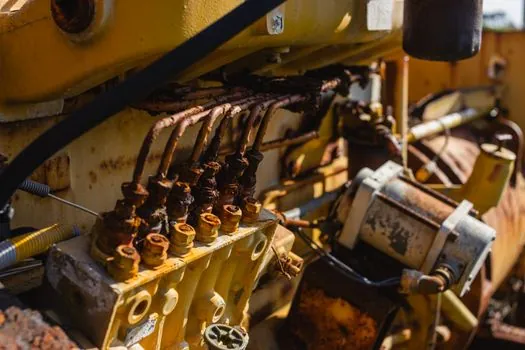
Field-level repair covers the wear parts on both checklists: rubber pads, wear-steel plates, gaskets, nozzle tips, water rings, hose bands, and air-hose repair ends are all bolt-on or clamp-on items a competent operator swaps in minutes [S2]. Hydraulic-hose replacement, hopper crack repair, and boom-section structural work cross into technician territory and need qualified personnel with OEM parts, per March 2024 industry guidance [S4]. A pump showing chronic swing-tube blow-by after repeated gasket and shim adjustments usually means the cutting plate or tube itself is worn past field tolerance; that is a service-shop replacement, not a jobsite fix.
Operator training is the gate that decides which path a crew takes. The same March 2024 source flags comprehensive operator training in safe procedures, preventive maintenance tasks, and wear-part recognition as the difference between a crew that runs a hose gasket swap in five minutes and one that waits two hours for a fitter [S4]. For broader context on how consumable-heavy maintenance programs show up in other equipment classes, the sourcing logic for circular-saw consumables is a useful parallel: small parts, frequent swaps, high downtime cost if the bin is empty. On the placement side, aerial work platform uptime on the same job site depends on the same grease-and-inspect discipline that keeps a shotcrete pump shooting.
Two signals worth tracking through the rest of 2026: OEM-published running-hour service intervals for current-model wet-mix pumps, and any revision to ASA wet- and dry-mix technical tips that consolidates peristaltic and small-format shotcrete pump checklists. Crews that lock both into a single laminated card per machine tend to be the ones that finish a shift without a service call.
See also our earlier report, IBC tank selection for warehouse automation: size, material, and integration criteria.