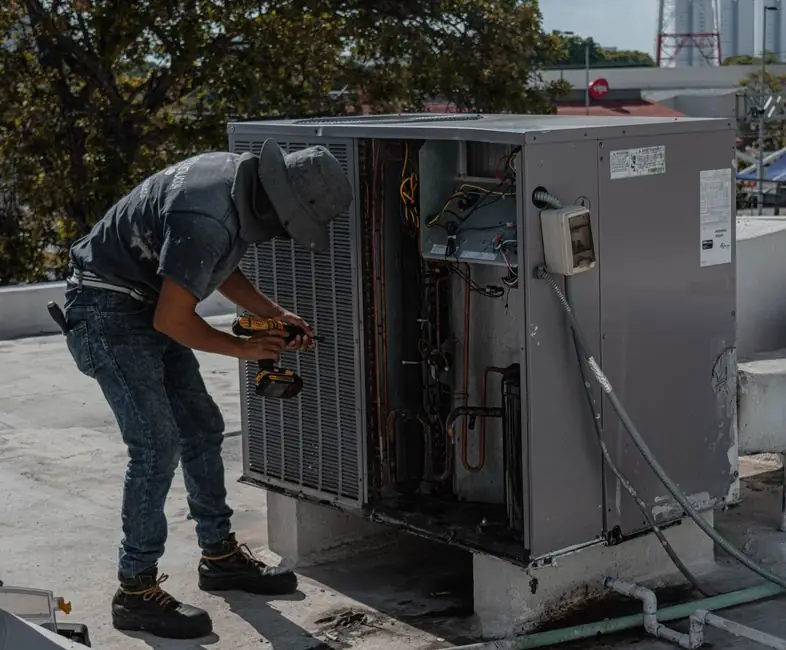
A 3/8-inch drive pneumatic impact wrench delivering 230-450 ft-lb (310-610 Nm) of working torque covers the bulk of HVAC installation work, from sheet-metal screw driving to M10 stud fastening on condensing-unit brackets, while 1/2-inch drives step in for heavier 3/4 inch and above line-set bracketing [S5][S6].
HVAC crews run compressor lines, ductwork, split-system mounting brackets, and gas-fired furnace flues, and the fastener portfolio spans #8 self-drillers through 1/2-inch lag bolts, so drive size, torque ceiling, and air consumption are the three numbers that decide which tool goes in the bag [S1][S2][S3].
Drive Size Map for HVAC Fastener Populations
HVAC installation work clusters around three fastener sizes: #8 to #10 self-drilling sheet-metal screws for ductwork, 5/16 inch to 3/8 inch hex lag bolts for condensing-unit and air-handler brackets, and 1/2 inch through-bolts for commercial rooftop curbs [S1][S4]. A 3/8-inch impact wrench handles the first two cleanly because standard 3/8-inch drive impact sockets and nut setters cover the full #8-3/8 inch range, and 3/8-inch drive anvil shanks are the common stocking item for HVAC service trucks [S5].
1/4-inch drive impacts are too small for production HVAC work, since the limited bolt capacity below M8 forces operators to double-up or pre-drill, and 1/2-inch drive impacts are oversized for residential split-system work, leaving extra weight on the wrist without usable benefit. For sheet-metal screw driving, a 3/8-inch nut-setter extension with a magnetic 1/4-inch hex sleeve is the workhorse; commercial rooftop crews graduate to 1/2-inch drive for curb and rail fastening where 1/2-inch bolts are standard [S4][S6]. A 3/8-inch pneumatic unit in the 4.0-5.0 cfm at 90 psi class is the typical stocking recommendation, and the same drive platform supports both a compact 1/2-inch unit for line-set bracketing and a dedicated impact drill for hole saw work on plenums.
Torque Window: Working Torque, Not Peak Rating
Peak torque ratings on 3/8-inch pneumatic impact wrenches in the HVAC service range run 330-600 ft-lb (447-813 Nm), but working torque in fifth-second impacts lands closer to 230-450 ft-lb (310-610 Nm), which is the figure that matters for fastener stretch and thread life [S5][S6]. Sheet-metal #8 screws only need 15-25 in-lb of seating torque, so an impact on its lowest regulator setting is the correct application; a 3/8-inch unit over-gunned on a #8 will snap the screw head and chew the hex.
Condensing-unit mounting lags at 5/16 inch need roughly 90-130 ft-lb of seating torque, well inside the working range of any 3/8-inch tool; 3/8-inch lags take 180-260 ft-lb, which is where the 1/2-inch drive starts to earn its place. Compressor hold-down bolts at 1/2 inch in commercial settings need 300-400 ft-lb, and at that point a 1/2-inch drive pneumatic impact in the 750-1,000 ft-lb peak class is the correct tool, not an over-gunned 3/8-inch unit [S5]. Technicians who cannot reach the working torque on a 1/2-inch bolt with a 3/8-inch tool should stop, not add extensions, and switch drives to avoid rounding the fastener head.
Air Supply, Hose, and Filter Prep

A 3/8-inch pneumatic impact in the HVAC service class consumes 4.0-5.0 cfm at 90 psi (113-141 l/min at 6.2 bar), which mandates a 3/8-inch ID hose at minimum and a 1/2-inch ID hose above 25 ft to keep the tool in its working pressure window [S5]. A drop below 80 psi at the inlet drops working torque by 20-30% on twin-hammer designs, which is the mechanism behind most under-torqued condensing-unit complaints on hot rooftops.
A dedicated air filter and lubricator drop is non-negotiable for HVAC truck work, since dust ingestion and moisture are the top two failure modes for twin-hammer impact mechanisms; a 5-micron particulate filter plus a regulator-lubricator with ISO VG 32 oil at 1-2 drops per minute is the standard prep, and crews running without it should expect 200-400 hour rotor life instead of the rated 800-1,200 hours [S5][S6]. A 1/4-inch regulator on the tool body, not the truck manifold, gives the operator a usable throttle for switching between sheet-metal screws and lag bolts on the same job. Tools in the HVAC line that fail to reverse under load typically have a fouled air solenoid valve in the reversing mechanism, not a worn motor, so the first service step is the filter and oiler, not teardown.
Vibration, Weight, and Shift-Length Ergonomics
Air impact wrenches in the 3/8-inch HVAC class weigh 2.8-4.0 lb (1.3-1.8 kg) bare, which over a full ductwork shift translates to 15-25 lb of cumulative hand-arm load for a two-man crew, and that is the threshold where vibration-damped handles start to matter [S5][S6]. A standard 3/8-inch twin-hammer at 8,000-10,000 rpm free speed produces 8-12 m/s² of three-axis vibration at the handle, which over a 2-hour shift pushes into the threshold limit value (TLV) zone for hand-arm vibration exposure on ISO 5349 / ISO/TR 19664 guidance, so crews on long rooftop installs should rotate operators or step down to a 1/4-inch tool for finish work.
Pistol-grip tools dominate HVAC because the work is mostly under-chest height on ductwork, and a D-handle or straight-handle 3/8-inch only earns its place on floor-mounted commercial air handlers where the operator works overhead. A 3/8-inch pneumatic impact with a composite shell and a through-bolt motor housing is the standard pick for the rooftop crew, while the interior finisher model prioritizes weight over torque ceiling.
Comparison: 3/8-Inch vs 1/2-Inch Drive for HVAC Work

The decision line between 3/8-inch and 1/2-inch drive pneumatic impacts on an HVAC truck sits at the 3/8-inch lag bolt, not at the condensing-unit bracket, which is a common mis-spec in service-van stocking [S5][S6]. Crews that carry only 1/2-inch over-gun the 5/16-inch work, while crews that carry only 3/8-inch stall on the 1/2-inch compressor hold-downs, so the practical stocking answer is one of each, not one or the other.
Criteria-based comparison: 3/8-inch drive delivers 330-600 ft-lb peak, 4.0-5.0 cfm air draw, 2.8-4.0 lb bare weight, and covers #8 screws through 3/8-inch lags; 1/2-inch drive delivers 750-1,200 ft-lb peak, 5.5-7.5 cfm air draw, 4.5-7.5 lb bare weight, and covers 3/8-inch through 1/2-inch structural bolts. Cost: 3/8-inch units list 25-40% below 1/2-inch in OEM catalogs, so the case for skipping the 1/2-inch is short-term budget, not workflow [S5][S6]. Crews running 90% residential and 10% commercial should keep a 3/8-inch primary and a borrowed 1/2-inch for the rare 1/2-inch hold-down; crews running 50/50 should own both, because renting the 1/2-inch once a quarter costs more than a year of ownership on a mid-tier unit.
When NOT to Use a Pneumatic Impact on HVAC Work
Refrigeration line flare nuts are the single biggest misuse case, and any HVAC tech torquing a 3/4-inch or 7/8-inch flare nut with an air impact is over-torquing the seal, which leads to leaks 6-18 months post-install [S4]. A flare nut must be hand-tightened to seat and then advanced with a torque wrench tester or a beam-type torque wrench to the OEM spec, typically 35-55 ft-lb for 3/4-inch line sets, which is below the practical torque floor of any air impact.
Likewise, copper-to-brass flare connections on condensate traps, refrigerant access valves, and Schrader core fittings should never see an air impact, because the joint design is a compression seal, not a thread-locked mechanical joint. Sheet-metal screws on a flex-duct connection should be driven by a regulated drill or a clutched impact on its lowest setting, not a full-power air impact, because the goal is to dimple the screw head into the sheet, not to clamp it, and over-driving cuts the screw shank. Gas-fired furnace flue assemblies that use self-tapping sheet-metal screws into 24-gauge galv steel also fall in this category, and a clutched drill is the correct tool. The rule of thumb: if the fastener is below 1/4 inch or is a flared/compression joint, the air impact stays in the bag.
Acceptance Test and Field Verification
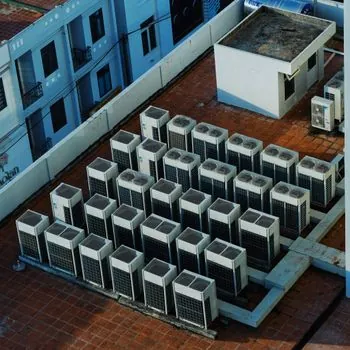
After any air impact pass on an HVAC bracket, a 5-second hand-feel torque audit on every 10th fastener with a calibrated beam wrench catches the under- and over-torque distribution that the impact cannot report [S5]. A correctly calibrated 3/8-inch twin-hammer at 90 psi should land a 5/16-inch lag within +/-15% of the target seating torque, and any reading outside that window points to a worn hammer mechanism, not a bad fastener lot.
Field test values: a 3/8-inch pneumatic at 90 psi inlet should free-run 8,000-10,000 rpm with a 4-5 cfm draw, and a 0-100 psi in-line gauge at the tool body should hold within 5 psi of the truck regulator under load. If the in-line gauge drops more than 10 psi, the hose is undersized, the filter is clogged, or the compressor is undersized for the duty cycle, and the cure is upstream of the tool, not a new impact. For ductwork fastening rate, an experienced two-man crew with a 3/8-inch impact and a sheet-metal screw collated feed should hit 120-180 screws per hour on residential trunk runs; any rate below 90 points to a tired operator, a dull hex, or an under-air tool, and the diagnostic order is air, fastener, tool, operator.
Next signal: monitor ISO 28927-2 vibration emissions on twin-hammer impacts in the 3/8-inch HVAC class, since 2026 OEM data sheets are starting to publish tri-axial m/s² values that let crews set time-on-tool limits, and the same standard will gate procurement decisions on commercial contracts through 2026-2027. Crews that need a parallel reference for heavier structural bolting work can compare notes against the steel-construction bolting spec map, where the torque and drive logic scales up but the air-prep rules do not change.