
Bridge bolting gangs typically run two wrench classes in parallel: a 3/4" drive model rated 1000-1356 N·m (740-1000 ft-lb) at 4500 rpm for structural steel erection [S2], and a 1-1/2" utility-class model weighing 14.5-16.0 kg (32-35 lb) with a 2" anvil for suspender and anchor-cable terminations [S4].
Air pressure is held at 90 psi (6.3 kg/cm²) at the tool inlet, free speed runs 4000-4500 rpm, and average air consumption sits at 11.2 scfm (25% duty) for the 3/4" twin-clutch class [S2]. These three numbers (pressure, rpm, scfm) are the gate criteria a site air audit must clear before a wrench is uncased. For background on how an air impact wrench converts this airflow into torque, the drivetrain and twin-hammer/twin-clutch behaviour is covered in the reference entry.
Three Wrench Classes Matched to Bridge Bolting Tasks
Bridge erection separates naturally into three torque bands, and the 3/4", 1" and 1-1/2" drive platforms map onto them with very little overlap [S2][S3][S4]. Deck-plate splices (A325/A490 M20-M24) clear at 600-900 N·m and are commonly run with 3/4" drives producing 1000 ft-lb (1356 N·m) headroom [S2]. Main-girder flange splices (M27-M36) sit at 1500-3000 N·m and demand a 1" drive twin-hammer [S3]. Anchor-cable terminations and suspender pins cross 4000 N·m, which is the operating envelope of the 1-1/2" platform, with reference weight 14.5-16.0 kg and a 2" anvil [S4].
Picking the wrong class costs time: a 3/8"-1/2" ratchet wrench (commonly 60 ft-lb) cannot stall a 1" structural bolt, and a 1-1/2" tool is unsafe on a 16 mm handrail anchor [S1]. Site practice is to colour-code the wrenches by hose tag (green/blue/red) and lock the breaker-bar path so the heavy class never sees a small fastener. The 3/8" pneumatic ratchet (e.g. ACDelco ANW302A at 60 ft-lb) is reserved for cable-tray, signage and formwork assembly, not structural splices [S1].
Site Air Supply: 90 psi, 3/8" NPT, 11.2 scfm Floor
The 90 psi (6.3 kg/cm²) inlet pressure published for 3/4" twin-clutch models [S2] is the working point, not a peak. Plant practice on cable-stay and suspension jobs is to set the after-cooler regulator 5-10 psi above the tool rating and accept a 5 psi drop across 30 m of 3/4" hose. Compressor capacity should be sized at roughly 1.5x the nameplate scfm of every wrench on the line running simultaneously; for a four-gang deck crew, 4 × 11.2 = 45 scfm continuous becomes roughly 68 scfm of compressor output [S2].
Inlet thread on industrial 3/4" wrenches is 3/8" NPT, and air consumption at 25% duty is 11.2 scfm [S2]. Filtration matters as much as pressure: water-injected tanks without a refrigerated dryer will stall a twin-clutch within a shift on humid days, and a 5 µm particulate filter plus coalescing stage upstream of the hose is standard. The pneumatic ratchet cousins of the impact wrench family, covered separately in the air ratchet wrench reference, share the same filtration and pressure gate.
Torque Verification and Calibration on Site

Manufacturer torque figures are reference values, not acceptance numbers; every bridge spec (AASHTO LRFD, EN 1090-2, JTG/T F50) requires calibration against a torque wrench tester or a Skidmore-Wilhelm bolt tension calibrator before the wrench goes on the splice. The 1000 ft-lb (1356 N·m) class wrenches [S2] should be bench-checked weekly under the same 90 psi inlet and 3/8" NPT hose used in production, and the actual torque value (not free-speed stall) recorded against the bolt's snug-tight plus turn-past requirements.
Pneumatic tools drift with hose length, air temperature and wear on the hammer mechanism; a 10% drop from nameplate is a typical end-of-shift figure, and once a wrench reads under 90% of its rated torque it should be pulled and serviced [S2]. The same audit principle applies to smaller drives: a 3/8" ratchet tested at 60 ft-lb on a calibration bench [S1] gives the site confidence that cable-tray clips are not over-torqued into strip-out.
Hose, Safety and Ergonomics for Elevated Work
Two-handed grip, dead-man throttle, and side-handle on the 1-1/2" 14.5-16.0 kg platform are not optional on a girder [S4]. The tool mass itself (3.9 kg / 8.6 lb for a 3/4" model, 14.5-16.0 kg for the 1-1/2" class) is the primary ergonomic load, and reaction torque at 1000 ft-lb can break a wrist if both hands are not on the tool and a stabiliser handle is fitted [S2][S4]. Operators should also wear an air quality monitor or at minimum a CO badge when working in a pier-box where compressor exhaust can pool.
Whip-check cables on every hose connection, a 3/8" minimum hose ID on the 3/4" wrench line, and a 1/2" hose ID on the 1-1/2" wrench line are the typical floor for bridge erection. Hose length above 30 m on the 1-1/2" platform costs roughly 5-8 psi at the tool, which is enough to push the wrench below its rated torque band, so a 7-10 hp diesel booster is normal on long spans. Side-handle orientation should be re-checked at every shift change, and gloves with vibration-dampening palms are part of the standard PPE set on heavy bridge bolting.
Comparison: 3/4" vs 1" vs 1-1/2" Drive for Bridge Use
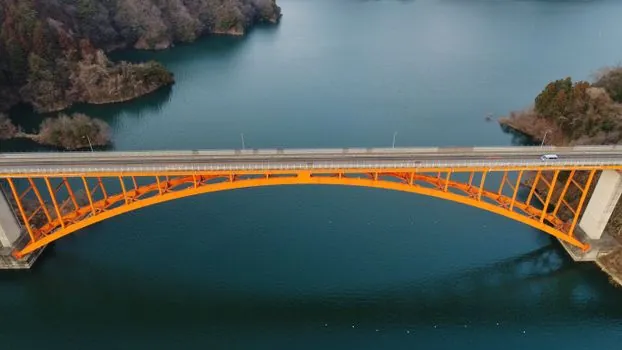
On a criteria-based read, the three platforms line up against four decision criteria. Torque: 3/4" = 1000-1356 N·m (740-1000 ft-lb) [S2]; 1" = up to 2700 N·m (2000 ft-lb) typical for utility 1" models [S3]; 1-1/2" = 4000+ N·m (3000+ ft-lb) for main-girder terminations [S4]. Weight: 3.9 kg (8.6 lb) for the 3/4" model [S2]; ~6-8 kg for 1" utility models; 14.5-16.0 kg for 1-1/2" [S4]. Air consumption: 11.2 scfm @ 25% for the 3/4" class [S2]; proportionally higher for the heavier classes. Bolt range: 3/4" drives M16-M24; 1" drives M22-M36; 1-1/2" drives M36 and above plus anchor-bar terminations [S2][S3][S4].
For deck splices, a 3/4" twin-clutch wrench is the workhorse and the cost-per-bolt is the lowest of the three platforms. For girder splices, the 1" drive is the only tool that completes the turn in 5-10 seconds without overheating, and the productivity delta versus down-rating with a 3/4" tool plus re-hit is typically 30-40%. For suspender and anchor-bar work, only the 1-1/2" 14.5-16.0 kg platform [S4] delivers the torque and the anvil size to drive the larger nuts without adapter stack-up that wastes inches of clearance on a stay-cable anchorage.
Procurement Pitfalls and Trackable Signals
The most common procurement error on cross-border bridge kits is buying a 3/4" wrench rated at 90 psi in a market where the compressor is set to 120 psi, which overspeeds the hammer and burns the anvil bushing in a week. Match the tool's rated 90 psi / 6.3 kg/cm² to the site regulator before signing off on the PO [S2]. A second error is treating 1000 ft-lb and 1356 N·m as the same figure; the 3/4" twin-clutch platform at 1356 N·m / 1000 ft-lb [S2] is the only one that covers both units, and mismatched nameplate numbers across bids are a sign the spec was not read.
Two trackable signals for the next quarter: published calibration drift curves on the 1" drive twin-hammer class, and a fresh batch of 1-1/2" 2"-anvil models at sub-15 kg weight as composite-housing designs mature [S3][S4]. For tooling in adjacent scopes on a bridge project, the overhead bridge crane reference covers the lifting side of girder erection, and the air pick entry covers the chipping and scarifying tools used in deck-concrete prep before the bolting gang arrives.
This topic is covered further in AGV Robot Selection for Food and Beverage: Hygienic Class, Payload, and Navigation Gates.