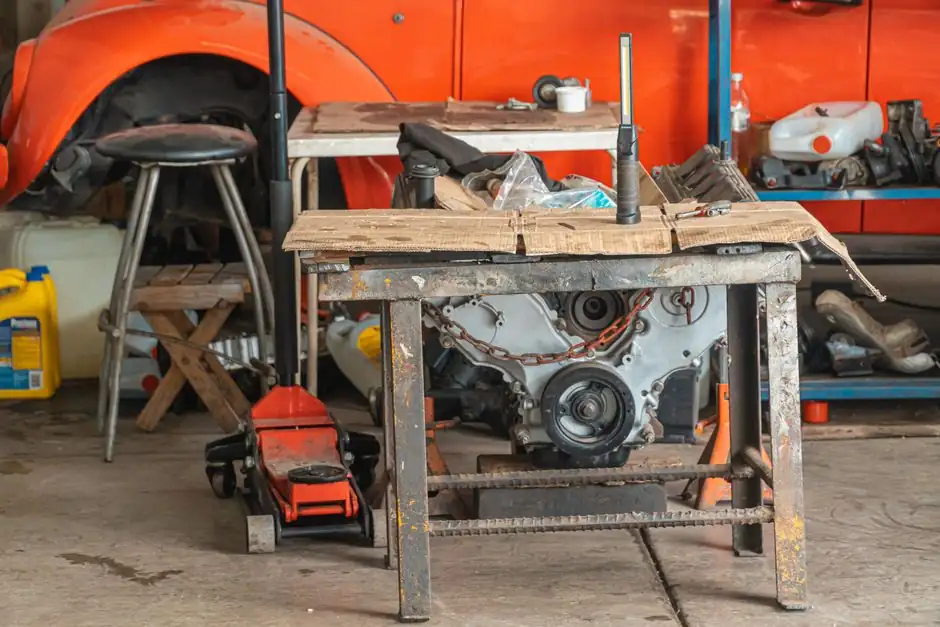
An air impact wrench is a pneumatically driven socket tool that stores angular momentum in a rotating hammer and releases it as short, high-torque impulses to the anvil, allowing operators to break loose or torque fasteners that a hand wrench cannot move [S3].
Compressed air remains the most common power source for impact wrenches, and the pneumatic platform spans 1/4 in (6.4 mm) drive units for small assembly through 3-1/2 in (89 mm) square drives used on major construction and heavy-equipment joints [S3]. Drive size, hammer mechanism type, and handle configuration are the three axes engineers use to classify and select a tool for a given job [S2][S4].
Classification by Drive Size and Typical Torque Envelope
Pneumatic impact wrenches are built around the same square-drive geometry as the socket sets they accept, so the drive dimension is the single most useful classifier when matching a tool to a fastener [S3]. The standard ladder runs 1/4 in, 3/8 in, 1/2 in, 3/4 in, 1 in, 1-1/2 in, and up to 3-1/2 in for the heaviest infrastructure work [S2][S3].
1/2 in drive is the workhorse for automotive service, plant maintenance, and general fabrication, and most catalog models in this class fall in the 500 to 1,300 ft-lbs torque band at 7,500 to 10,000 RPM free speed [S5]. 3/4 in drive picks up where lug nuts leave off and is standard for truck, agricultural, and structural-steel bolting. 1 in and 1-1/2 in drives are reserved for heavy industrial joints and large construction, where published peak torque reaches approximately 3,000 ft-lbs [S2]. Below 3/8 in, the same tool logic shrinks into assembly and instrumentation work, where 1/4 in drives dominate electronics and light-fixture assembly [S3].
The 1/2 in segment is also the most benchmarked: side-by-side tested models span 500 ft-lbs (ACDelco ANI405A) to 1,300 ft-lbs (Aircat 1250-K, Ingersoll Rand 2235QTiMAX) at 8,000 to 8,500 RPM, with measured sound levels from 85 dB to 105.2 dB on the same drive size [S5]. A useful working rule: larger drive square does not linearly multiply torque, but it does extend the upper end of the envelope by roughly 2 to 3 times between adjacent standard sizes [S2][S3].
Classification by Hammer Mechanism
The hammer mechanism is what actually converts the motor's continuous rotation into percussive torque, and mechanism choice drives both peak output and service life [S3]. Four families dominate the pneumatic category, each with a distinct torque-versus-speed and durability profile [S2].
Twin-hammer mechanisms use two opposed hammers striking a single anvil, producing two impacts per revolution, higher free speed, and a balanced feel that suits most general automotive and assembly work. Jumbo-hammer mechanisms stack larger hammer masses for the slowest but most powerful blow per cycle, used where peak torque matters more than cycle time. Two-hammer designs (sometimes a subset of twin) cover general-purpose service, while pinless-hammer mechanisms eliminate the wear-prone cam pins, trading some peak torque for longer life in dirty, high-vibration industrial environments [S2]. A separate ball-and-cam construction, common in older pin-clutch designs, is a closely related variant where the hammer slides on a spring-loaded cam rather than swinging on pins [S3].
The mechanism also sets the tool's reaction behavior: a design that releases the hammer after each strike means the operator feels only the motor's acceleration torque, not the peak fastener torque, which is why impacts of 1,000+ ft-lbs can be applied one-handed [S3]. Pulse tools, a related but distinct oil-pulse class used in production assembly, are reactionless and shut off at target torque, but are categorized separately from conventional impact wrenches because the impact mechanism is replaced by hydraulic pulse transfer [S3].
Classification by Handle Style and Body Configuration
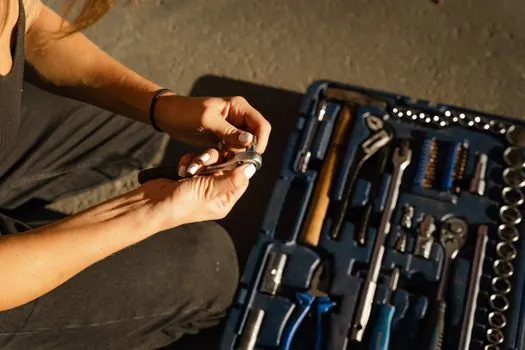
Handle geometry is the third classifier, and it tracks directly with the size and reaction load of the tool [S4]. Pistol-grip bodies are the most common configuration, with the motor inline and the grip below, and they dominate the 3/8 in, 1/2 in, and smaller 3/4 in drive classes where the operator can counter reaction with body weight [S4]. D-handle (enclosed pistol) and straight-handle configurations show up on 3/4 in and 1 in tools where two-handed control is required. Lever-start or rod-handle configurations (sometimes called "rocking dog" or "lever" wrenches) appear on the largest 1-1/2 in and 3-1/2 in drives used in construction and rail work, where the operator stands beside the tool and uses a separate reaction arm [S3][S4].
Body material is a secondary differentiator: composite housings reduce weight by roughly 0.5 to 1.0 lb versus cast aluminum at the same drive size, which matters for overhead or repetitive automotive work [S5]. A 1/2 in composite model such as the Aircat 1150 lists 900 ft-lbs at 9,000 RPM, demonstrating that composite bodies do not force a torque penalty at the workhorse drive size [S5].
Selection Criteria: Matching Tool to Job
Selection should start with the largest fastener on the job, not the average one, because under-spec'd pneumatic impacts stall or refuse to break the fastener loose and over-spec'd tools damage threads and joints [S2][S5]. For automotive lug nuts and light truck service, 1/2 in at 500 to 800 ft-lbs covers the common case. For heavy truck, agricultural, and structural M24+ bolting, step up to 3/4 in at 1,000+ ft-lbs. For pipeline, mining, and large construction joints, 1 in and 1-1/2 in drives are mandatory because they are the only standard drives that survive the reaction loads above ~2,000 ft-lbs [S2][S3].
Air supply is the often-forgotten fourth axis. A typical 1/2 in pneumatic impact consumes 4 to 6 CFM at 90 PSI; if the shop compressor is undersized, the tool runs but stalls at peak load [S2]. Pairing the wrench to an air impact wrench compressor sizing chart is as important as choosing the drive size. For shop applications where portability matters more than absolute peak torque, cordless electric impacts have displaced pneumatics in the 1/4 in to 1/2 in range since the mid-2000s, but pneumatic tools still dominate the 3/4 in and larger classes where the energy density of compressed air exceeds what a 18 to 28 V battery pack can deliver [S2][S3].
Comparison: Pneumatic vs. Electric vs. Hydraulic Impact Classes
Across the three main power platforms, pneumatic, corded/cordless electric, and hydraulic, the trade-off is energy density versus portability versus cost, and the answer depends on the drive size in use [S2][S3][S6]. A direct comparison on four criteria: peak torque ceiling, portability, cost-per-ft-lb, and operating cost, makes the split visible.
On peak torque, pneumatic 1 in drives reach ~3,000 ft-lbs, hydraulic tools span 500 to 2,500 ft-lbs in a more compact body, and cordless electric tops out around 1,500 ft-lbs in the 1/2 in class [S2]. On portability, cordless electric wins for site work without air supply, pneumatic requires a compressor and hose but has unlimited runtime, and hydraulic needs a separate power pack and is least portable [S2][S6]. On cost-per-ft-lb, pneumatic is the cheapest at the 1/2 in workhorse class, hydraulic is roughly 3 to 5 times the cost due to the power unit, and cordless electric sits between, dominated by battery replacement [S2]. On operating cost, pneumatic has the lowest energy cost per fastener where shop air exists, but carries a noise penalty of 85 to 112 dB at the workhorse drive, versus 75 to 90 dB for typical cordless electric at the same bolt [S5].
For a hands-on comparison of how a related cordless platform handles different fastener classes, the circular saw trade-off guide walks through a similar power-versus-portability analysis that maps cleanly to cordless impact selection. Where energy density at the work site is the deciding factor, an impact drill is a smaller-scale variant on the same theme, useful for shop and field drilling rather than high-torque fastening.
Common Failure Modes and Operating Limits
Three failure modes account for most pneumatic impact wrench downtime: hammer-mechanism wear, air-motor lubrication starvation, and anvil/socket wear. Hammer wear shows up as lost torque long before the tool seizes, and pinless designs are the documented countermeasure for high-dust environments [S2]. Air motors without an in-line lubricator run hot and lose power within hundreds of hours, which is why most 1/2 in and 3/4 in shop models specify an inline oiler at 2 to 3 drops per minute.
Sound exposure is the most-quoted operating limit: tested 1/2 in models range from 85 dB (Aircat 1056-XL) to 112 dB (Workpad mini), which crosses the threshold where hearing protection is mandatory under most occupational hearing-conservation programs [S5]. Vibration exposure is a secondary limit on production assembly lines, where reactionless pulse tools are the documented alternative for shift-long tightening [S3]. Air-consumption limits also cap duty cycle: a typical 1/2 in impact pulling 5 CFM on a 6 CFM compressor will not sustain continuous use without a larger receiver tank [S2].
Applicable Standards and Sourcing Notes
Pneumatic impact wrenches are not governed by a single dedicated product standard, but several adjacent standards apply depending on the work environment. In automotive service, ASME/SAE fastener torque specifications define the output target rather than the tool. In hazardous-area plants (refineries, chemical, paint shops), tool selection shifts to non-sparking bronze or beryllium-copper alloys, paired with facility air-supply safety rules. For assembly-line torque-controlled tightening, ISO 5393 and VDI 2647 cover the procedure for pulse and shut-off tools, and the same logic is what makes a pulse tool a separate category from an impact wrench [S3].
For sourcing, the practical rule is to match the manufacturer's published CFM at 90 PSI to the available compressor capacity before selecting on torque, and to insist on a tested sound level rather than a catalog number when the tool will be used shift-long. The BobVila test set above is a useful reference because it lists measured dB and RPM, not just claimed torque, and the Soartec and MSC catalogs break the pneumatic line into drive size, hammer type, and handle form without mixing power platforms [S4][S5][S2].
Track two signals going into the next procurement cycle: whether 1/2 in cordless electric continues to take share from pneumatic in light-vehicle service (the trend visible since 2010 has not reached the 3/4 in class as of late 2025) [S2][S3], and whether composite-body 1/2 in tools below 90 dB become the new baseline for indoor tire and assembly work, where the current low is 85 dB [S5].
The underlying component specifications are covered under torque wrench tester.