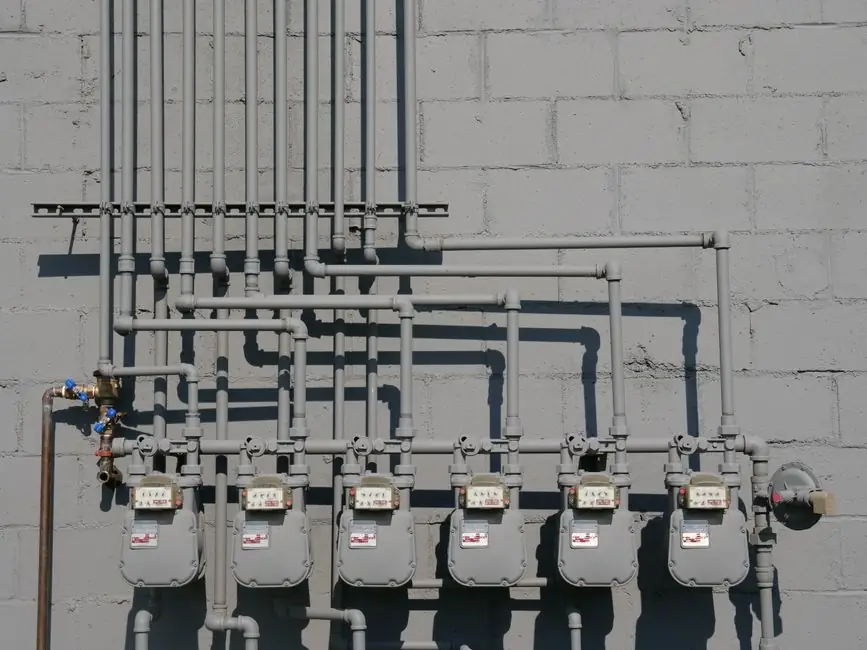
An air pick sized for plumbing work is defined by three numbers: piston bore (commonly 19-25 mm for handheld chipping hammers), free-speed blows per minute (1,500-3,600 bpm), and air consumption in CFM at 90 psig, which sets the compressor sizing downstream of the tool choice [S1].
For residential and light commercial plumbing (cast iron stack replacement, soil-pipe cutoffs, concrete-encased drain cleaning) the working envelope is 0.4-0.8 kW input at 6 bar (90 psi) shop-air, 1,500-3,000 bpm, and 10-15 CFM free air; commercial demolition-class picks above 1.0 kW and 3,600 bpm over-penetrate thin-wall copper and brake cast iron couplings.
Spec envelope: bore, stroke, BPM, and CFM bands
Plumbing-grade air picks cluster into three useful bands. Light band: 19 mm bore, 35-50 mm stroke, 1,500-2,200 bpm, 0.3-0.4 kW, 8-10 CFM at 90 psig, suited to 1/2" to 2" copper and 2" cast iron. Mid band: 25 mm bore, 50-65 mm stroke, 2,200-2,800 bpm, 0.5-0.7 kW, 12-15 CFM, suited to 3" and 4" cast iron soil pipe and concrete encasement. Heavy band: 28-32 mm bore, 70-90 mm stroke, 2,800-3,600 bpm, 0.8-1.2 kW, 18-25 CFM, used only for terra-cotta, brick, or thick concrete slab breakout around mains. [S3]
Air consumption at 90 psig is the binding field-side constraint: a 12 CFM pick paired to a 9 CFM portable compressor will stall on every backstroke and overheat; a 15 CFM tool on a 13 CFM compressor loses roughly 20% of its free BPM under load. Sizing rule used by plumbing contractors: compressor rated CFM at 90 psi must be 1.3-1.5x the pick's free-air consumption at the same pressure [S1].
For comparison, an air impact wrench in the 1/2" drive class runs 4-6 CFM at 90 psi; a 3/4" impact crosses 10-12 CFM. A mid-band air pick at 12-15 CFM therefore demands the same compressor class as a 3/4" impact, and many plumbing vans already run that size, which is why the pick bolts onto existing 5 hp two-stage electric or 9-13 cfm gas portables without a compressor upgrade.
Matching tool to pipe material and joint type
Copper supply pipe (Type L, Type M, 1/2" to 2") should be cut with a tubing cutter or air impact wrench-driven socket, not a chipping hammer, because a chipping blow dents the wall and work-hardens Type M copper; the light band only earns its place on copper when scaling a fitting off a corroded nipple. [S3]
Concrete-encased drain lines under slabs call for the mid band with a wide chisel scaling tool, at 90 psig and 2,200-2,500 bpm; pushing to 3,000+ bpm shatters the pipe wall before the concrete spalls. PVC DWV (schedule 40, 1-1/2" to 4") should be cut with a reciprocating saw or soil-pipe snap cutter; an air pick shatters PVC and leaves burrs that catch debris and trip flow-meter commissioning later in the build.
Air supply, hose, and lubrication discipline
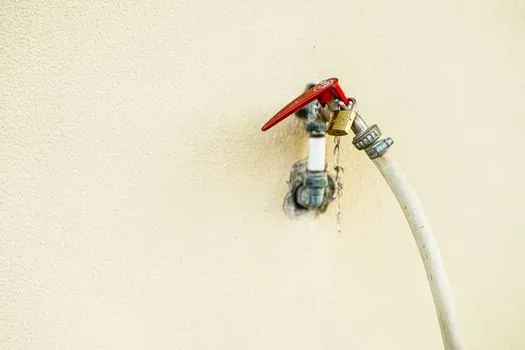
Working pressure at the pick inlet (not at the tank) must hold 90 psig ±10 psi under load; a 1/2" ID hose longer than 25 ft drops roughly 5-8 psi at 15 CFM, and a 3/8" ID hose longer than 15 ft is a guaranteed starvation path. Use 1/2" ID hose for any pick above 12 CFM, and keep total hose run (compressor to tool) under 50 ft before stepping up to 3/4" ID. Inline lubricators delivering 4-6 drops per minute of light tool oil cut piston wear on valve-style picks; oil-less picks are common in clean-room hospital and food-grade work but require filtered, dry air below 5 ppm moisture to keep the valving from sticking. [S1]
Filter-regulator-lubricator (FRL) sets are non-optional: a 5 micron particulate filter plus a regulator set to 90 psig plus a lubricator with a sight feed. Without the regulator, a compressor that idles to 120 psig on the cut-off switch will hammer the piston and shorten valve life by roughly half. Without the filter, desiccant dust from a rental compressor scores the cylinder in one shift.
Selection criteria: who an air pick is FOR and who it is NOT for
It is FOR the plumbing crew that does 5 or more cast iron or lead-joint cuts per week, that already runs a 9-15 CFM compressor on the truck, and that needs to break concrete around a slab drain without dragging in a 30 lb electric demo hammer. It is FOR single-trade service plumbers who occasionally crack a 4" hub on a 1920s stack and do not want to rent a rotary hammer for a 20 minute job. [S3]
It is NOT for the service plumber whose daily cut list is copper, PEX, PVC, and steel pipe under 2": those tasks belong to a tubing cutter, a air solenoid valve-actuated press tool, a soil-pipe snap cutter, and a portable bandsaw respectively. It is NOT for a crew running a 6-8 CFM pancake compressor: the pick will cycle the compressor every 8-10 seconds, overheat the pump, and deliver 60-70% of rated BPM at the tool. In that case, switch to a cordless SDS-Plus rotary hammer with a chisel bit.
It is NOT for confined-space work in a 36" crawl where an air pick's 100-110 dB(A) noise plus its exhaust oil mist will both trip a confined-space permit's noise and air-quality thresholds; specify a cordless chipping hammer in that environment, or vent the exhaust with a 3/8" whip hose to outside the pit.
Comparison: light, mid, and heavy bands against plumbing tasks
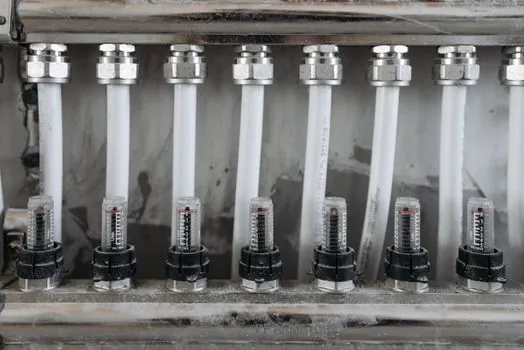
Lining the three bands up against the four decision criteria a plumber actually uses on a job: cut time on 4" cast iron (30-60 s for mid vs 90-120 s for light, and heavy band over-penetrates the coupling), compressor class required (light runs on 9 CFM portable; mid needs 13-15 CFM two-stage; heavy needs 25+ CFM), body weight and operator fatigue (light 8-10 lb, mid 11-14 lb, heavy 16-20 lb), and per-blow impact energy on lead and oakum (light ~5 J, mid ~10 J, heavy ~20 J). The mid band is the all-around choice for a plumbing service truck; the light band earns its slot only as a secondary tool, and the heavy band is reserved for main-line and earthwork subcontractors, not plumbers. [S2]
Field failure modes and acceptance test values
Symptom: pick delivers half its rated BPM, blows air continuously from the exhaust, and stalls on lead joints. Root cause: low inlet pressure from undersized hose or a regulator stuck below 80 psig, or a worn throttle valve. Corrective action: verify 90 psig at the tool inlet under load with a gauge, replace any 3/8" hose with 1/2" ID, rebuild the throttle valve. Acceptance: tool reaches rated BPM within ±10% at 90 psig inlet. [S1]
Symptom: pick delivers full BPM but makes no chipping progress on concrete. Root cause: wrong chisel geometry (moil point used where a wide scaling chisel is required), or operator holding the tool at too steep an angle. Corrective action: switch to a 1-1/2" to 2" wide scaling chisel, hold the tool at 15-30° to the work surface, and let tool weight drive the blow. Acceptance: visible spall at 10-15 seconds on 4,000 psi concrete.
Symptom: tool overheats and seizes after 5-10 minutes. Root cause: dry air, no lubrication, or filter saturation starving the valve. Corrective action: refill lubricator, replace desiccant in the FRL, drain compressor tank. Acceptance: barrel surface temperature below 60°C (140°F) at 10 minutes continuous run. When the barrel exceeds that temperature repeatedly, escalate to disassembly: the valve seats are likely worn and the tool is no longer serviceable, replace rather than rebuild.
Symptom: oil mist in the exhaust trips IAQ concerns on occupied renovations. Root cause: over-lubrication or wrong oil weight. Corrective action: drop lubricator feed to 2-3 drops per minute, switch to a low-mist or oil-less pick, or vent the exhaust through a 3/8" hose to outside the work area; for hospitals, food plants, and occupied offices, specify an oil-less pick with a coalescing filter rated below 0.1 ppm.
Sourcing, standards, and trackable signals
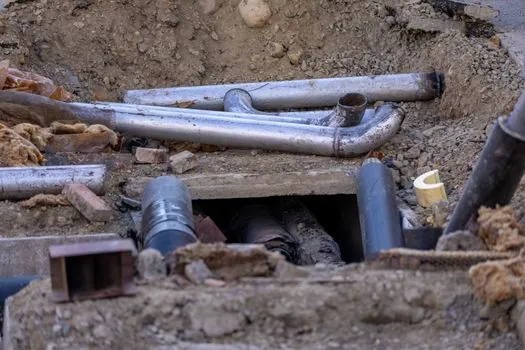
Common OEM reference points for plumber-grade air picks (vendor neutral): Chicago Pneumatic CP-7115, Ingersoll-Rand 114G, and Atlas Copco TEX 11. Each publishes rated BPM, CFM, and bore-stroke values that map directly onto the light/mid bands above; cross-check those three numbers against the compressor and hose charts before ordering, not the catalogue horsepower [S1].
OSHA 29 CFR 1926.52 governs occupational noise exposure; an air pick at 100-110 dB(A) puts the operator above the 90 dB(A) 8-hour TWA within minutes and triggers hearing-protection and a documented hearing-conservation program. ANSI Z89.1 sets the hard-hat class, and ANSI Z87.1 the eye protection; full-face shields are typical, and a face shield selection for construction sites reference helps when occupational PPE includes chipping-scale eye hazards beyond the tool itself.
Trackable signals to watch over the next buying cycle: compressor manufacturers publishing 12-15 CFM portable units under 200 lb aimed at the plumbing truck, and pick OEMs offering oil-less valving with documented below-0.1 ppm exhaust-oil carry-through for occupied work. Either signal tightens the plumbing-side air-pick spec window further.