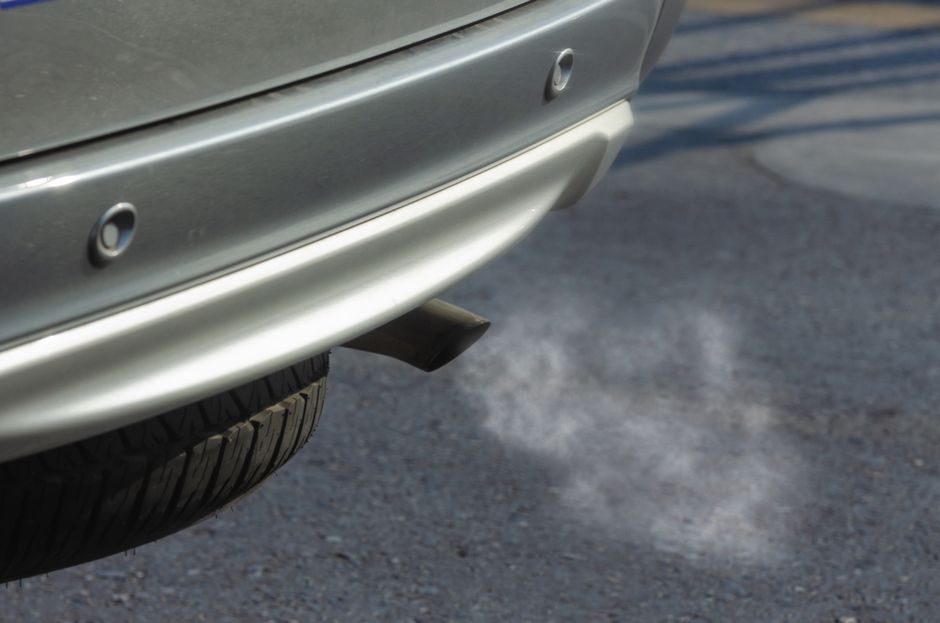
Eight equipment families dominate industrial air pollution control: Electrostatic Precipitator (ESP), Pulse-Jet Baghouse, Wet Flue Gas Desulfurization (FGD), Spray Dryer, Selective Catalytic Reduction (SCR), Mercury Control Technology, Particulate Control Systems, and CO2 Capture, as segmented in the global market taxonomy [S1].
Application split follows four heavy-industry verticals — cement, chemical, commercial power generation, and iron & steel — with the global market valued at USD 53,423.39 M in 2019 and forecast to reach USD 76,512.53 M by end-2025 at a 6.16% CAGR [S1]. Geography coverage spans Americas, Asia-Pacific, and EMEA, with country-level breakdowns covering 26 markets including the US, China, India, Japan, Germany, and the UK [S1].
Particulate Control: ESP vs Pulse-Jet Baghouse
ESP and pulse-jet baghouse are the two workhorse options for PM capture, and they diverge sharply on particle size, resistivity, and operating temperature. ESPs handle high-temperature, high-dust-load gas streams common in cement kilns and utility boilers, while pulse-jet baghouses dominate when dust resistivity is high, particle size is sub-micron, or collection efficiency above 99.9% is mandated. [S1]
Pulse-jet cleaning depends on a pilot-operated reverse-jet pulse valve firing 60–100 ms compressed-air bursts into filter cages, with diaphragm life and coil duty being the dominant maintenance drivers. Indian OEM Maniks has supplied reverse-jet pulse valves and sequential timers for 47 years to cement and steel bag-filter dust collectors, with 75% of orders shipped same-day and exports spanning 10+ countries [S2]. For a spec-first map of when to pick ESP versus baghouse, the selection guide covers the same decision tree in detail. Where a downstream process demands precise compressed-air control on the pulse manifold, air solenoid valves are the typical actuation element.
SO2 and Acid Gas: Wet FGD vs Spray Dryer
Wet FGD and spray-dryer absorbers both target SO2, but they sit at different points on the temperature and water-economy axis. Wet FGD (limestone or lime slurry) operates below the acid dew point, achieves >95% SO2 removal on coal-fired boilers, and produces gypsum byproduct; spray dryers operate above dew point and suit smaller units, waste-to-energy, and incinerators where water management is constrained. [S1]
Scrubber internals — packing, mist eliminators, recirculation pumps — are the long-lead items, and ECS Environmental Solutions offers vertical pumps, fans, and blowers specifically engineered for scrubber service alongside dry and wet scrubber skids [S3]. The ECS / KCH / HEIL merger consolidated dry scrubber, biological, wet scrubber, and activated-carbon product lines under one North American service footprint with 100+ years of combined engineering experience [S3].
NOx Reduction: SCR System Position and Reagent
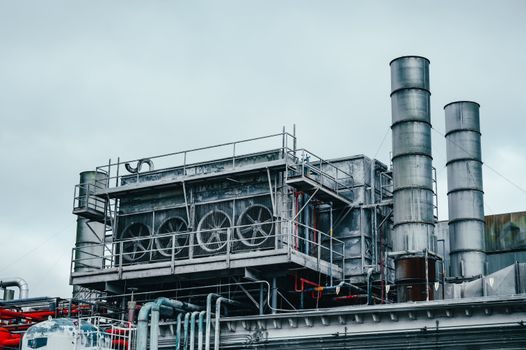
Catalyst volume scales with flue-gas flow, target ΔNOx, and allowable space velocity, and SCR is routinely paired upstream of wet FGD or downstream of an ESP depending on dust loading at the catalyst face. [S1]
SCR reactor housings, sootblowers, and ammonia-injection skids are typically fabricated from carbon steel with stainless liners; ducting between the air heater and economizer is the hottest section. Vendor rosters across the broader APCS market include Amec Foster Wheeler, Andritz, Babcock & Wilcox, Ducon, Fujian Longking, GEA Bischoff, GE, Hamon, Horiba, Mitsubishi Hitachi Power Systems, Pure Air, Siemens, Thermax, and Tri-mer [S1].
Mercury and Trace Metals
Mercury control technology — activated-carbon injection (ACI), halogenated additives, and sorbent-enhanced filtration — is the newest compliance-driven segment, with US MATS and equivalent global rules pushing Hg capture below 1–2 lb/Tbt in coal-fired units. ACI can be injected upstream of an existing ESP or pulse-jet baghouse, reusing particulate hardware as the collection surface for the Hg-laden sorbent. [S1]
Co-benefit capture of mercury on fabric filters is one reason pulse-jet baghouse retrofits accelerated at US coal plants after 2015, and the same logic applies to cement co-processing kilns burning alternative fuels. The market research explicitly tags Mercury Control Technology as a discrete sub-segment alongside ESP and baghouse [S1].
CO2 Capture as a Discrete Sub-Segment
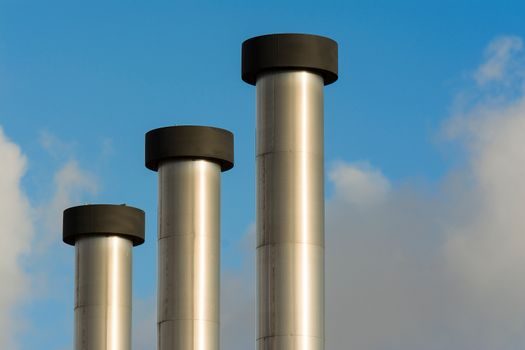
CO2 capture is treated as a standalone APCS type in the segmentation, distinct from combustion and post-combustion SO2/NOx hardware, and the segment covers amine-based, chilled-ammonia, membrane, and adsorption routes. The 2019–2025 forecast priced the global APCS market at USD 53,423.39 M to USD 76,512.53 M, with CO2 capture growth pacing differently from particulate and SO2 hardware depending on regional carbon pricing [S1].
Unlike ESP and FGD, CO2 capture trains are typically bolted onto new builds or major retrofits rather than replacing existing hardware, and they share few common components with the other seven types. Where the capture solvent or sorbent contacts rotating equipment, air impact wrench tooling is unrelated, but pump and blower specification rules from the wet-scrubber world carry over directly.
Selection Criteria: Pollutant, Temperature, Dust Load, Byproduct
Four criteria drive the equipment pick: target pollutant (PM, SO2, NOx, Hg, VOC, odor), inlet gas temperature, dust loading, and downstream byproduct handling. The main options line up as: ESP for high-temp, high-dust PM with dry discharge; pulse-jet baghouse for high-efficiency PM with fabric-filter-grade dust; wet FGD for deep SO2 removal with gypsum byproduct; spray dryer for medium-duty SO2 with dry discharge; SCR for NOx; ACI for Hg; dry/wet scrubbers plus biofilter for odor and VOC. [S1]
ECS Environmental Solutions lists dry scrubbers, wet scrubbers, biological systems, and temporary odor control as a matched family for plants that need to combine acid-gas, particulate, and odor treatment on a single skid [S3]. The trade-off is usually capital versus auxiliary cost: ESPs and spray dryers carry lower operating cost but higher capital; baghouses and wet FGDs reverse that ratio. For plants already running compressed-air manifolds, the pulse valve and timer panel chain inside a baghouse is the single biggest maintenance-driven cost line over a 20-year life.
Limitations, Failure Modes, and Standards Anchors
Each APCS type has a characteristic failure mode: ESPs lose efficiency on high-resistivity fly ash; baghouses fail at temperatures above the felt rating or with moisture condensation; wet FGDs scale and corrode at the absorber inlet; SCR catalysts poison with arsenic, alkali, and SO3; ACI sorbent handling becomes the bottleneck on units exceeding MATS-tier limits. The market research attributes 2019–2025 growth to regulatory tightening across cement, chemical, commercial power, and iron & steel, with the Americas, Asia-Pacific, and EMEA all contributing [S1].
Compliance regimes driving the 2026 buy-cycle include US NAAQS for criteria pollutants, EU IED BAT-AELs for waste incineration and large combustion plants, and India CPCB norms for cement and steel — each sets different PM, SO2, NOx, and Hg ceilings. Vendor coverage in the report spans 16 named OEMs across both general APCS integrators and component specialists, with Thermax (India) and Tri-mer explicitly listed alongside Fujian Longking and Horiba [S1]. For a parallel downstream reference on mercury and catalyst chemistry, the PVC resin mercury-free catalyst transition shows how the same regulatory pressure is moving across chlor-alkali and process industries.
Trackable signals over the next 12 months: NESHAP amendments for hazardous-waste incinerators in the US, EU BAT conclusion reviews for large combustion plants, and India CPCB phase-III stack norms for cement — each will tilt the ESP-versus-baghouse and wet-FGD-versus-SCR mix in different regions. Vendor M&A activity (the ECS / KCH / HEIL merger being the most recent example) is consolidating dry scrubber, biological, and wet-scrubber product lines into single North American suppliers [S3].
Component reference pages worth checking: air pick.