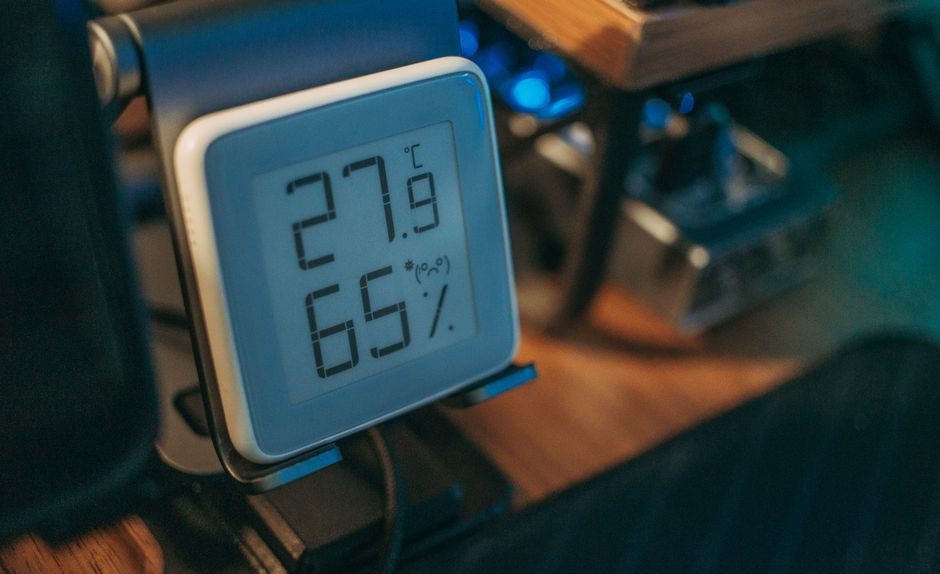
Industrial air-quality monitors used in chemical processing must be filtered against cross-interference from solvent vapours, acid gases and airborne particulates that would otherwise corrupt the PM2.5, VOC and gas-specific readings (per [S8] Avigilon, 2026).
For 2026 procurement, three classes dominate: FRM/FEM-grade reference monitors validated against 40 CFR Part 58 Appendix B [S1], bench-style multi-pollutant chambers such as the SEnTeC-2 (1.6 m³, -70 to +180°C) [S2], and the 2026 consumer-grade low-cost sensor stack used in IAQ pilots (per [S7] Consumer Reports, 2026).
Sensor-class compatibility with the chemical envelope
Electrochemical gas sensors tolerate the broadest range of corrosive backgrounds when paired with PTFE or hydrophobic-membrane filters, while NDIR CO2 and photoionisation VOC sensors require periodic lamp/filter cleaning in coating and blending areas described in [S8] (2026). Metal-oxide VOC sensors exhibit drift on exposure to silicone vapours and hexamethyldisiloxane, so process engineers in chemical blending should specify pre-filters and a six-month field-recalibration cadence. Particulate monitors using laser scattering (PM1/PM2.5/PM10) need a heated inlet above 40°C to avoid condensation of humid process air; a flow meter on the dilution train is the simplest way to keep the sheath-air ratio inside the optical chamber's design envelope.
A 2026 head-to-head of the three sensor classes against four decision criteria lines up as follows: FRM/FEM reference monitors win on regulatory acceptance and accuracy but lose on cost and footprint; SEnTeC-2-class multi-pollutant chambers win on channel count (20+ sensors), environmental range (-70 to +180°C, 5-98% RH) and automatic pollutant stabilisation [S2] but require fixed installation; the 2026 consumer-grade units reviewed by [S7] win on price and form factor but lose on hazardous-location certification and CO coverage.
Cross-interference and material compatibility matrix
Cross-interference between SO2, NO2, O3 and water vapour is a documented source of measurement bias when multiple criteria pollutants are sampled in parallel, and the EPA QA Handbook [S1] binds parallel monitoring to the 40 CFR Part 58 Appendix B QA framework. The MDPI 2026 IAQ review [S6] notes that low-cost MEMS VOC sensors cross-react with ethanol and isopropanol, so plants with routine solvent cleaning operations should require documented interference-equivalence testing from the vendor. Material compatibility extends beyond gas-phase chemistry: probe bodies in 316L stainless, Kalrez or Chemraz seals, and PTFE-faced industrial valves on the calibration-gas manifold are the baseline for organic and acid-gas streams.
Sampling-system components for hazardous-location deployment

Sample-conditioning trains in chemical service almost always include a pressure transmitter on the vent line, a pressure sensor at the probe tip to detect clogged filters in real time, and solenoid-actuated industrial valves on the calibration-gas manifold to switch between sample, zero and span gas without manual intervention. The SEnTeC-2 specification sheet [S2] lists 20+ sensor channels, wind/vibration/altitude testing, and automatic pollutant stabilisation as the capabilities that distinguish a 2026 multi-pollutant chamber from the 3-9 sensor, no-stabilisation SEnTeC-1 baseline. For continuous-fence-line operation, raw 4-20 mA or Modbus TCP outputs are usually aggregated into a PLC before being pushed to the site historian, since OPC UA pub/sub over single-pair Ethernet is the default for new airshed installations (per [S3] 40 CFR Part 58 § 58.2 reporting requirements, 2026-06).
Regulatory siting and QA for compliance-grade data
40 CFR Part 58 § 58.2 [S3] explicitly defines five binding areas — "quality assurance procedures for monitor operation and data handling", methodology, operating schedule, siting parameters, and minimum network design — that govern any compliance-grade ambient air program, with Appendix B adding the precision/accuracy acceptance bands that FRM/FEM monitors must meet [S1]. The American Chemistry Council [S9] further endorses a science-based community air monitoring framework that plants adjacent to residential receptors can adopt to convert fence-line data into a defensible public dataset. Process owners should treat those QA bands as the floor, not the ceiling, because low-cost sensor networks reviewed in [S6] (2026) typically show significant deviation from FRM-grade readings even after field calibration, while compliance reporting under Part 58 requires tight agreement for the same pollutant.
Environmental envelope and operational limits
Industrial IAQ monitors in chemical plants must survive the 30-60% RH envelope recommended by ASHRAE for occupied zones [S10], but chemical operations routinely drive ambient readings outside that band; the SEnTeC-2 chamber covers -70 to +180°C and 5-98% RH in factory acceptance testing [S2]. Condensation control is critical because laser-particle counters misread liquid droplets as PM2.5 mass, and electrochemical sensors can be permanently damaged by bulk water ingress; specifying IP65 enclosures with Gore-Tex vents is the minimum for outdoor fence-line cabinets. Portable, body-worn sensors reviewed in [S5] are useful for hot-zone surveys but should not be used for compliance reporting because their size, weight and battery constraints compromise the precision bands of Part 58.
When a chemical-plant monitor is the wrong tool
Wood-dust and combustible-dust environments documented in [S8] require certified explosion-proof housings and an automatic filter-changer so the sample head is never exposed to a flammable cloud during cartridge replacement; the actuator can be a servo motor or a pneumatic cylinder depending on site power and hazardous-area classification. Conversely, the consumer-grade 2026 monitors tested by [S7] — Air Gradient, Amazon, Ikea, Inkbird, IQAir, Qingping — are not interchangeable with industrial units because most lack CO, only some have VOC channels, and none carry the hazardous-location certifications that a chemical-fence-line installation requires. Buyers should treat the 2026 consumer category as a screening or occupancy-comfort layer, and confine regulated measurements to FRM/FEM, SEnTeC-2-validated or equivalent industrial hardware.
Sourcing checklist for 2026 procurement

Vendors who can hand over all four on a single data sheet should be shortlisted; vendors who cannot should be sent a 30-day sample trial before any capital commitment. Trackable next signals for the second half of 2026 include EPA's periodic QA Handbook update cycle and any SEnTeC-2 firmware revision that adds new FRM/FEM pollutant channels [S2].
The 2026 selection question is no longer "is it a monitor" but "is it a monitor that survives the chemical envelope, passes Part 58 QA, and ships with a documented cross-interference matrix" — the three filters that separate a defensible purchase from an audit liability (per [S1][S3][S8], 2026-06).