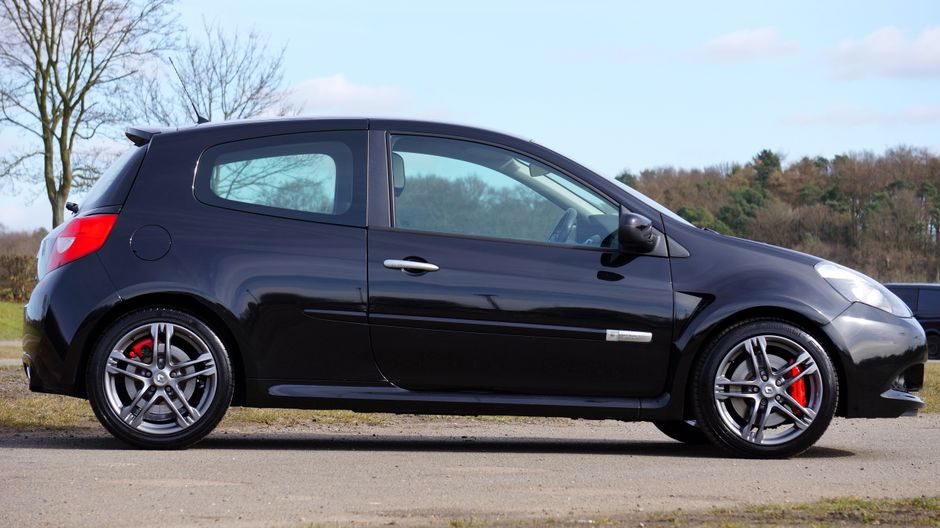
Automotive alloy steel specification is driven by three quantifiable levers — required surface hardness, section size at quench, and the fatigue-loading spectrum of the part — not by grade name familiarity [S1].
Bulk of the volume still flows through conventional wrought grades: 41xx Cr-Mo, 43xx Ni-Cr-Mo, 51xx/52xx Cr-spring, 86xx Ni-Cr-Mo case-hardening, plus the silicon-manganese 60Si2MnA / 65Mn family used for coil and leaf springs in Chinese mill catalogues [S7].
Wrought Grade Map by Component Family
Alloy structural steel is defined by an addition of one or more alloying elements on top of plain carbon steel, with the aim of raising hardenability, refining the as-quenched microstructure to a uniform sorbite/bainite/very-fine pearlite mix, and pushing the tensile-to-yield ratio to roughly 0.85 [S9]. That microstructural target is the engineering reason AISI/SAE 4140 (≈1% Cr, 0.2% Mo) became the default crankshaft and connecting-rod forging grade, and why 4340 (≈1.8% Ni, 0.8% Cr, 0.25% Mo) is reserved for higher-section or higher-stress drivetrain components [S1].
For spring and suspension parts, the controlling metric is elastic limit and fatigue endurance under cyclic shear. Chinese mill offerings list 65Mn and 60Si2MnA as high-performance spring steels, marketed for superior elasticity and fatigue resistance in automotive suspension and industrial spring applications [S7]. Si raises the elastic limit, Mn keeps the steel weldable, and the high-C content is what lets the strip be hardened to ~50 HRC after quenching and tempering [S7].
Case-Hardening and Surface-Engineered Routes
For gears, CV joints, and pinions, the spec is usually a low-carbon case-hardening grade such as 8620 (≈0.2% C, 0.55% Ni, 0.5% Cr, 0.2% Mo) carburised to 0.7–0.9 mm case depth, surface hardness 58–62 HRC, with a tough 30–35 HRC core [S1]. A nickel-bearing chemistry is preferred when the part sees sub-zero service, because Ni suppresses the ductile-to-brittle transition.
Where wear is the dominant failure mode rather than fatigue, automotive tier-1s move to overlay-plate solutions: chromium-carbide-rich fused alloy steel plate such as ARCOPLATE, where the chromium-carbide overlay chemistry is engineered to outlast quenched-and-tempered wear plate in high-abrasion conveyor and mixer service [S2]. This is not a substitute for the structural grades above — it is a parallel material system applied to ground-engaging, dump-truck liner, and chute components inside the vehicle's logistics chain.
Additive Manufacturing Material Options
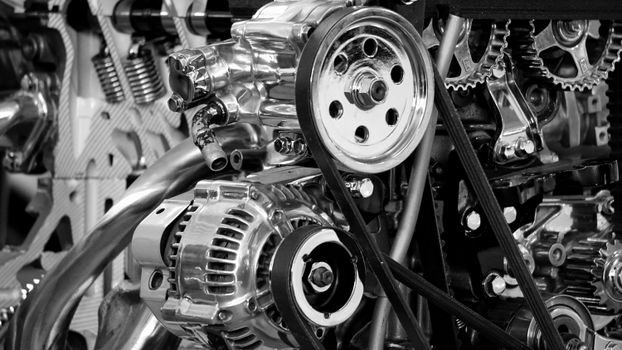
Wire and arc additive manufacturing (WAAM) of alloy steel via self-developed flux-cored wire has been demonstrated to deposit material whose final properties are set by inclusion-forming elements Ti and Mn, allowing the as-deposited hardness and toughness to be tuned by chemistry rather than by post-machining heat treatment alone [S8]. For laser-based directed energy deposition, the automotive AM candidate set narrows to AISI H13 tool steel, CPM 9V, and 316L stainless — each validated for crack-free deposition under controlled preheat and scan strategies [S1].
Aluminium alloys still dominate the AM discussion for body-in-white because most currently available AM materials have not been developed specifically for automotive crash-relevant applications, and crash-energy absorption remains a property the additive process has not yet matched consistently [S4]. Steel AM in automotive is therefore concentrated on tooling (H13 dies repaired or built by laser cladding) and on small-batch structural prototypes, not on serial body parts.
Supplier and Sourcing Landscape (2026)
Global sourcing of alloy steel for automotive tier suppliers is split across three channels: integrated mill direct (e.g. Liaoning-based exporters offering 65Mn/60Si2MnA spring steel and aluminised steel coils), distribution/specialty tube suppliers serving the petrochemical and boiler crossover market, and custom manufacturer directories [S3][S6][S7]. On the MFG custom-manufacturing directory, alloy steel shops are filtered by capability — DMLS, FDM, MJF, SLS, SLA — so procurement teams should match the part to a process family, not to a single shop name [S3].
For wear-plate and ground-engaging components, vertically integrated suppliers such as Alloy Steel International manufacture both the chromium-carbide overlay plate and the fabricated end-product at a single site, an arrangement that compresses lead time for mining and heavy-industry customers but adds ISO 9001 / stage-2 quality-accreditation documentation overhead [S2].
Decision Comparison: Wrought vs Spring vs Case-Hardening vs AM
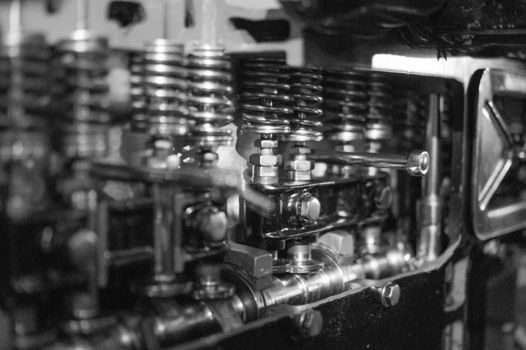
A side-by-side spec view for the four material families used in automotive parts [S1][S7][S8][S9]:
Wrought Cr-Mo / Ni-Cr-Mo (4140, 4340): moderate cost, highest availability, validated machinability, tensile-to-yield ratio ~0.85 after quench-and-temper, suitable for forged crankshafts and connecting rods. Spring grades (65Mn, 60Si2MnA): silicon-driven elastic limit, ~50 HRC after heat treatment, lower cost per kg than Cr-Mo grades, used for coil/leaf springs and torsion bars. Case-hardening grades (8620 and Ni-Cr-Mo variants): hard surface (58–62 HRC) on a tough core, mandatory for gears and CV joints, require carburising process control. AM tool-steel (H13, CPM 9V) and stainless (316L): lowest volumes, highest per-part cost, justified only for tooling, repair, or low-volume structural prototypes where lead time dominates unit cost.
Selection Criteria, Constraints, and Common Failure Modes
Five selection criteria consistently separate a good alloy-steel spec from a recall-inducing one: hardenability band (Jominy distance at a given hardness), section size at the quench tank (governs the achievable as-quenched microstructure), tempering temperature versus required toughness (each 10 °C above optimum drops Charpy by ~5–10 J), cleanliness / inclusion rating (governs fatigue life), and the case-depth tolerance for carburised parts (typically ±0.1 mm on a 0.7–0.9 mm target) [S1][S9].
Failure-mode history is also a selection input: in WAAM alloy-steel deposits, the dominant failure is lack-of-fusion at the interlayer interface, and the fix is to control Ti/Mn ratios in the flux-cored wire so inclusion populations pin grain growth [S8]. In wrought spring steel, the dominant field failure is fatigue cracking initiated at surface decarburisation — addressed by removing the decarburised layer or specifying a Si-rich chemistry such as 60Si2MnA [S7].
Standards, Documentation, and Cross-References
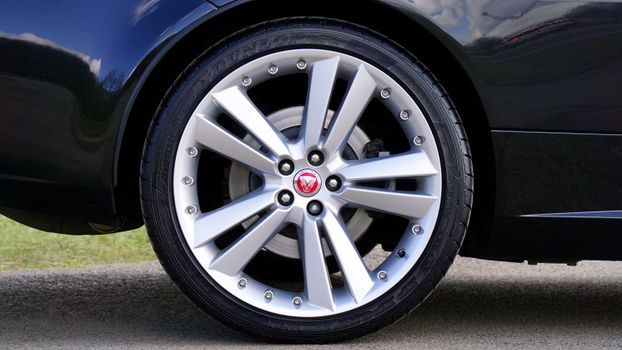
Alloy structural steel's regulatory backbone is the AISI/SAE grade system for chemistry, complemented by customer-specific standards such as EN 10083 for quenched-and-tempered steels, ASTM A29 for hot-rolled alloy bars, and OEM-specific fatigue and cleanliness specs on top of the generic ones [S1][S9]. For spring and case-hardening applications the relevant mill-product standards vary by region, but the property targets (hardness, case depth, tensile/yield, Charpy) are universal and should be cited in the purchase specification rather than left to the mill default [S7].
Readers comparing alloy steel to other structural material families will find the alloy steel reference useful for grade chemistry ranges, and the carbon steel entry for context on why alloying additions are added in the first place. For tooling and high-temperature service, titanium alloy and nickel alloy references cover the adjacent spec space, while aluminum alloy is the natural comparison for body-in-white lightweighting programs [S4]. Procurement teams working through supplier capability lists alongside material specs may also want to scan the screw machine part suppliers 2026 cluster map to align alloy-steel sourcing with downstream machining partners [S3].