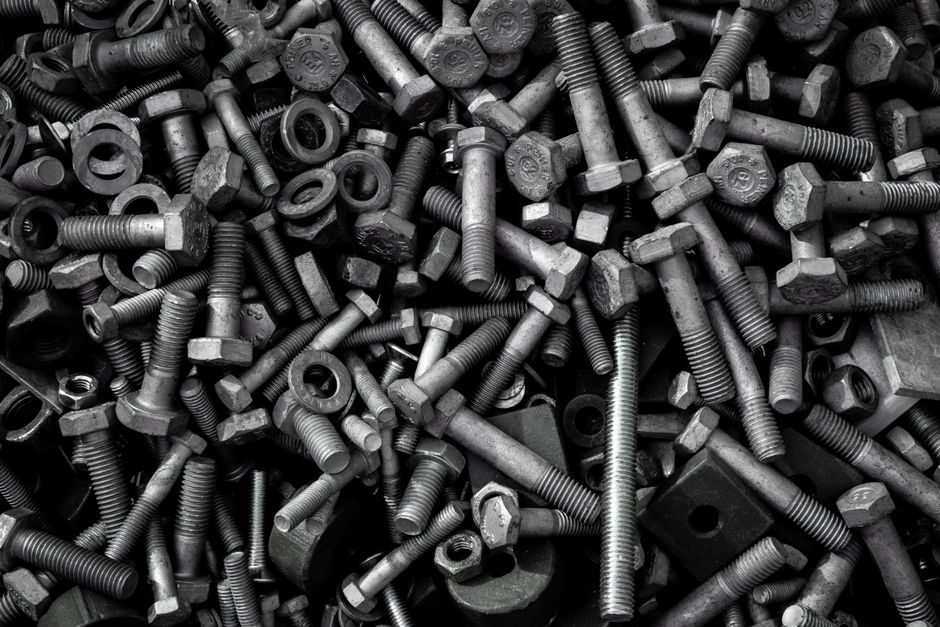
Three supplier tiers dominate screw machine part sourcing in mid-2026: Taiwanese-owned Guangdong factories (e.g. Zhangliang Hardware in Shenzhen) produce machinery screws and specialty fasteners with ISO 9001:2015 systems [S2]; Zhejiang and Jiangsu factories (Lishui, Nanjing) supply ball screws and ball screw assemblies with C5/C7 grade tolerance to CNC machinery OEMs [S1]; and US screw-machine job shops such as Preferred Fasteners run Brown & Sharpe multi-spindle screw machines with in-house centerless, thru-feed, in-feed, flat, and thread-rolling secondary operations [S4].
Typical lot sizes split sharply: Chinese trading-platform listings show prototype-to-100,000-piece runs from CNC, screw machining, stamping, and injection molding under one roof [S5], while custom machined parts from made-in-China manufacturers list piece prices in the US$ 1-10, US$ 4-15, and US$ 5-16 bands for aluminum/stainless steel CNC parts [S9]. Source: Made-in-China supplier directory [S9].
Supplier Geography and Certifications
Guangdong (Dongguan, Shenzhen, Guangzhou) concentrates machinery-screw, fastener, and CNC-turned-part production, with Diamond Member suppliers listing main products that include CNC turning parts, screws, prototype parts, gears, shafts, washers, nozzles, and pins [S2]. Jiangsu (Suzhou, Nanjing) and Zhejiang (Lishui) hold the ball screw, linear guide, and linear bearing segment, with Nanjing factories holding ISO 9001:2015, ISO 45001:2018, and ISO 14001 certifications alongside the typical ISO 9001:2015 baseline [S1]. Tianjin appears as the solar-ground-screw and mounting-structure cluster [S2]. US screw-machine shops operate as single-site job shops running multi-spindle automatics with thread rolling and grinding in-house rather than as multi-product catalog suppliers [S4].
Capability Comparison: What Each Tier Actually Runs
Tier 1 — Taiwanese-Owned Guangdong Screw Houses: cold-heading, thread rolling, and CNC turning for stainless, carbon, and titanium fasteners; product lines include hex socket set screws, knurled screws, self-drilling screws, and titanium-alloy screws for medical and aerospace instruments [S2]. Tier 2 — Zhejiang/Jiangsu Linear-Motion Factories: CNC ball screws in SFU/SFNU/DFU/SFS/SFY/SFE/SFI series at C5 ground and C7 rolled tolerance, with end-machined EK/EF fixed/floated support holders in 5-20 mm shaft diameters [S1]. Tier 3 — US Screw-Machine Job Shops: Brown & Sharpe multi-spindle automatics for high-volume turned specials, with thru-feed and in-feed grinding plus thread rolling as in-house secondary ops — a different model from CNC screw conveyor feeder plants [S4][S7].
Material breadth differs sharply: Chinese CNC-machined-part factories list 304 stainless, aluminum, brass, and titanium in the same product line [S9], while US screw-machine job shops position themselves on specialty and standard fasteners with grinding/thread-rolling value-add rather than exotic alloy breadth [S4]. For extrusion-related applications, Suzhou factories supply single-screw and twin-screw elements for PE/PP pipe and film-blow lines as a distinct sub-category [S2].
Spec and Tolerance Bands That Matter
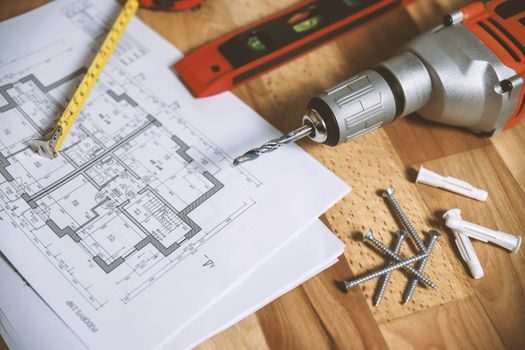
Ball-screw tolerance grades C5 (ground) and C7 (rolled) are the standard offerings in 2026 catalogs, with common diameters 16 mm, 20 mm, 25 mm and leads 1605, 1610, 2005, 2505, 2510; shaft lengths run 800-3000 mm and end-machining is offered for EK/EF 5-20 mm support holder fit [S1]. Custom machined parts for industrial equipment list piece-price bands of US$ 1-10 for aluminum/brass, US$ 5-8 for aluminum/steel drone and automation parts, and US$ 4-15 for stainless/aluminum bracket clamps [S9].
For fastener sub-categories, current Made-in-China listings distinguish heavy-duty self-drilling screws for metal roofing and cladding from stainless 410 zinc-plated pan-head self-drilling screws and titanium-alloy socket/Torx screws for medical/aerospace use [S2]. The taxonomy matters: a buyer searching for a single screw component will surface very different factories than one sourcing a screw conveyor feeder, where current price bands run US$ 9,060-140,320 per mobile unit and US$ 9,560-21,430 for pneumatic conveyor systems [S7].
Pricing, Lead Time, and Order-Size Reality
Custom machined parts for automated equipment commonly quote US$ 5-16 per piece for anodized polished stainless/aluminum at small-batch MOQs; higher-volume runs drop into the US$ 1-10 range for simpler aluminum/brass turned parts [S9]. Screw-feeder conveyor systems are quoted at US$ 10,500-24,000 for U-type and single-shaft units, US$ 11,200-19,600 for U-type screw conveyor feeders, and US$ 10,500-36,500 for raw-meal auger feeders — a wide spread driven by trough length, motor power, and stainless vs. carbon-steel construction [S7].
Trading-platform suppliers with screw-machine services list OEM production, JIT stocking programs, and offshore manufacturing as bundled offerings alongside CNC machining, while Turkish-origin listings on the same platforms concentrate on agricultural huller/peeler machinery rather than screw parts [S6][S8]. For buyers comparing supplier fit, China magnesium ingot sourcing follows a similar multi-tier pattern and can serve as a reference framework for vetting alloy-supplier claims.
Selection Criteria: Who Each Tier Is For
Tier 1 (Taiwanese-Owned Guangdong): best for buyers needing 10,000-500,000 piece runs of standard or semi-standard fasteners (self-drilling, hex-socket set, knurled, titanium) with ISO 9001 paperwork and bilingual export support [S2]. Tier 2 (Zhejiang/Jiangsu linear-motion factories): the right fit for CNC-machine builders specifying ball screw grade C5/C7, end-machined support holders, and integrated ball-spline compound units, with multi-cert (ISO 9001:2015 + ISO 45001:2018 + ISO 14001) documentation [S1]. Tier 3 (US screw-machine job shops): suited to high-mix low-volume specials, parts requiring in-house grinding or thread-rolling that a CNC-only shop would subcontract, and North-American OEM programs that need domestic PPAP/ISIR documentation [S4].
Tier mismatch is the most common sourcing error: buyers requesting a lead screw for a packaging machine are often routed to Tier 1 fastener factories, when the correct fit is a Tier 2 ball/lead-screw linear-motion specialist with end-machining and C5/C7 tolerance grading [S1]. Conversely, buyers needing a million-piece turned brass bushing should not approach a Tier 2 ball-screw factory whose equipment is configured for shaft-level turning rather than high-speed multi-spindle production [S4].
Failure Modes and Constraint Checkpoints
Three failure modes show up repeatedly in screw-machine-part sourcing: (1) mis-classified supplier — a CNC turning shop taking a 50,000-piece order for parts requiring centerless grinding will subcontract it out, eroding the cost advantage; (2) tolerance-grade mismatch — specifying a C5-ground ball screw when a C7-rolled part would do, or vice versa, drives cost and lead time in opposite directions [S1]; (3) certification gap — EU and US OEM programs often require IATF 16949 for automotive screw-machine parts, which a generic ISO 9001:2015 certificate does not satisfy [S2].
Cross-check before RFQ: confirm the factory's main-product list actually includes the part family (not just "screw" as a keyword); ask for the multi-spindle machine count if running Brown & Sharpe-class work [S4]; request sample PPAP or dimensional report for C5/C7 ball-screw orders; verify ISO 9001:2015 certificate scope covers the specific product code, not just the legal entity [S1][S2]. For process-engineers comparing selection workflows across component categories, industrial oven type-selection and pinch-valve sourcing follow the same supplier-cluster-and-cert-scope discipline.
Trackable signals for Q3-Q4 2026: whether Jiangsu/Zhejiang ball-screw factories extend standard C5-ground lead-time quotes as CNC-machine demand firms; whether US screw-machine job shops add 5-axis secondary ops to compete with CNC-turned-part imports; and whether Guangdong Tier-1 fastener suppliers add IATF 16949 scope to capture automotive embedded part programs currently going to specialized shops.