Industrial hinge selection hinges on three numbers — load rating in kg or N, cycle life (commonly 25,000 to 200,000+ cycles), and material grade — and matching them to door weight, swing angle, and exposure to corrosion or heat [S4].
Marlboro Manufacturing's published product line (as of 27 July 2026) catalogues six industrial hinge families: continuous, butt, slip-joint, weld-on, strap, and custom, with North American distribution [S4]. Specifiers evaluating industrial enclosures, cabinets, and access panels use these families as the working vocabulary for door-and-frame hardware.
Butt Hinges: The Default Cabinet-Duty Workhorse
Butt hinges ship as two rectangular leaves joined by a knuckle-and-pin assembly, mortised into the door edge and frame so only the knuckle shows when the door is closed; this recessed mounting protects the hinge from lateral impact in service [S4]. Common leaf sizes span 25 mm (1 in) up to 200 mm (8 in) for enclosure work, with stainless 304 as the default indoor grade and 316 specified for chloride exposure such as marine or chemical washdown areas. Pin diameters typically range 3 mm to 8 mm; a 6 mm pin is a common default for 100 mm leaves carrying doors up to roughly 25 kg. Cycle life for commodity stainless butt hinges in laboratory testing commonly lands in the 25,000–100,000-cycle band; specifying a higher pin diameter, sintered bronze bushings, or a needle-bearing upgrade pushes that into the 100,000–200,000+ range. A concrete 2026 specifier mistake: ordering brass butt hinges for outdoor chemical exposure — brass dezincifies in ammonia and amines and fails well before the 25,000-cycle mark.
Continuous Hinges: Full-Length Load Distribution
Continuous (piano) hinges run the full height of the door, distributing load across every fastener hole rather than concentrating it at two or three points, which makes them the default for tall, heavy, or high-cycle access panels [S4]. Standard stock lengths reach 3.66 m (12 ft) in 304 and 316 stainless, with pin diameters 1.6 mm to 3.2 mm; the longer pin and full-length bearing surface lift cycle ratings to the 200,000–500,000+ band typical of this format. Specifiers in instrument-panel fabrication pair continuous hinges with industrial coating systems on the surrounding cabinet because the constant pin-to-leaf gap is a known corrosion-initiation site in washdown environments. Practical limit: continuous hinges are not field-shortenable without re-pinning the knuckle — order to cut length or buy a mill-length coil and shear to size.
Slip-Joint and Weld-On Hinges: Heavy-Equipment and Fabrication Use
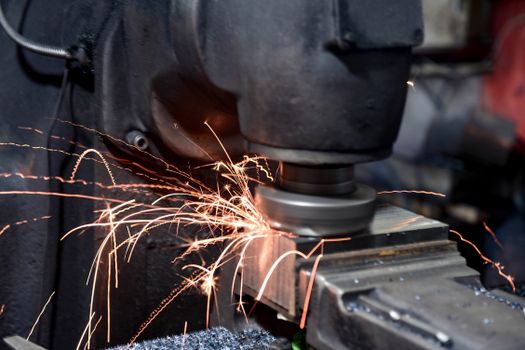
Slip-joint hinges incorporate a separable joint that allows the pin to be removed without disassembly of the door, which is the practical answer to removable access panels on rotating equipment where the door must come off for maintenance [S4]. Weld-on hinges ship as blank leaves (no mounting holes), letting the fabricator stitch or MIG-weld them directly to steel enclosures, machine guards, and skids — eliminating the fastener-corrosion path entirely. For welding to mild steel, low-carbon 304 stainless is weldable with E308L filler; for dissimilar joints to galvanized or hot-dip zinc-coated frames, a 309L filler is the conservative pick to avoid zinc cracking at the HAZ. Both families are commonly supplied in 304, 316, and carbon steel; 316 dominates in coastal, food-processing, and pharmaceutical service, while carbon steel is the cost-driven pick for indoor machine guards.
Strap Hinges and Custom Designs: Heavy-Door and Specialty Mounts
Strap hinges use elongated leaves (often 100–300 mm long) that mount across the full face of the door rather than into its edge, lifting the practical load ceiling above 100 kg per pair on gates, generator enclosures, and shipboard hatches [S4]. The longer moment arm distributes door weight across more fasteners, but it also requires the underlying structure to carry the load — a strap hinge on a thin 1.2 mm sheet-metal door is a build error, not a hardware choice. Custom hinges cover non-rectangular geometries: curved (piano-style) leaf, offset knuckle, lift-off, and concealed European-cup formats; lead time on a true custom is 4–8 weeks versus 1–2 weeks for a catalogue item, and custom tooling charges commonly run USD 2,000–10,000 depending on geometry. Specifier tip: when a custom is unavoidable, send the OEM a 2D DXF plus the door's weight, swing angle (90°, 180°, 270°), and the operating cycle count; the latter drives the pin and bushing spec more than the door weight does.
Material and Corrosion Mapping: Stainless, Brass, Aluminum, Carbon Steel
Stainless 304 covers indoor and mildly corrosive atmospheres; 316 adds 2–3% molybdenum for chloride resistance and is the right default for washdown, marine, and pharmaceutical service. Brass hinges (CDA 360 or 385) machine cleanly and look correct on architectural enclosures, but they dezincify in ammonia, amines, and stagnant water, so they are wrong for fertilizer plants, animal labs, and boiler rooms. Aluminum hinges (often 6061-T6) weigh roughly one-third of a comparable steel part and ship with a hard anodized or industrial coating finish for corrosion resistance; their fatigue strength is lower, so size them up by one leaf length versus a steel equivalent. Carbon steel hinges (cold-rolled, often zinc-plated or powder-coated) are the cost-down pick for indoor machine guards and electrical enclosures, with a typical 2026 unit cost 30–60% below a 304 equivalent at the same leaf size. Repute Steel & Engineering, a Mumbai-based manufacturer-exporter serving oil & gas, pharma, chemical, and shipbuilding customers, lists stainless fasteners, flanges, fittings, and valves alongside its hinge-relevant material catalogue as of October 2025 [S3].
Cycle, Load, and Geometry Decision Criteria
First-pass decision rule: pick the family by geometry (butt for standard doors, continuous for tall/heavy panels, slip-joint for removable access, weld-on for fabricated steel, strap for heavy gates, custom only when nothing else fits) [S4]. Second-pass rule: pick the material by environment (304 indoor, 316 washdown, brass architectural-only, aluminum weight-driven, carbon steel cost-driven) [S3]. Third-pass rule: pick the size by load — a common engineering shortcut is roughly 1 mm of leaf width per 1 kg of door weight as the minimum, with a safety factor of 1.5 for high-cycle or impact-loaded service. Fourth-pass rule: verify cycle rating against expected service life; an enclosure opened twice per shift, 250 working days per year, accumulates roughly 130,000 cycles over five years, which is the practical break-point between commodity and bearing-grade hardware. Specifier pitfall: ignoring swing angle — a 270° swing needs a knuckle geometry that clears the frame at full open, otherwise the hinge binds and the cycle rating becomes irrelevant.
Selection Criteria Comparison: Hinge Family vs Decision Driver

Butt hinges score high on cost and availability, medium on load (typically up to 25–40 kg per pair), and low on cycle ceiling relative to continuous [S4]. Continuous hinges invert that: high load, high cycle, low cost-per-mm-of-length, but they cannot be field-shortened cleanly. Slip-joint hinges win on maintainability and field-replaceability, lose on aesthetics because the joint is visible. Weld-on hinges score highest on tamper-resistance and corrosion path elimination, lowest on field replaceability. Strap hinges carry the heaviest static loads (100+ kg per pair) but require stiff, reinforced door structures. Custom hinges break ties on geometry but cost 2–10× the catalogue item and add 4–8 weeks to the schedule. For enclosure specifiers who also touch process control hardware, the same engineering discipline — material grade, rating, and cycle — applies to adjacent components like the industrial buzzer and industrial camera families used on the same panel face.
Failure Modes, Limitations, and Trackable Signals
The three dominant industrial hinge failure modes are pin shear (under-rated pin diameter, often paired with 304 in a 316 chloride environment), knuckle wear (under-specified cycle count for high-traffic panels, fixable only by upgrade to a bearing-grade hinge), and galvanic corrosion at the hinge-to-frame interface when a stainless hinge mounts to a carbon-steel or aluminum structure without isolation [S4]. Trackable signals: pin elongation visible as a door that no longer closes flush; a powdery white residue at the knuckle in chloride service (pitting initiation); and door sag greater than roughly 2 mm at the free corner, which means the hinge is bending, not wearing. Specifier signal: if a 304 hinge is being specced for a washdown or coastal application, change the spec to 316 before release — the stainless 304-to-316 cost premium is small relative to a 12-month field replacement, and the change is mechanical, not regulatory. Marlboro Manufacturing continues to publish its six-family industrial hinge line and accepts custom-engineered hinge inquiries as of late July 2026 [S4], which is the practical engineering lead to follow when a standard catalogue item cannot meet the cycle, geometry, or material requirement.
Related analysis: Molded Case Circuit Breaker Selection Guide: Frame, Trip Unit, and Application Map.