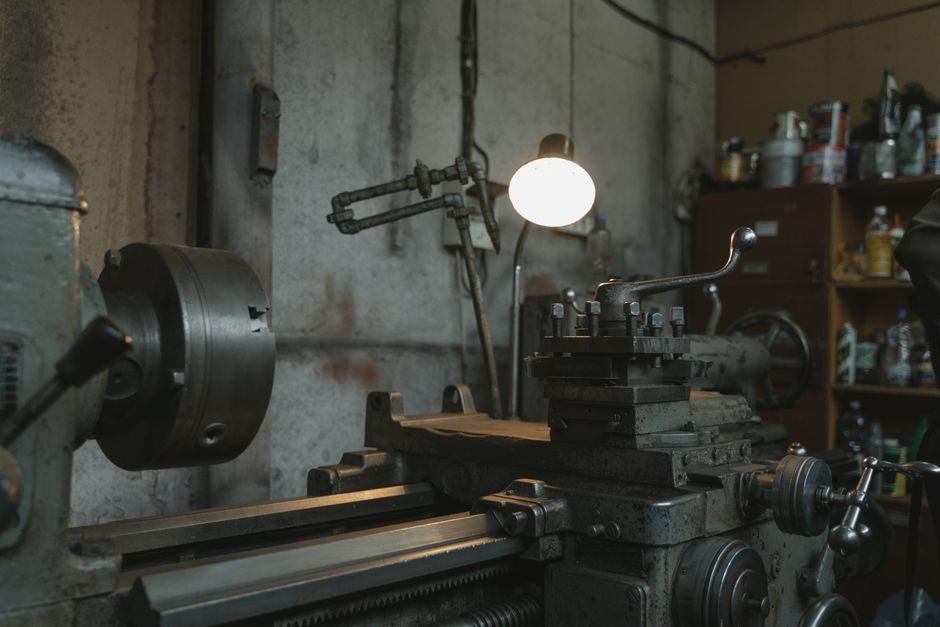
Screw machine parts are high-volume turned components produced from bar stock on single-spindle automatics, multi-spindle rotary machines, or sliding-head Swiss-type lathes, with form tools shaping external diameters and cross slides doing the secondary ops [S1][S2]. In a 2026 production environment the most common part families are simple bushings, threaded studs, knurled spacers, and custom medical or fluid-power fittings in brass C36000, 12L14 steel, 303/304 stainless, and 6061-T6 aluminum [S3][S4].
The category is broad: long-established shops such as Hyland Screw Machine Products have been turning precision components since 1928, run four generations of family ownership, and ship over 1 million parts per year under ISO 9001:2015 [S3]. Apex Machine Products has produced automatic screw machine products and CNC turned parts in Racine, WI since 1943, and full-service screw machine toolrooms such as Micro Form (Michigan, in business since 1980) supply form tools, shave tools, dovetail tooling, and carbide insert holders to that same customer base [S2][S4]. Tooling geometry — not the machine platform — sets the practical cost ceiling per part, so the part-type decision starts with the cutting tool.
Part Types Defined by Process Platform
Single-spindle automatic screw machines (Acme, New Britain, Davenport, Conomatic, Tornos, Index) feed one bar through one collet and use a sequence of form tools, cross slides, and cutoff tooling; they are the workhorse for lot sizes above ~5,000 pieces where a single diameter change justifies a 2-4 hour setup [S1][S4]. Multi-spindle rotary machines — Acme Gridley RA-6, RB-8, RB-6, RBN-8, RAC-6, RPA-6/8, plus the smaller 7/16" RA-6 through 1-5/8" RB-6 in the same product line — cut cycle time by running four, six, or eight spindles in parallel against a single bar [S1]. Each spindle can carry independent form tools, drilling, and thread chasing, so multi-spindle is preferred for parts under ~3" length where you want one piece per index instead of one piece per bar feed [S1].
Swiss-type (sliding headstock) machines hold the bar through a guide bushing so deflection is suppressed; they win on small-diameter, long-aspect-ratio parts — typically under 1/2" diameter and over 4:1 length-to-diameter — and are widely used for the lead-screw-adjuster bodies, medical bone screws, and electronic connector pins that show up in 2026 sourcing lists [S3]. For work that needs more than turning and simple milling — hex flats, slots, off-center holes — shops typically retrofit servo cross slides, CNC compound 2-axis slides, and synchronized thread-milling attachments onto an existing Acme Gridley or New Britain platform [S1].
Tooling Families That Define a Part's Geometry
Form tools — circular form, dovetail form, dovetail shave, solid or brazed carbide form, and carbide insert form tools — are the workhorse cutting geometry; the form tool blank is plunge-fed radially into the rotating bar to produce the finished OD profile in one revolution [S2]. Tight-tolerance form tools ground with CAD datum design on EDM machines hold the tight-tolerance ±0.0005" to ±0.001" range that is typical for the threaded and knurled features of screw machine parts [S1][S2]. Shave tools (dovetail shave) follow a pre-formed blank to improve surface finish and bring the diameter into spec without removing large chip loads; they are paired with form tools whenever a part is run on a multi-spindle at high spindle speed.
Secondary tooling covers the rest of the feature list: form reamers and straight reamers for inside diameters, single-point and power recess tools for screw-recess machining, step drills and trepan tools for deep or large-diameter holes, broaches for internal keyways and slots, back chamfer tools for lead-in chamfers on both ends, and pick-off tools for transferring a finished part off the spindle [S2]. Threading is handled by single-point thread chasing, synchronized thread milling, or in the case of the most precise work, by linear-sensor-controlled tapping heads holding ±0.001" tap depth on a 7/16" RA-6 through 8" RPA-8 platform [S1]. Tool bits, keyseat cutters, center laps, and burrs round out the consumable bench, and resharpening with full coating service (TiN, TiCN, AlCrN) is standard from full-service shops [S2].
Application Map by Material and Tolerance Band
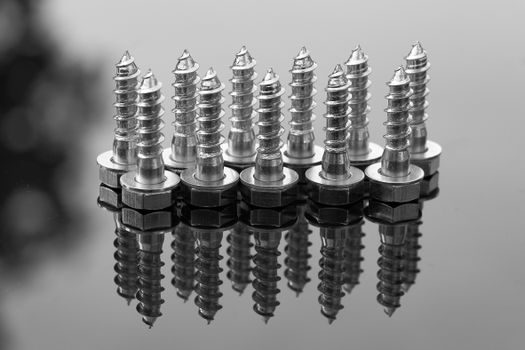
12L14 leaded steel is the equivalent low-cost ferrous choice for automotive brackets, threaded bushings, and small ball-screw-related hardware where moderate corrosion and tighter cost targets dominate; 303 stainless is the standard for medical, food-grade, and aerospace fittings because its sulfur addition preserves machinability while keeping the corrosion rating of an austenitic grade. 304 stainless and 316 stainless are specified where weldability or chloride resistance matters more than chip-breaking, and are usually run on Swiss-type machines with high-pressure coolant. 6061-T6 aluminum is the default for weight-sensitive parts, and because aluminum cuts at surface speeds above 1,000 SFM, the same Acme Gridley 1" RAN-6 platform that runs 100 brass parts per hour can run 300+ aluminum parts per hour [S1][S3].
Tolerance band selection is equally concrete: ±0.005" on diameters and ±0.010" on length is the standard expectation on a single-spindle or multi-spindle automatic with a form tool, ±0.001" is the practical floor when linear-sensor tapping and CNC cross slides are added, and Swiss-type work regularly holds ±0.0005" on critical features [S1][S2]. Surface finish of 32 µin Ra is typical on a honed form tool, and 16 µin Ra is achieved with a shave pass; any tighter finish usually justifies moving the part off the screw machine onto a secondary grinding or honing operation. For a related cut-off workflow that often follows a screw machine cell, this cut-off machine selection map for interior finishing maps the abrasive-side spec band; for the upstream aluminum stock side, the rubber tubing suppliers and material bands piece shares the same ISO-style band framework that applies to round-bar sourcing.
Who Should Use a Screw Machine — and Who Should Not
Screw machines pay back when bar stock diameter is under ~2-5/8" (the largest Acme Gridley spindle in the rebuild catalog is 8" RPA-6/8, but the practical sweet spot is 7/16" through 2-3/8" HSC-6) and annual volume clears 5,000-10,000 pieces per part number [S1][S3]. The cost crossover with CNC turning is roughly 1,000-3,000 pieces depending on cycle time, and multi-spindle wins decisively above 50,000 pieces/year because the per-index time collapses from minutes to seconds [S1]. A shop will use a screw machine for threaded fasteners, knurled knobs, fluid-power fittings, sensor bodies, electrical contact pins, and medical implant components that need a turned-and-milled combination at high volume [S3][S4].
The screw machine is the wrong tool when the part needs prismatic features larger than the bar diameter (a milled pocket or a deep slot, for example), when lot size is under ~500 pieces and a CNC lathe will finish the job in two operations, when material is bar form above ~3" diameter, or when burr-critical medical specs call for a single-setup Swiss cell. It is also the wrong tool for parts with cast or forged pre-forms, where the screw machine is preceded by a secondary mill. For a different family of high-volume turned products, the rubber tubing types and applications map covers extruded (not machined) cylindrical parts and uses an identical volume-versus-tolerance decision frame.
Rebuild, Retrofit, and Capacity Decisions for 2026
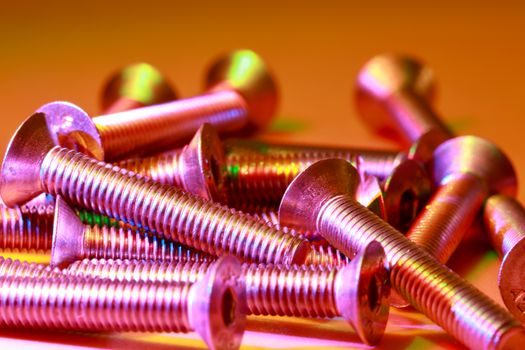
Used Acme Gridley, New Britain, Davenport, and Conomatic platforms are still the dominant installed base in North American screw machine shops, and rebuilding an existing spindle carrier, toolslide, or headstock — rather than buying a new CNC — is the standard cost-control move in 2026 [S1]. TechDrive conversions that swap the mechanical drivetrain for a Fanuc CNC give the legacy machine infinitely variable speeds and feeds and add CNC cross-slide expandability without scrapping the cast iron [S1]. Servo retrofits — single-axis cross slides, thread chasing, arbor milling, cross drill/end drill, straddle milling, and synchronized end slotting — drop onto the same mechanical platform and add a second generation of CNC capability [S1].
Spindle sizes in the rebuild and parts catalog cover the full 7/16" RA-6 through 8" RPA-6/8 family, with the 1-5/8" RB-6, 2" RB-8, and 2-5/8" RB-8 being the most rebuilt configurations because they cover the bulk of the brass and steel fittings market [S1]. Custom engineering, equivalent parts fabrication, and surplus OEM spares are listed part-by-part so a shop can source a single bushing or a full headstock rebuild from the same vendor [S1]. For a sourcing-side comparison, the industrial oven suppliers 2026 map and the ferrosilicon suppliers map use the same vendor-tier and spec-band format that an engineer evaluating a screw machine shop's tooling shelf would apply.
Quality, Standards, and Sourcing Signals
The dominant quality framework in 2026 is ISO 9001:2015 — Hyland Screw Machine Products is certified to it, and most mid-market screw machine shops in the U.S. Midwest hold the same accreditation [S3]. For medical and aerospace work, additional certifications (ISO 13485 for medical devices, AS9100 for aerospace) layer on top of ISO 9001:2015, and the same shop will usually run a calibrated inspection bench with micrometers, depth micrometers, height micrometers, vernier calipers, and dial indicators in the 0.001" to 0.0001" resolution band. Inspection tools in the screw machine cell itself typically include plug gages, ring gages, and thread gages, with optical comparators reserved for first-article and layout work [S5].
Material traceability is verified by mill cert and usually held on file for seven years; for embedded-part assemblies that combine a turned screw machine body with a molded insert, the supplier is expected to control both the bar stock and the insert resin under a single PPAP or first-article package. Watch for two specific signals in 2026: (1) shops that have added in-house CNC thread milling and synchronized end-milling attachments are pushing the multi-spindle platform into feature sets that used to require a secondary CNC, and (2) rebuild lead times for Acme Gridley spindle carriers are running 8-12 weeks at most North American rebuilder shops, which is the practical constraint when sizing capacity for the second half of 2026 [S1].
Closing note: for a shop choosing a screw machine vendor in Q3 2026, confirm spindle size (7/16" RA-6 through 8" RPA-8), platform age, available servo retrofits, and ISO 9001:2015 certification on the certificate itself, then run a 100-piece first-article against your tightest tolerance and surface-finish callout before green-lighting a production run [S1][S3].