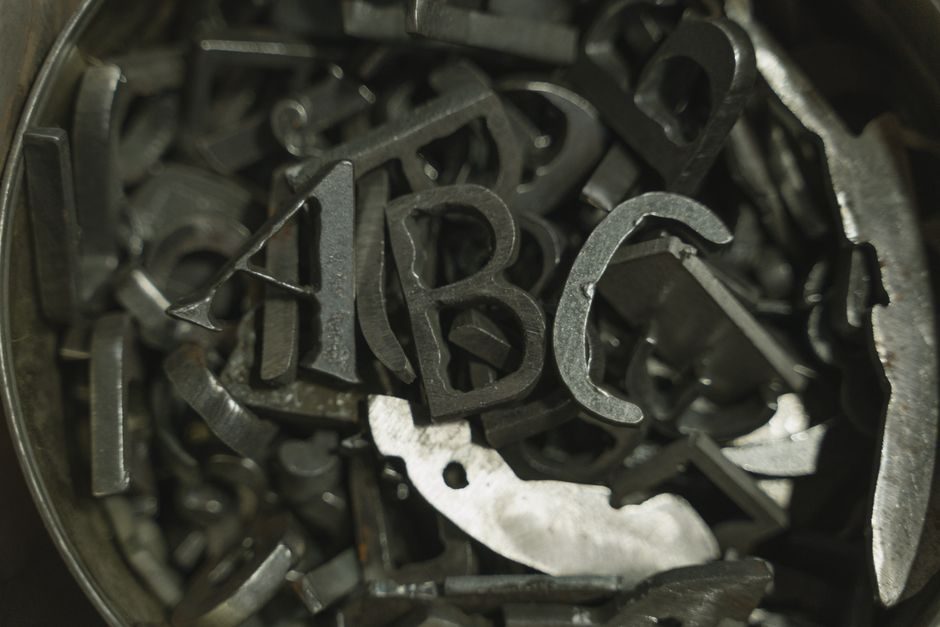
Alloy steel selection for mold and die making is driven by four decision variables — working hardness, wear regime (abrasive vs adhesive), impact loading, and thermal exposure — with AISI D-series, H-series, and P-series grades covering the dominant cold-work, hot-work, and plastic-mold applications [S1].
The Chinese bar-export supply base lists mold steel as a stock category alongside carbon, alloy, stainless, and free-cutting grades, and frames common mold-steel chemistry in the 40Cr / 42CrMo / 4140 / 4340 / 42CrMo4 family for quenched-and-tempered preforms [S1]. Heat-treatment capacity — vacuum hardening, quenching, tempering, normalizing, annealing, and cryogenic hardening — is bundled into the same supplier envelope, which compresses the lead time between blank supply and finished die cavity [S1].
Cold-Work Tool Steels: D2, D3, A2, and O1 Compared
Cold-work grades D2 (1.2379 / SKD11) and D3 (1.2080 / SKD1) are the default for high-volume blanking, punching, and tooling-die inserts where abrasive wear dominates over shock loading, with typical working hardness 58–62 HRC after vacuum hardening and double temper [S1]. A2 (1.2363) trades ~2 HRC of wear resistance for a measurable gain in toughness and dimensional stability during air-hardening, while O1 (1.2510) oil-hardening remains the low-cost choice for short-run dies and repair parts [S1].
Quenched-and-tempered preforms in the 4140 / 42CrMo4 / 4340 family are routinely supplied at 28–32 HRC as a weldable, machinable substrate for die holders, bolsters, and mold base plates, then locally hardened at the cavity only [S1]. The drilling-depth capability of 100–300 mm diameter holes up to 3000 mm deep on 4140 / 4145 / 4150 / 42CrMo4 forgings supports deep-cooling-channel machining in die-set construction [S1].
Hot-Work Tool Steels: H11, H13, H21, and Die-Casting Die Demands
Hot-work grade H13 (1.2344 / SKD61) is the workhorse for aluminum and zinc die-casting die and forging dies, with a typical working range of 48–52 HRC, a 600 °C hot-yield ceiling, and a chemistry centered on 5% Cr, 1.5% Mo, 1% V that resists thermal-fatigue cracking across cyclic heating [S1]. H11 (1.2343) drops the vanadium to lower wear resistance but raises impact toughness for hammer-die inserts, while H21 (1.2581) tungsten-rich chemistry pushes hot strength higher for hot-extrusion tooling [S1].
Die-casting die selection is a thermal-fatigue problem first and a wear problem second: dies see 200–400 °C surface temperatures with water-based die spray each cycle, and the 5% Cr martensitic family was developed specifically to tolerate this regime without gross-cracking failure [S1]. Heat-treatment routing is usually vacuum austenitize, gas-quench, then double temper at 560–620 °C to convert retained austenite below 5% and stabilize the cavity dimensions before EDM or wire-cutting [S1].
Plastic-Mold Steels: P20, 2738, NAK80, and Stainless Variants
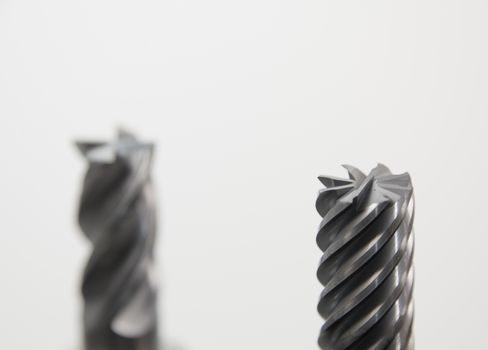
P20 (1.2311 / 1.2738) at 30–36 HRC remains the default plastic-mold steel for injection and compression molds up to medium cavity depths, supplied pre-hardened so the mold base can be CNC-machined without post-quench distortion [S1]. The 1.2738 variant adds ~0.15% Ni to P20 to improve through-thickness hardness uniformity on large blocks, which matters when mold dimensions exceed 600 mm [S1].
For abrasive glass-filled or mineral-filled resins, NAK80 (1.2688 / 10Ni3MnCuAl) and similar 40 HRC precipitation-hardening mold steels give a polished, weldable cavity without the distortion penalty of through-hardening. Corrosive molding (PVC, flame-retardant additives) shifts selection to stainless mold grades such as 420-modified, S136 (1.2083), or 1.2316 with 13–17% Cr and a PVD-nitriding finish [S1].
Forged Preform Supply: Sizes, Tolerances, and Heat-Treatment Capacity
Forged preform capacity for die blocks covers OD up to 485 mm in closed-die work at 0.5–50 kg per part, and up to 4.5 MT single-piece weight in open-die forging, with ring-type forgings reaching 2000 mm diameter at 3500 kg [S3]. Such blocks feed directly into the rough-machining stage of large mold base fabrication, where the forging's grain-flow orientation is preserved to maximize through-thickness toughness [S3].
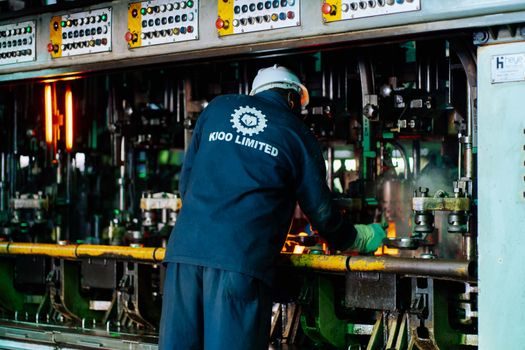
Heat-treatment furnaces sized at 3-ton and 5-ton capacity, instrumented with digital data loggers, are typical for the in-house normalizing, quenching, and tempering of die preforms before shipment [S3]. Quality-system coverage on the forging side runs ISO 9001:2015, ISO 14001:2015, ISO 45001:2018, and PED for pressure-equipment-linked die work, with in-house PMI, MPI, ultrasonic, and impact (ASTM and BS) testing [S3].
Selection Criteria: Hardness vs Toughness vs Machinability vs Cost
The cold-work vs hot-work vs plastic-mold choice is a four-axis trade: working hardness (HRC), Charpy impact (J), machinability rating (% relative to 1212 free-cutting steel), and relative cost per kg. D2 sits at the high-hardness, low-impact corner; H13 in the middle on all four; P20 in the high-machinability, low-cost corner. [S1]
On the cost axis, the carbon-and-alloy bar base 4140 / 42CrMo4 is roughly one-third the price of D2 or H13 in the same supplier catalog, and is therefore the default for non-cavity die components (bolsters, clamping plates, ejector housings) [S1]. On the machinability axis, pre-hardened P20 at 30–36 HRC cuts ~40% faster than D2 at 60 HRC, and accepts deep cavities with 0.05 mm tolerance without EDM correction when tooled with carbide [S1]. On the toughness axis, H13 at 48 HRC delivers ~27 J Charpy V at room temperature, roughly 5× higher than D2 at 60 HRC, which is why hammer-die and extrusion-die cavities default to H-series [S1].
Failure Modes and Heat-Treatment Pitfalls
The three dominant failure modes in service are gross-cracking (D2 cold-work, low-temper), thermal-fatigue checking (H-series, under-tempered), and EDM micro-cracks (any high-HRC grade with no post-EDM stress-relief). Each maps to a heat-treatment fix: a third temper at 540 °C for D2 to convert retained austenite; double-tempering H13 above the secondary-hardening peak (~560 °C) to stabilize the matrix; and a 450 °C post-EDM stress-relief on any cavity over 55 HRC [S1].
Distortion is the secondary failure vector on through-hardened grades — vacuum-furnace gas-quench pressure must match the cross-section, otherwise thin ribs on a P20+ cavity will warp out of the ±0.02 mm grinding tolerance. Cryogenic treatment at -196 °C between quench and first temper is the established route to drop retained austenite below 2% on D2 and H13, and is now listed as a standard heat-treat service by mold-steel bar exporters [S1].
Welding, Repair, and Surface Treatment of Cavities
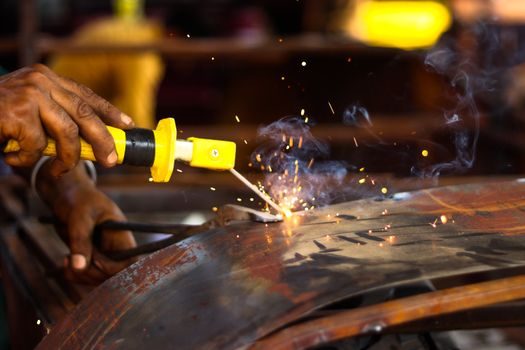
Weld-repair of die cavities is a controlled-process step rather than a field fix: pre-heat 300–400 °C, use matching-chemistry filler (e.g. H13-grade weld rod to repair H13 dies), post-weld stress-relief at 580–620 °C, then re-harden and re-temper — only on H-series and low-alloy substrates, never on D2 at service hardness [S1]. P20-family molds are routinely TIG-welded with 1.2311 / P20 filler and re-aged at 500 °C without full re-quench, which is why P20 dominates large repairable casting-mold work [S1].
Surface-engineering options stack onto the bulk grade: nitriding (gas or plasma) adds a 0.3–0.8 mm case at 900–1100 HV for sliding parts; PVD coatings (TiN, CrN, AlCrN) push cavity surface hardness above 2000 HV for glass-filled-resin molding; and chrome plating remains a corrosion-defense option for PVC tooling where the bulk grade is 420 / S136 [S1].
Supply Map and Standards Crosswalk
Chinese bar exporters cross-list mold-steel grades under GB, AISI, DIN (W-Nr), and JIS (SKD) designations in a single product line, with mold steel as an explicit stock category alongside carbon and stainless [S1]. The same supplier groups sand-casting mold and die-casting tooling under "machinery, mold-making" end-use, with forging capacity sourced to 0.5–50 kg closed-die and 4.5 MT open-die producers [S1][S3].
Trackable signals for the next review window: (1) whether cryogenic treatment remains standard inclusion in mold-steel bar export quotes, given its measurable effect on D2/H13 dimensional stability [S1]; (2) supply-side expansion of NAK80 / 1.2688 pre-hard stock for large plastic-mold cavities; (3) uptake of closed-die forging to 2000 mm ring diameter for wind-turbine hub molds, where the Lal Metal-style 3–5 ton heat-treat furnace envelope sets the practical cap [S3]. For an adjacent spec map on the same alloy-steel family used in automotive components, see the automotive alloy-steel selection guide.