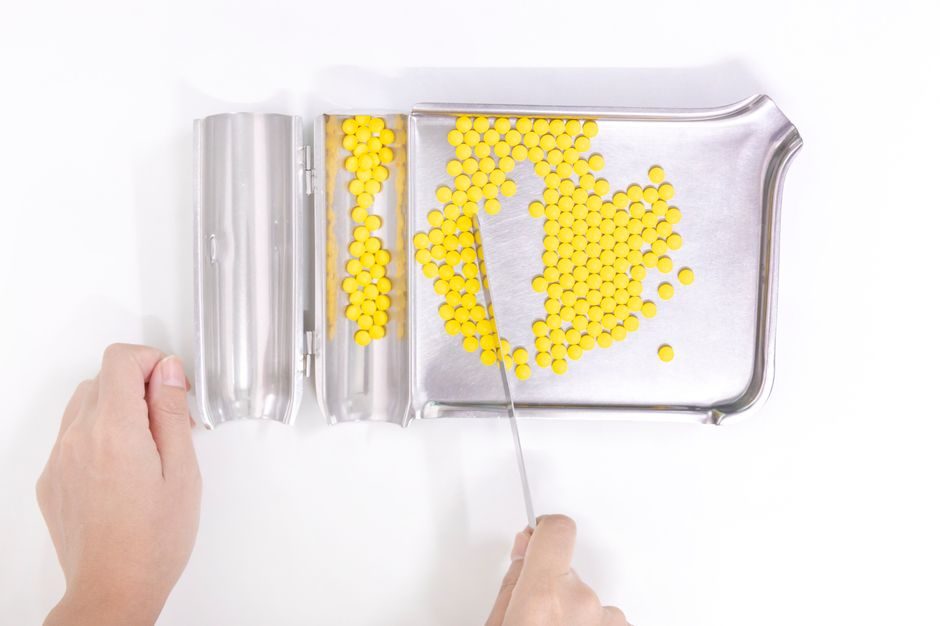
Medical-device alloy selection in 2026 is governed by three hard constraints — MRI non-magnetic behaviour, ISO 10993-class biocompatibility, and resistance to autoclave/sterilisation corrosion — with cobalt-chromium alloys such as Elgiloy® leading the implant and orthodontic-wire segment [S1].
Outside the implant category, alloy steel families split sharply: martensitic 420/440 and precipitation-hardening 17-4 PH cover cutting edges and surgical instruments, while 54-56 HRC matrix tool steels (12 % Cr or modified 5 % Cr) dominate moulds for medical-grade polymer optics [S2].
Implant and In-Body Wire/Strip: Cobalt-Chromium (Elgiloy® Class)
Elgiloy® is a non-magnetic Co-Cr-Ni alloy originally commercialised in 1947 as a watch spring; in 2022 the grade marked 75 years in service, with current medical use centred on orthodontic brackets and wires, implantable cardiac valve frames, medical stylets, infusion-pump metal bellows, and orthopaedic devices [S1].
The non-oxidising Co-Cr matrix gives the alloy its biocompatibility claim: it does not corrode in contact with body fluids and therefore does not release toxic ions into surrounding tissue, while its non-magnetic structure allows patients to undergo MRI without image artefact or device displacement [S1].
Surgical and Cutting Instruments: 420, 440 and 17-4 PH Stainless
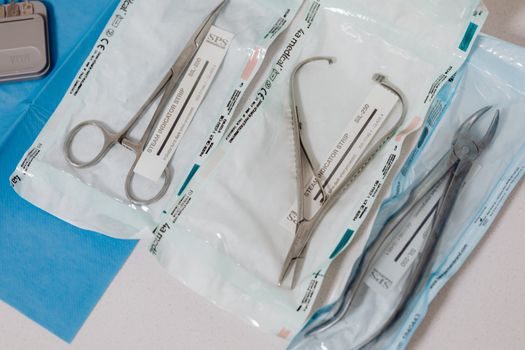
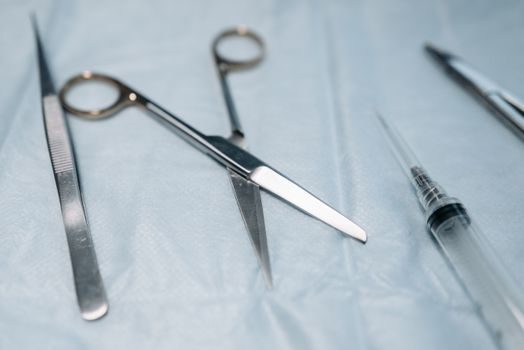
For reusable scalpels, forceps, needle drivers and dental burs, martensitic 420 (≈13 % Cr) and 440C (≈17 % Cr) remain the default picks because they take a 58-60 HRC edge and survive repeated 134 °C steam sterilisation; 17-4 PH (UNS S17400) is preferred where higher tensile strength (≈1310 MPa aged H900) and corrosion resistance are both required, such as in arthroscopic and endoscopic shafts. [S1]
These martensitic and PH grades sit inside the broader stainless-steel envelope rather than the pure alloy steel family, but are routinely grouped with alloy steels on medical procurement schedules and are the workhorse choice for re-processable instruments.
Plastic-Optic and Polymer-Component Moulds: 54-56 HRC Matrix Tool Steels
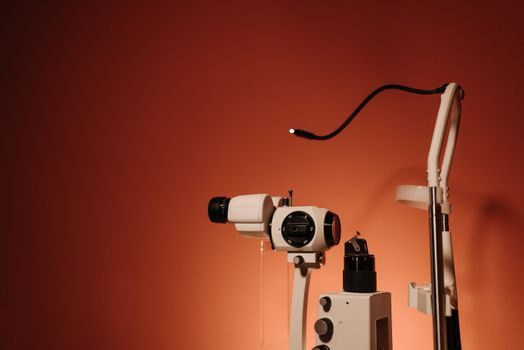
For medical polymer optics — head-up displays, AR/VR optics, transparent diagnostic components — the mould material must take a mirror polish, hold dimensional stability across long injection cycles, and resist corrosion from aggressive polymers or HFFR/biocomposite feedstock; ASSAB specifies Tyrax ESR (0.4 C, 12.0 Cr, 2.3 Mo, 0.5 V) and Unimax (0.5 C, 5.0 Cr, 2.3 Mo, 0.5 V) at 54-56 HRC for this duty [S2].
Tyrax ESR carries a high chromium content for corrosion resistance, while Unimax is a modified 5 % Cr steel tuned for toughness; both grades are matrix-type with reduced primary-carbide size, which is what allows the mirror-class polish that optical-grade polymer parts require [S2].
Selection Criteria and How the Three Families Compare
Across the three main alloy families, the four most consequential selection axes are MRI safety, edge hardness, corrosion mode, and biocomability evidence. [S1]
Elgiloy® Co-Cr wins MRI safety + corrosion in body fluid but cannot be hardened to cutting-edge levels and is supplied as wire/strip, not bar [S1]. Martensitic 420/440 stainless and 17-4 PH deliver 58-60 HRC edge hardness, are autoclave-tolerant, but are ferromagnetic and therefore contraindicated for in-body implants exposed to MRI. Tyrax ESR / Unimax at 54-56 HRC are tool-room steels: not used as implant or instrument material at all, but specified for the moulds that produce transparent medical polymer components [S2].
For procurement, the practical decision rule is: in-body wire/strip or MRI-adjacent hardware → Co-Cr (Elgiloy class) [S1]; reusable cutting or articulated instruments → 420/440/17-4 PH; moulds for medical polymer optics → 54-56 HRC matrix tool steels such as Tyrax ESR or Unimax [S2].
Supply, Standards and Biocomability Documentation
OEMs such as Elgiloy Specialty Metals ship material under tight tolerance control, with in-house lab testing and small R&D to large production lots; the parent Combined Metals network adds flat-rolling, wire-drawing and slitting capacity, with service centres and representation in most medical-device manufacturing hubs [S1].
Independent regional stockholders and exporters (e.g. Chhajed Steel & Alloys in Mumbai; Shenzhen LongZhan Trading Co. in Guangdong) round out the alloy-steel pipe, tube and bar supply chain for medical-tooling and instrument finishing, with shipment coverage spanning the Middle East, Southeast Asia, South America, and Africa [S3][S4]. Biocomability evidence in regulated submissions typically relies on ISO 10993 cytotoxicity/sensitisation panels, ISO 13485 quality-system certification at the device manufacturer, and ASTM F75 / F562 for cast and wrought Co-Cr implant alloys — the metallurgical baselines against which Elgiloy-type compositions are benchmarked [S1].
Common Failure Modes and Pitfalls to Avoid
Three specification errors dominate medical alloy-steel sourcing: specifying a ferromagnetic 420/440 or 17-4 PH part for an in-body implant where MRI displacement and image artefact are unacceptable; choosing a non-medical-grade tool steel for a polymer-optics mould and ending up with a mould that cannot hold a mirror polish past 10 000 shots; and accepting material without ISO 10993 evidence documentation, which invalidates the device file. [S2]
For high-volume optical moulds, switching to a non-corrosion-resistant tool steel in the presence of corrosive polymers, HFFR compounds, or biocomposites is the most common root cause of premature mould degradation and surface pitting; corrosion-resistant 12 % Cr or modified 5 % Cr matrix grades eliminate this failure path [S2].
Adjacent Material Families Often Confused with Alloy Steel
Titanium alloy (notably Ti-6Al-4V, ELI grade) is the dominant orthopaedic-implant and spinal-cage material because of its low modulus (≈110 GPa vs ≈200 GPa for Co-Cr) and proven osseointegration, and is now the first choice for load-bearing implants where the higher modulus of Co-Cr causes stress-shielding concerns [S6].
Nickel alloy and carbon steel families appear in adjacent medical supply chains — nitinol (Ni-Ti shape-memory alloy) for stents and orthodontic archwires, carbon-steel blanks for non-implant cutting tools — but are not the workhorse picks for the three core device categories above.
Material specifiers should treat Elgiloy-class Co-Cr, 17-4 PH / 420 / 440 stainless, and 54-56 HRC matrix tool steels as the three-pillar default for medical-device alloy selection, reserving titanium for load-bearing implants and nitinol for shape-memory applications.
For related context on the same alloy-steel family applied to other manufacturing sectors, the 2026 alloy-steel selection map for automotive manufacturing covers the chassis and powertrain counterpart to the medical wire/strip use case. Track the next revision of ISO 10993-5 (cytotoxicity) and any tightening of ASTM F562 Co-Cr-Ni-Mo compositional limits as the two most likely near-term regulatory signals that will move medical alloy-steel specifications.