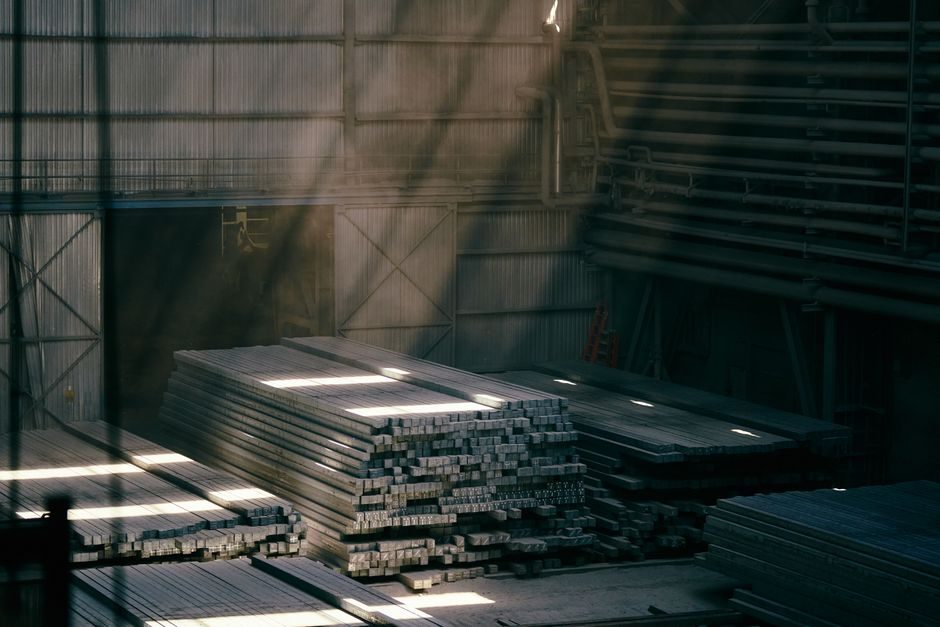
Alloy steel in construction is not a single material but a family of low- and medium-carbon steels with deliberate additions of Cr, Ni, Mo, Mn, Si, B and V that lift hardenability, tensile strength and toughness well above plain carbon steel baselines [S6].
Selection drivers in 2026 are dominated by weldability, the yield-to-tensile ratio (typically ~0.85 in quenched-and-tempered structural grades), fatigue resistance at welded joints, and the ability to source hot-rolled round bars and plates in ASTM/EN-equivalent grades [S5][S6].
What "Structural Alloy Steel" Actually Covers
Structural alloy steel is defined as steel containing one or more deliberate alloy additions, used for machine parts and engineering components, with suitable hardenability so that after appropriate heat treatment the microstructure becomes uniform sorbite, bainite or very fine pearlite [S6]. This microstructure is what gives the grade its signature combination: tensile strength well above plain carbon grades, a yield-to-tensile ratio clustered around 0.85, elevated toughness and fatigue strength, and a low ductile-to-brittle transition temperature, which together let it carry load in larger cross-sections than carbon steel can [S6].
For construction buyers the practical consequence is that alloy steel becomes the default choice once a section gets thick, a load gets cyclic, or a welded joint sits in a fatigue-critical path. Low-carbon base grades such as 08ps and low-alloy 10KhSND, the latter a Cr-Ni-Cu-Mo bearing steel used in road-building equipment, are commonly cited references in construction-machinery research, with passive fluxgate monitoring tracking how their structures evolve under thermal cycling [S3].
Common Construction-Relevant Grades and Where They Sit
Three families cover most constructional use: low-alloy structural plate (ASTM A572 / A633 analogues and the 10KhSND / 09Г2С type used in CIS-spec machinery), bearing-grade alloy round bar (100Cr6 / SUJ2 / GCr15, ~1.0% C, ~1.5% Cr) for pins, rollers and wear rings, and through-hardening medium-carbon grades such as 4140 / 42CrMo4 for high-stress shafts and couplings [S5][S6]. Hot-rolled alloy bearing steel round bars in 100Cr6 are widely listed for bearing rings, rolling-mill rolls and heavy-machinery balls where contact fatigue and hardness dominate the duty [S5].
For comparison across the most common picks used on a jobsite or in a fabrication shop, the table below lines the three against four selection criteria. This is a criteria-based pass that lets a buyer or engineer rank the options against actual duty, not vendor preference.
Low-alloy structural (e.g. 10KhSND, 09Г2С) vs bearing-grade 100Cr6 vs medium-carbon 4140/42CrMo4 on the four criteria that most often decide a construction spec: cost, weldability, typical hardness/tensile after heat treatment, and primary duty. Low-alloy structural is the cheapest of the three, has the best weldability (low C, low CE), is normally supplied hot-rolled with tensile in the 490–620 MPa band, and is aimed at welded frames and machine structures [S3][S6]. Bearing-grade 100Cr6 is more expensive, is not welded in service, reaches ~58–62 HRC after through-hardening, and is specified for rolling elements, wear rings and pin joints where contact fatigue dominates [S5]. Medium-carbon 4140/42CrMo4 sits in the middle on cost, is weldable only with preheat and PWHT, reaches 28–32 HRC (or ~850–1000 MPa tensile) after Q&T, and is the default for shafts, couplings and high-stress pins [S6].
Selection Criteria by Duty, Not by Grade Name

First decision is weldability. If the member is going to be welded in the field or shop, low-carbon / low-alloy structural grades (C typically ≤0.20%, CEV typically ≤0.45) are the safe default, since the higher carbon of bearing and through-hardening grades pushes them into the preheat + PWHT regime or out of weldability entirely [S6]. The alloy-element roles that matter for construction buyers are: Mn and Si for solid-solution strength, Cr and Mo for hardenability and elevated-temperature stability, Ni for toughness at sub-zero, and V / Nb / Ti for grain refinement and precipitation strengthening — each addition trades cost for a specific property, and the heat-treat route determines whether that property is actually realised [S6].
Second decision is load mode. Static axial load in a thick section points back to low-alloy structural plate. Cyclic or fatigue-loaded welded joints benefit from the fine bainitic / sorbitic microstructures that the Q&T route delivers, which is why construction-machinery research on 10KhSND tracks how thermal cycling shifts hardness and stray-field signatures over service life [S3]. Impact-loaded wear parts — bucket edges, crusher liners, cutting rings — slide toward high-Cr bearing or tool-grade alloys rather than constructional alloy steel, because hardness and abrasion resistance start to dominate over weldability.
Standards, Spec Sheets and What to Verify on the MTC
Construction-grade alloy steel is normally ordered to ASTM (A572, A633, A829 plate), EN 10025 for European structural plate, EN 10083 for quenched and tempered alloy steels, or the relevant GOST for CIS projects, and the mill test certificate should show the actual ladle chemistry plus CEV, the heat-treatment condition (as-rolled, normalised, Q&T), and the resulting mechanical properties [S6]. For bearing applications the relevant spec is typically ASTM A295 for high-carbon bearing steel, and the grade designation alone (e.g. 100Cr6) tells the buyer the nominal 1.0% C / 1.5% Cr chemistry but not the cleanliness or hardenability band, both of which must be checked on the cert [S5].
Buyers should also be alert to the fact that alloy steel and stainless steel are sold through overlapping distributor channels, and that vendor pages frequently mix the two; for a corrosion-exposed site the correct family is stainless steel or a nickel alloy, not an alloy steel that simply happens to be stocked on the same shelf [S2]. Where the structure is non-corrosive but weight- or stiffness-sensitive, aluminum alloy can be a legitimate alternative, but it does not match alloy steel on either modulus or fatigue strength at temperature.
Adjacent Equipment and Cross-Spec Considerations
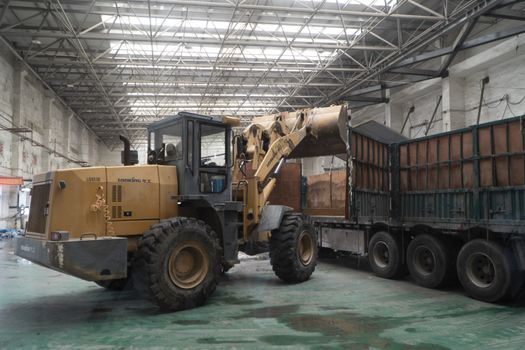
On a demolition or structural-steel jobsite the alloy choice drives downstream equipment decisions: cut-off wheels, die-casting parameters for fittings, and fixed gas detection for welding all change with the base metal. A cut-off machine spec map for demolition duty is useful when prepping alloy bar stock on site, and a strain gauge selection guide matters when verifying residual stress in welded low-alloy frames. For plants where the alloy steel sits inside a process skid, fixed gas detectors for construction sites cover the welding fume and shielding-gas hazards that come with the joining step. [S1]
Where alloy steel is being poured or cast into pump and valve bodies rather than rolled into plate, the selection logic shifts toward die casting machine tonnage and alloy match, because the duty and alloy system are different from a rolled-structural decision.
Limits, Failure Modes and What Alloy Steel Will Not Do
Alloy steel is not corrosion-proof. In atmospheric, marine or chemical exposure an alloy steel will rust at roughly the rate of a plain carbon steel; if corrosion resistance is part of the duty, the spec should move to stainless steel or a coated system, not a higher-alloyed carbon steel [S2]. It is also not a substitute for a titanium alloy where strength-to-weight at elevated temperature is the driver, nor for a silicon-steel core where magnetic hysteresis loss dominates. Hydrogen embrittlement is a real failure mode in higher-carbon alloy steels under sustained tensile load in humid service, and the standard mitigation routes are lower-carbon variants, vacuum degassing, and controlled hardness [S1].
The right discipline is to set the required through-thickness mechanical property first, then pick the lowest-alloy grade that hits it after the available heat treatment.
Trackable signals to watch over the next sourcing cycle: revision updates to ASTM A829 plate and EN 10083-3 for quenched-and-tempered alloy steels, any tightening of CEV limits in EN 10025 for thicker structural plate, and reported lead-time drift on 100Cr6 bearing bar, which has historically been the tightest alloy construction input.