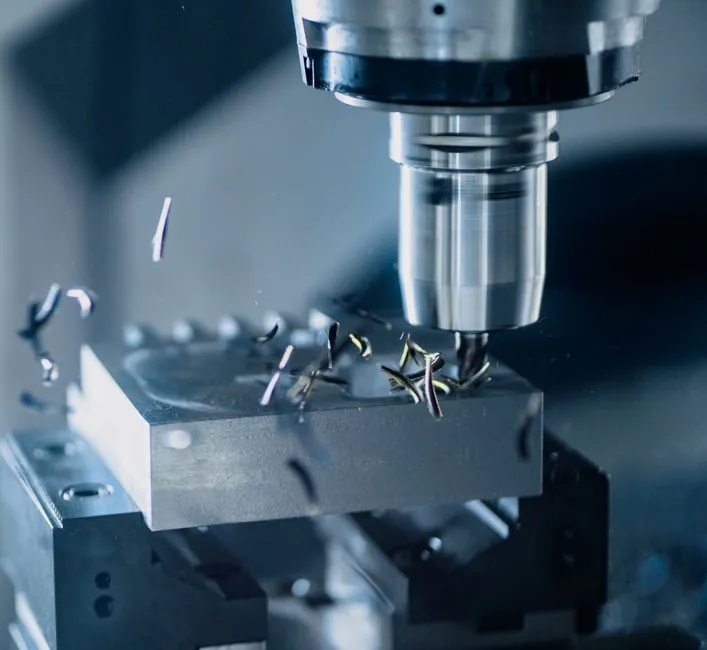
For high-stress components, alloy steel is the default specification: 4140 (Cr-Mo) and 4340 (Ni-Cr-Mo) routinely deliver 125-150 ksi ultimate tensile strength after quench and temper, versus 65-100 ksi for medium-carbon AISI 1045 in the same condition [S3][S6].
Carbon steel earns its place on cost, weldability, and low-cycle ductility: low-carbon grades (under 0.3% C) are the most widely used steel on earth, chosen wherever forming and joining dominate the design [S1][S5]. The decision below is engineered around stress state, not a single number.
Composition, Grades, and the 8% Line That Defines "Alloy"
Carbon steel is an iron-carbon alloy with carbon between 0.05% and 2.1% by weight; any other elements present are treated as residuals, not deliberate additions [S3]. The category splits into low-carbon (under 0.3% C, mild steel), medium-carbon (0.3-0.6% C), and high-carbon (0.6-1.25% C, with 2% as the practical ceiling before the alloy becomes brittle cast iron) [S1][S5].
Alloy steel uses the same iron-carbon base, then adds deliberate alloying elements at 1-5% (low-alloy) or 8% and above (high-alloy, including the stainless family at roughly 12% chromium) [S1][S2][S3]. Common additions are chromium, nickel, molybdenum, vanadium, manganese, silicon, and boron; each shifts the matrix in a specific direction, hardening response, corrosion resistance, or temper embrittlement behaviour [S1][S2][S4]. The reference low-alloy grade 4140 (0.4% C, 1% Cr, 0.2% Mo) is the workhorse for stressed shafts and gears [S3]. For related bar-stock tolerancing when you spec 4140 round bar, see alloy steel round bar size tolerance for machining stock.
Mechanical Properties Side by Side
Alloying elements change the rules: alloy steel trades raw hardness-as-quenched for a much deeper hardening response, finer grain, and better toughness at the same strength level [S5][S6]. Tensile strength climbs because the alloying elements (especially Mn, Ni, Cr, Mo) refine grain size, improve hardenability, and shift the transformation products toward tougher tempered martensite [S2][S5].
Carbon steel shows the opposite trade curve: as carbon rises from 0.1% toward 1.0%, hardness and tensile strength climb, but ductility and weldability fall off [S3][S5]. The general comparison, with the caveat that alloy content can flip individual rows, looks like this: alloy steel has high to very high corrosion resistance, low-to-medium weldability, and low-to-medium ductility by default; carbon steel has low corrosion resistance, high weldability, and high ductility at low C [S3]. For heavily loaded components specifically, alloy steel delivers higher fatigue strength and better high-temperature performance than plain carbon steel of equivalent tensile strength [S6].
Decision Matrix for High-Stress Components
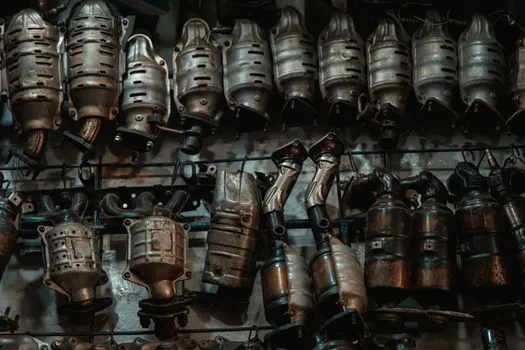
Match the failure mode, not the marketing claim. For cyclic or impact loading (drive shafts, connecting rods, gear teeth, crane pins, springs under repeated stress), alloy steel wins because of superior fatigue strength and through-hardening, especially in larger cross-sections where plain carbon steel cannot develop a hard case without a dramatic quench that risks distortion and cracking [S1][S4][S6]. For elevated-temperature service above roughly 400 deg C (boiler tubing, reformer fittings, turbine bolting), chromium-molybdenum alloy grades retain strength where carbon steel graphs rapidly [S2][S6]. For sour-service (H2S) environments, NACE MR0175 restricts hardness to roughly HRC 22 maximum, which effectively forces low-carbon or low-alloy grades and rules out high-carbon [S3].
The break-even cases: thin-wall pressure vessels and structural frames where welding dominates the cost, and code stamp (ASME) requires weldability, push the spec toward low-carbon or low-to-medium carbon steel [S2][S3]. Cutting tools, springs, wear plates, and wire rope favor high-carbon steel for its as-quenched hardness and lower alloy cost [S3][S5]. A practical working table:
Cost: carbon steel lower upfront, alloy steel lower over service life when corrosion maintenance is included [S2][S3]. Strength: alloy steel exceptional, carbon steel sufficient for non-critical loads [S2]. Corrosion resistance: alloy steel excellent as a base property, carbon steel needs coatings or galvanizing [S2][S3]. Machinability and weldability: carbon steel easier in both, alloy steel needs preheat, post-weld heat treatment, and sometimes low-hydrogen consumables [S1][S2].
Welding, Heat Treatment, and the Hidden Cost of "Stronger"
The biggest specification trap is treating alloy steel as a drop-in for carbon steel. Alloy steels are difficult to weld and prone to cracking without preheat (typically 150-300 deg C depending on section and grade) and PWHT, which adds labour and fixture cost that can erase the material price gap on small parts [S1]. Carbon steel, particularly low-carbon grades, welds with basic procedures and does not generally require preheat below roughly 25 mm section at ambient [S1][S2].
Heat treatment behaviour also diverges. Alloy steels respond to quench and temper in a much wider range of section sizes because the alloying elements delay pearlite formation, allowing martensite to form at slower cooling rates [S5][S6]. For spec interpretation of the resulting tensile numbers, quenched and tempered alloy steel tensile strength: ranges, limits, and how to read them walks through typical UTS/yield bands by section size. Carbon steel needs water or brine quench to harden in thick sections, which raises distortion and crack risk and effectively caps the usable strength envelope [S5].
Where Each Steel Wins in Real Service
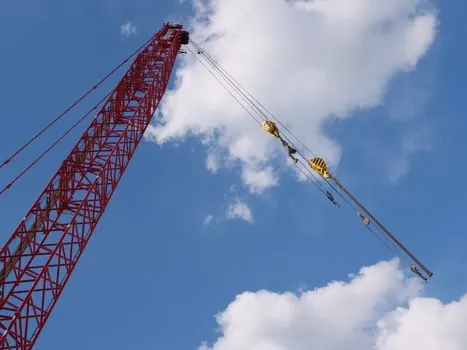
Alloy steel applications cluster in heavy industry: mining, aerospace, automotive driveline, railroad axles and rails, power-generation shafts, and high-strength structural members for bridges and high-rise buildings [S1][S2][S4]. The combination of strength-to-weight advantage and fatigue resistance is what makes alloy steel lighter than carbon alternatives for the same duty, useful when every kilogram of rotating mass or structural steel matters [S4].
Carbon steel applications dominate general construction (rebar, structural shapes, pipelines), chemical and oil-and-gas pressure piping, automotive body panels, cutting tools and springs at the high-C end, plus legacy weapons and rail [S1][S2][S4]. Low-carbon steel is the default in simple mechanical systems where hobbyist and OEM fabrication matters; medium-carbon lands in gears, axles, and railway components; high-carbon goes into springs, wires, chisels, and blades [S2][S4]. For a closer look at fatigue-loaded wire applications, the 1x7 vs 1x19 steel strand construction, stiffness, and selection comparison covers the cable-side analogues to this material choice.
Cost, Lead Time, and a 2026 Surcharge Watch-Point
Upfront, carbon steel is substantially cheaper because the production route is simpler and the raw inputs (iron, carbon, trace Mn and Si) are commodity-cheap versus Cr, Ni, Mo, and V [S3]. Lifecycle cost can flip when maintenance, coatings, and replacement frequency are added: alloy steel needs less corrosion protection and lasts longer in fatigue-critical service [S3].
Lead time is a separate variable worth tracking: nickel and chromium surcharges have stretched alloy steel deliveries past 7 months in recent cycles, and that is a procurement signal to monitor before locking a 4140 or 4340 spec into a 2026 build programme, see nickel and chromium surcharges stretch alloy steel lead times past 7 months. For current regional and condition pricing of common grades, alloy steel price per kg: grade, condition, region (Oct 2026) provides the spot bands.
Specify alloy steel (4140, 4340, or comparable Cr-Mo / Ni-Cr-Mo) for shafts, gears, splines, high-stress springs, and any section over roughly 25-50 mm that must be through-hardened. Specify carbon steel (A36, A516, 1045, or 1060) when weldability, code-stamp economy, and unit cost dominate, and the loading is static or low-cycle. Verify with mill certs against ASTM A29, A322, A434, or A829 as applicable, and run a welding procedure qualification before any repair or fabrication weld on a stressed alloy component.
Spec-level background on the components involved: carbon steel, high voltage tester, and carbon fiber.