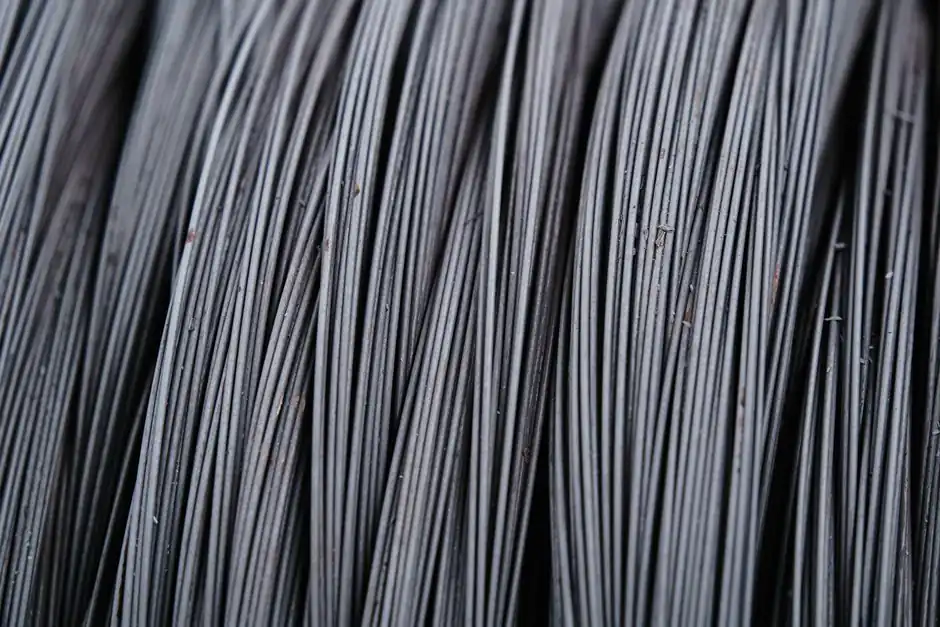
Both 1x7 and 1x19 are single-strand constructions with no strand-over-strand lay: 1x7 lays 7 wires in one helical bundle, 1x19 lays 19 wires in one helical bundle, and the wire count is the only thing that changes [S5].
Compare that to a stranded steel strand like 7x7 (7 strands of 7 wires = 49 wires) or 7x19 (7 strands of 19 wires = 133 wires), and the engineering trade-off becomes obvious: more wires and thinner wires buy flexibility, fewer and thicker wires buy stiffness and abrasion resistance [S2][S5].
Reading the construction number
The first number is the strand count, the second is the wire count per strand. A 1x19 cable is therefore a single strand of 19 wires, while a 1x7 is a single strand of 7 wires; neither has a separate core or strand-on-strand lay [S5].
For the stranded 7x7 vs 7x19 pair, the total wire counts are 49 and 133 respectively, meaning 7x19 carries more than 2.5x the number of wires of a 7x7 of the same diameter [S2]. The same diameter and the same galvanised finish can therefore mask a 2.7x difference in wire count, and the on-site behaviour changes accordingly.
Stiffness and stretch: why 1x19 holds its shape
A 1x19 cable has almost nothing to compact or settle under load, because there is no strand-on-strand slip and no fibre or steel core being compressed. That is the reason architects specify it for cable railing infill and why riggers use it for standing rigging: once tensioned, it stays where it was set and keeps a clean, bright appearance across a long unsupported run [S5].
The trade-off is bending stiffness. A 1x19 rope does not want to be coiled tightly and should never run over a small-diameter sheave; a 1x7 sits between the two, stiffer than 7x7 in the small-diameter range but with marginally more give than a true 1x19. A prestressing strand for concrete follows the same principle: a single helical bundle locks the wires in place so that post-tension elongation stays predictable.
1x7 vs 1x19: where the small difference matters
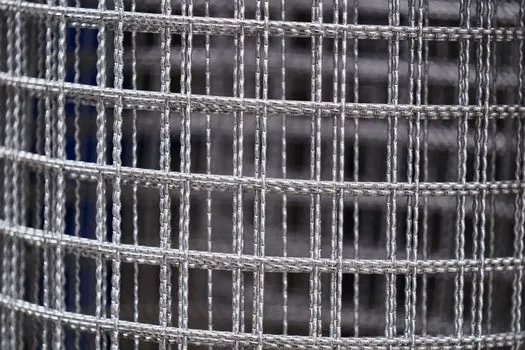
Within the single-strand family, 1x7 is the slightly more flexible of the two and is commonly stocked in galvanised and stainless finishes for guy wires, light rigging, fence bracing and architectural tie-backs where the run is straight and visibility of sag is not critical. [S5]
1x19 is stiffer and lower-stretch, with the same surface look as 1x7 but noticeably more resistance to bend. A spec sheet for 1/8" to 1/4" Type 316 stainless 1x19 from one stocking distributor lists 1/8", 5/32", 3/16", 7/32" and 1/4" as the standard diameter set, with Type 316 specified for marine and chloride exposure [S5]. 1x7 in the same diameter set is usually priced slightly lower per foot and weighs marginally less for the same nominal diameter because fewer wires mean less steel cross-section in the outer helix.
Selection matrix: 1x7 / 1x19 / 7x7 / 7x19
The four constructions line up against four decision criteria as follows. The data is synthesised from the cross-vendor construction guide [S5] and the cable flexibility comparison [S2]:
Flexibility, low to high: 1x19 (very low) < 1x7 / 7x7 (semi-rigid) < 7x19 (high). Constructional stretch, low to high: 1x19 < 1x7 ~ 7x7 < 7x19. Abrasion resistance of the outer wires, high to low: 1x19 > 1x7 ~ 7x7 > 7x19, because thicker outer wires resist wear on dirty or rough surfaces [S5]. Fatigue life over a sheave, low to high: 1x19 (poor) < 1x7 / 7x7 (moderate) < 7x19 (best), which is why 7x19 is the default for winch lines, pulleys and garage door cables [S2][S5].
Use 1x19 for architectural cable railing, standing rigging and any straight run where visible sag is unacceptable. Use 1x7 or 7x7 for guy wires, light rigging, tie-downs, fencing and trellis runs, and budget-friendly cable railing where the very stiffest 1x19 look is not required. Use 7x19 for winch lines, pulley systems, garage door cables, hoists and control cables [S3][S5].
Material and finish: galvanised vs 304 vs 316
Construction only tells you the geometry; the alloy and finish decide whether the cable survives the environment. Galvanised high-carbon steel is the value choice for outdoor duty, with strong rust and corrosion resistance for general construction [S5].
Type 304 stainless is the indoor and light-outdoor default, while Type 316 adds 2-3% molybdenum and is the marine grade specified for salt water and chloride exposure; one stocking line lists 1x19 in Type 316 from 1/8" through 1/4" diameter as the marine-grade offering [S5]. For corrosive process plants, the same logic applies across wire rod feedstock: alloy choice and finish decide service life more than the construction class.
Termination and field handling
1x19 is harder to terminate in the field than 7x7 or 7x19 because the stiff single strand resists the swage die and the wires do not redistribute load the way a stranded rope does. Mechanical and swageless fittings designed specifically for 1x19 are the safe default, and field-made eyes with nicopress sleeves are not recommended for this construction. [S5]
7x7 and 7x19 both swage cleanly with standard wire rope fittings and tolerate field-cut eyes with ferrules, which is one of the reasons they show up in everyday construction tools bags alongside swagers, cutters and tensioners. A practical note for construction machinery with sheaves: the sheave diameter should generally be at least 20x the rope diameter for 7x19 and substantially more for 1x19, otherwise the outer wires fatigue and birdcage within a few hundred cycles.
Where aircraft cable is no longer enough

The 7x7, 7x19 and 1x19 family is the aircraft-cable range and tops out at roughly 1/4" to 3/8" in most stocking lines. For heavier rigging, hoisting and crane work, the next step is an IWRC (Independent Wire Rope Core) rope such as 6x19, 6x25 or 6x26, where a separate steel core adds crush resistance and helps the rope hold its shape under heavy load [S5].
6x19 class is the IWRC general-purpose option, 6x25 is the standard fatigue-resistant option for repeated bending, and 6x26 is the heavy-duty option where abrasion and crushing dominate. Stocked diameters in this class commonly run up to 1-1/4" [S5], which is roughly 5x the upper limit of a typical 1x19 architectural cable.
Quick decision rule
If the run is straight and the eye will see sag, specify 1x19. If the run is straight but the budget is tight and the sag tolerance is generous, drop to 1x7 or 7x7. If the cable has to cycle over a sheave, winch drum or pulley, specify 7x19 and confirm sheave diameter. For hoists, cranes and IWRC-class duty, jump to 6x19, 6x25 or 6x26 with the appropriate termination hardware. Related selection logic for matched industrial hardware, like picking the right alloy round bar tolerance for machining stock, follows the same pattern: define the duty, then the geometry, then the material. [S5]