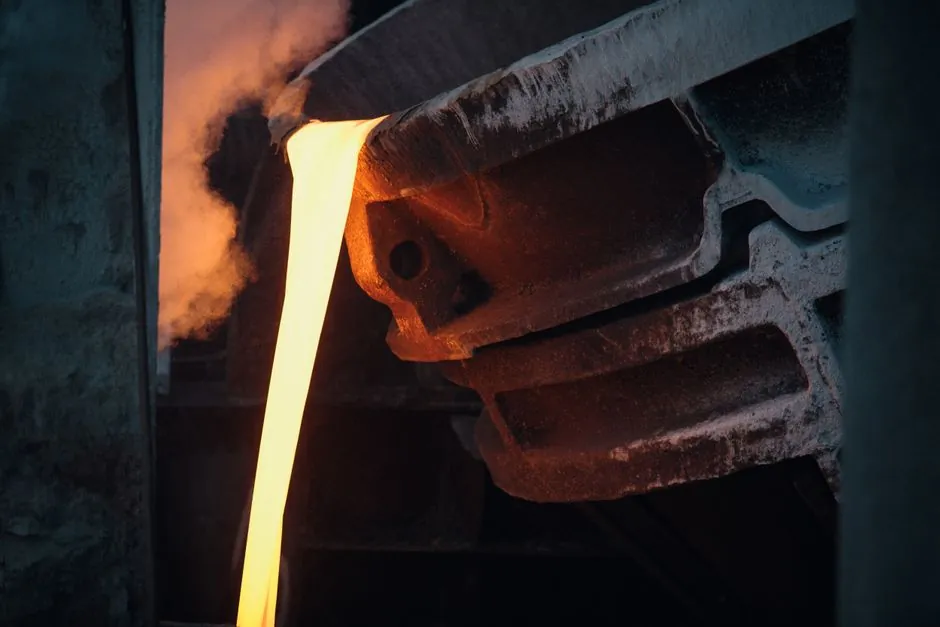
AlMg5Si2Mn (commercial Magsimal-59) and AlSi10MnMg sit at the centre of every non-heat-treated automotive structural die-casting decision, and the 2018 Rheinfelden Alloys structural-casts handbook still draws the practical line between them: a weight reduction up to 40% versus an AlSi10MnMg design is achievable when switching to an AlMgSi high-pressure die-casting alloy, with no heat treatment required on the final part [S3].
Both alloys are widely used in automobile die-casting structural parts, but their design logic is opposite: AlSi10MnMg is built around an Al-Si-Mg system that needs T5 or T6 ageing to hit its mechanical ceiling, while AlMg5Si2Mn is a "naturally hard" system that reaches its properties in the as-cast state, which simplifies process flow and eliminates distortion or blister scrap [S5][S2].
Composition, designation, and how the two alloy families differ
AlSi10MnMg is a hypoeutectic Al-Si-based alloy in which approximately 10% Si gives excellent castability, Sr refines the eutectic for uniform as-cast structure, and Mg forms the Mg2Si strengthening phase; in the as-cast state Mg has little effect on strength but reduces ductility [S1]. AlMg5Si2Mn, by contrast, is a low-Fe, Mn-stabilised Al-Mg-Si system where the term "naturally hard" is borrowed from wrought alloys: even AlMg5Si2Mn ages slightly, but the effect ceases within a few days at room temperature, and outstanding mechanical properties are reached without heat treatment depending on wall thickness [S2]. Mn serves the same iron-control role in both, promoting the less detrimental α-Al15(Fe,Mn)3Si2 phase over the acicular brittle β-Al5FeSi needles that punish ductility in recycled AlSi10MnMg [S4]. A Cr-bearing variant, AlMg5Si2MnCr (0.1–0.3 wt% Cr, brand MAXXALLOY-Structure), raises 0.2% yield strength by 10–15 MPa versus the Cr-free baseline and reduces sticking in the die [S2].
Mechanical-property ceiling with and without heat treatment
High-pressure die-cast AlSi10MnMg is the most used alloy for structural components and is typically primary quality because the high performance required is reached through T6 heat treatment, per Bongiovanni et al. in La Metallurgia Italiana, April 2024 [S4]. The catch, also recorded by industrial process notes, is that heat treatment of AlSi10MnMg causes casting deformation and surface blistering, with the risk increasing sharply as the volume of die castings grows [S6]. For standard HPDC parts only T5 (artificial ageing without prior solution treatment) is feasible because the porosity of the castings blocks any subsequent T6 or T7 treatment; parts requiring T6 or T7 must be cast under high vacuum [S1]. AlMg5Si2Mn sidesteps the whole question: the as-cast 0.2% yield strength is lower than that of a peak-aged AlSi10MnMg, but the elongation at failure in thin walls is the design driver for crash-relevant structural parts [S2].
Thermal conductivity and the electromobility requirement
Thermal conductivity has moved from a footnote to a spec line, driven by motor housings, heat sinks, battery trays and inverters for EVs [S1]. Nováková et al. measured as-cast thermal conductivity of AlSi10MnMg at 50 °C in the range of about 125 to 138 W·m−1·K−1, with the value rising as the cooling rate of the casting process slows (gravity sand and gravity die casting sit above HPDC) and rising again as temperature climbs from 50 to 300 °C [S1]. A practical conclusion: artificial ageing performed in industrial practice on castings to raise mechanical properties in the 160–230 °C window has a positive effect on thermal conductivity, so T5 ageing is not a trade-off against thermal performance in motor-housing or inverter-housing service [S1]. General HPDC guidance still holds that aluminium die castings are not usually solution heat treated, and low-temperature ageing may be used for stress relief or dimensional stability [S7]. For an overview of how die casting feeds into this property set, the broader process and alloy-design background is covered separately.
Weldability, corrosion, and joining for mixed-material body-in-white
AlMg5Si2Mn is described as "resistant to corrosion and fantastically weldable", making it a default for chassis components, pressure vessels, car seats and structural parts where castings with very high ductility and good strength without heat treatment are required [S2]. The absence of a T6 step also deletes a whole scrap category: no distorted parts, no blisters, no straightening rework, and the heat-treatment furnace investment and energy line are removed from the part's cost stack [S2]. AlSi10MnMg, in turn, has a much higher Si load that drives castability and strength but raises the solidification shrinkage and makes welding more demanding. Joining-methods notes in the Rheinfelden structural-casts handbook cover the mixed weld/braze/flow-drill combinations that an AlSi10MnMg-intensive body-in-white typically requires [S3].
Process control: melt cleanliness, sticking, and the as-cast structure
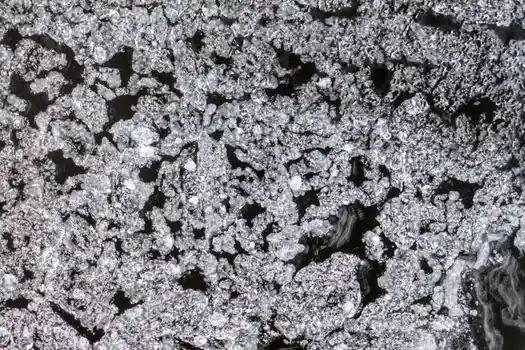
AlMg5Si2Mn is unforgiving on melt cleanliness: contents of as little as 10 ppm of sodium lead to a brittle structure, so alkaline cleaning salts must be avoided in the foundry and the calcium and sodium contents of circulation material must be monitored [S2]. The recommended in-process check is thermal analysis, with a recalescence of 0.6 to 1.2 °C used to confirm the correct as-cast structure [S2]. AlSi10MnMg is more tolerant in the melt shop but pays for it later through iron pick-up, which is why the SALEMA secondary-alloy project targets the upper tolerance of EN 1706 43500 with 70% and 90% end-of-life recycle content to keep β-Al5FeSi needles under control [S4]. On the die side, AlMg5Si2Mn has a low tendency to stick despite the low Fe level, because Mn lets even thin-walled parts demould cleanly, though the higher solidification shrinkage versus AlSi alloys must be designed into the die inclination [S2]. Choosing between the two also feeds back into die-casting die and die-casting machine selection, where thermal-balance design and clamp-force sizing change with alloy shrinkage and the spray/lubrication regime.
Decision matrix: which alloy fits which structural part
Use AlMg5Si2Mn when the part is safety-critical, thin-walled, must be welded into a multi-cast body-in-white, cannot tolerate the distortion or blister risk of a T6 step, and weight saving is the primary driver: chassis nodes, rear longitudinal members, shock-tower housings and battery-tray cross members are typical fits, with the 40% weight-reduction figure relative to an AlSi10MnMg design as the headline number [S3][S2]. Use AlSi10MnMg when the part is large, complex, and benefits from Si-driven castability, when T5 ageing is acceptable in the 160–230 °C window (it also raises thermal conductivity), or when peak tensile/yield strength after T6 is mandatory and the part can be vacuum-cast to suppress blister-causing porosity [S1][S4]. As-cast, AlSi10MnMg in HPDC reaches 125–138 W·m−1·K−1 at 50 °C and rises with temperature and ageing temperature, which makes it the practical choice for motor-housing and inverter-housing thermal paths [S1]. A common compromise is the AlMg5Si2MnCr variant, trading 0.1–0.3 wt% Cr for 10–15 MPa of extra 0.2% yield strength and reduced die-sticking, when the ductility of the base AlMg5Si2Mn is already sufficient [S2].
Signals to watch over the next design cycles: the SALEMA project's full data set on secondary AlSi10MnMg at 70% and 90% end-of-life recycle content, which would shift recycled-content targets on structural parts without a T6 step [S4]; and continued industrial qualification of Cr- and Zr-bearing AlMg5Si2Mn variants as a way to recover the 10–15 MPa yield gap versus peak-aged AlSi10MnMg without re-introducing heat treatment [S2]. Both signals are tractable on the next die-trial campaign.
Related analysis: Dampproofing vs Waterproofing: What Actually Changes the Spec.