
Aluminum alloy selection is a four-axis decision: alloy series (1xxx-7xxx), temper designation (O, H, T4-T7), fabrication route (extrusion, rolling, casting, forging), and service environment (corrosion class, load, temperature). Engineers who collapse these into a single "6061-T6 or 7075-T6" choice routinely over-pay 15-40% on billet cost or under-spec fatigue life.
This guide walks the technical gates that decide the alloy on a real drawing: mechanical envelope first, then formability/weldability, then corrosion and surface treatment, with extrusion-speed and die-cast process limits as the process-side check [S1]. A working knowledge of aluminum alloy families is assumed; readers new to the families can review the base reference for series-by-series composition envelopes.
Series Selection: Which 1xxx-7xxx Family Fits the Service Envelope
Series 1xxx (≥99.0% Al) carries the highest corrosion resistance and electrical/thermal conductivity of the wrought families, with tensile strength typically 70-185 MPa depending on temper, and is the default for chemical tanks, heat exchangers and busbars where strength is secondary [S2]. Series 3xxx (Al-Mn, e.g. 3003, 3105) is the workhorse for sheet forming — cookware, roofing, signage — with tensile around 110-285 MPa and formability rated good-to-excellent.
Series 5xxx (Al-Mg, e.g. 5052, 5083, 5754) is the marine-and-pressure-vessel default: 5052 sits at 210-260 MPa tensile, 5083 reaches 270-350 MPa, with elongation 12-25% in annealed tempers and good weldability. Series 6xxx (Al-Mg-Si, e.g. 6061, 6063, 6082) covers the structural extrusion space — aluminum window and door profiles, aluminum ladder rails, architectural sections — because the Mg-Si balance lets T5/T6 tempers hit 185-310 MPa tensile while keeping extrusion speeds workable. Series 7xxx (Al-Zn-Mg-Cu, 7050, 7075) is reserved for highest-strength aerospace and tooling structural parts, with 7075-T6 at 572 MPa tensile typical, at the cost of weldability and a corrosion class that demands cladding or coating in marine service.
Temper Designations and What They Actually Do to the Numbers
The temper suffix is not decoration — it changes yield strength by 2-5x on the same billet. The F (as-fabricated) and O (annealed, full soft) tempers set the lower bound: 6061-O is roughly 55-125 MPa tensile with elongation 25-30%, used where deep drawing or severe forming precedes any age-hardening step. H tempers (strain-hardened, 1xxx/3xxx/5xxx series) cover the cold-rolled sheet range: H32, H34, H116 differ by the amount of cold work and the presence of a final stabilisation anneal — H116 on 5083 is the marine-grade sheet spec because the stabilisation step prevents sensitisation. [S1]
T tempers (solution heat-treated, quenched, then aged) carry the structural numbers. T4 = solutionised + naturally aged to a stable condition, typical pre-paint or pre-form state; T5 = cooled from an elevated-temperature shaping process (extrusion) and then artificially aged — the standard condition for 6063 architectural extrusion; T6 = solutionised + artificial ageing to peak hardness, the spec for 6061 structural, 7075 aerospace, and most die-cast handle stock [S3]; T7 = solutionised + over-aged/stabilised, used where T6's peak hardness would be lost in service (e.g. 7075-T73 for SCC resistance, 6082-T7 for elevated-temperature creep). On aluminum veneer panel flat sheet, 3003-H14 / 3003-H16 are the common feed because paint-line bake cycles are below the alloy's recrystallisation threshold and the H temper survives the oven without distortion.
Fabrication Route Gates: Extrusion, Casting, Rolling, Forging
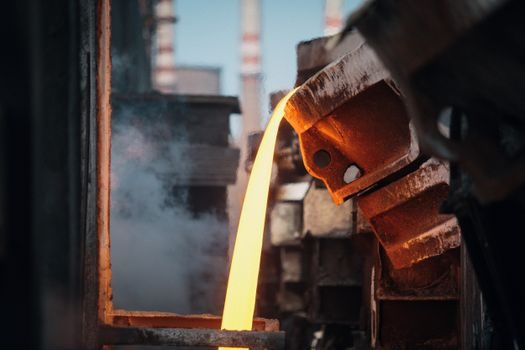
Extrusion speed is a hard gate on the 6xxx series and the reason 6061 vs 6063 is not a price question but a productivity question. Per published process guidance, extrusion outflow speed for 6063 commonly reaches 30-50 m/min under good billet pre-heat, while 6061 caps closer to 5-15 m/min because the higher Mg+Si content raises deformation resistance [S1]. On complex hollow profiles (window frames, curtain-wall mullions, ladder rails), this 3-5x speed gap drives the default choice of 6063-T5; 6061-T6 is reserved for load-bearing sections where the 50-80 MPa higher yield justifies the slower press.
Cast routes split on alloy family. Sand and permanent-mold casting use A356 / A357 (Al-Si-Mg, T6 tensile ~220-290 MPa) for housings, pump bodies, and structural handles; the same family covers most aluminum die-casting machine work in pressure-fed cold-chamber cells and hot-chamber magnesium-tolerant cells. Die-cast handle stock runs Al-Si-based alloys (e.g.
Forging routes (5xxx, 6xxx, 2xxx, 7xxx) are used where the part needs grain-flow alignment the cast/extruded routes cannot give. Rolled sheet (1xxx, 3xxx, 5xxx) and plate (5083, 6061, 7075) feed the transport, marine and tooling markets. A practical decision tree: if the part is a hollow profile <300 mm circumscribed circle and under 60 MPa allowable, extrude in 6063; if structural with welded joints, extrude or roll in 5083/6082; if complex 3D net-shape with internal webs, cast in A356 or die-cast in ADC12 [S2].
Corrosion, Surface Treatment and Joining Constraints
Corrosion environment is the second hard gate after mechanical envelope. In marine and de-icing-salt exposure, 5xxx series (5083, 5754, 5052) is the safe default; 7075 and 2024 must be clad (Al-clad layer) or coated. In food-contact and architectural anodising, 6xxx is preferred over 5xxx because the Mg-Si precipitates respond cleanly to sulfuric-acid anodising and accept architectural-grade electrolytic colouring; 5xxx sheet can anodise to a slightly cloudy finish due to Mg distribution. [S2]
Weldability is series-defined: 1xxx, 3xxx, 5xxx and the 6xxx with low Cu (6063, 6082) are readily weldable by MIG/TIG; 2xxx (Al-Cu) and 7xxx (Al-Zn) are generally not welded — bolted or riveted joints are the default. For 6061-T6 welded structures, the HAZ drops to roughly T4 strength, so weldments are typically designed on the as-welded strength (around 165 MPa) rather than parent-metal T6 (~310 MPa). Anodising pre-treatment also constrains alloy: high-silicon cast alloys (A383, ADC12) cannot be anodised to a uniform colour — they are typically powder-coated or left as-cast.
Comparison Table: Series-by-Criteria for Sourcing Decisions
Putting the four common structural families head-to-head on the decision criteria that actually drive a part drawing: 5052-H32 / 5083-H116 (5xxx) — tensile 210-350 MPa, weldability excellent, corrosion resistance high, formability good, cost band low-to-medium, used in marine hulls, pressure vessels, vehicle panels. 6061-T6 (6xxx) — tensile 290-310 MPa, weldability fair (HAZ-softened), corrosion good, formability fair, cost band medium, used in frames, jigs, transport, bike and ladder structural. 6063-T5 (6xxx) — tensile 185-240 MPa, weldability good, corrosion good, formability/extrudability excellent, cost band low-to-medium, used in architectural extrusion, window/door profiles, heat sinks. 7075-T6 (7xxx) — tensile 540-572 MPa, weldability poor, corrosion fair (clad required in marine), formability fair, cost band high, used in aerospace primary structure, high-stress tooling, racing components. [S3]
The right cell for any new drawing is dictated by which criterion is non-negotiable: marine + welded = 5xxx; complex hollow + moderate strength = 6063-T5; structural + welded + cost = 6061-T6; maximum strength + low corrosion risk = 7075-T6; deep-drawn sheet + paint + low cost = 3003-H14. For thermal-service parts, a fifth gate applies: above 150 °C, the T6 tempers begin to overage and lose strength; 6061-T6 loses roughly 30% of its room-temperature yield by 200 °C, and 7075-T6 is unsuitable above ~120 °C — designers should drop to 5083-O or 6063-T5 in those envelopes.
Process-Side Limits: Extrusion Speed, Die Life, Heat-Treat Response
On the production floor, alloy choice is also constrained by what the gas aluminum melting furnace line and the press can deliver. [S1]
Extrusion parameters per published process data: 6063 billet pre-heat typically 420-480 °C, ram speed 5-20 mm/s, outflow 30-50 m/min on simple hollows; 6061 drops to 380-450 °C, 3-8 mm/s, 5-15 m/min because the Mg+Si in solution raises the deformation resistance at the die bearing [S1]. 7075 extrudes poorly and is rarely seen on commercial presses — most 7075 stock is rolled plate or forged. Die life is also series-sensitive: higher Mg/Si increases bearing wear, so 6061 dies need re-polishing 2-3x more often than 6063 dies on similar throughput.
Selection Workflow and Sourcing Signal

A defensible alloy choice on a 2026 drawing runs in this order: (1) lock the service envelope — load, temperature, corrosion class, joining method; (2) lock the fabrication route — extrude, cast, roll, forge — based on part geometry; (3) within that route, pick the series that meets the load + corrosion + joining gate; (4) within the series, pick the temper that hits the strength/ductility balance and survives downstream surface treatment; (5) verify the chosen grade with the foundry/press on the actual cycle-time and tool-life penalty. [S2]
Two trackable signals for the next sourcing window: alloy price bands through 2026 H2 — the LME aluminium alloy surcharge spread between 6063 billet and 7075 plate has held in a 1.6-2.0x ratio through 2024-2025 and is the single largest variable in cross-grade substitution; and industrial pump pricing data through 2026, which uses 304/316 stainless and ADC12/A356 cast bodies as the cross-reference for how cast-alloy surcharges move with LME. Sourcing teams should request two things from every supplier quote in 2026: the exact alloy-and-temper designation (not just "aluminium") and the mill/heat-treat certificate to ASTM B209 / B221 / B247 for wrought or ASTM B26 / B85 for cast stock, so the spec gate is auditable downstream.