
An aluminum coil is a delivery form, not a material: it is a continuous flat-rolled strip spooled on a core, produced by direct-chill (DC) or continuous-cast (CC) stock in standard widths 800–1900 mm and thicknesses 0.01–10.0 mm [S1]. An aluminum alloy, by contrast, is a graded composition — 1xxx (≥99% Al, commercially pure), 3xxx (Al-Mn), 5xxx (Al-Mg), and 6xxx (Al-Mg-Si) — that can be supplied as coil, sheet, plate, strip, foil, or extruded profile [S1][S3].
The buying question is therefore layered: pick the alloy first (corrosion duty vs strength vs formability), then the temper (O, H12–H34, T3–T6), then the coil envelope (thickness × width × ID/OD), and only then the surface treatment (mill finish, coated, color-coated, embossed) [S2][S5]. Skipping the alloy step is the single most common reason a procurement RFQ comes back with the wrong chemistry and a failed mechanical test.
1xxx Commercially Pure: 1050 / 1060 / 1100 Coils
1xxx series is the commercially pure family, with 1100 carrying ≥99.0% Al content and the lowest mechanical strength of any wrought aluminum grade [S1]. Haomei lists the 1xxx option (1050, 1060, 1100) within its 0.01–10 mm × 800–1900 mm coil envelope, with tempers O, H12, H14, H16, H18 covering dead-soft to full-hard [S1].
Use 1xxx when the duty is formability, deep-drawing, chemical-storage lining, transformer winding strip, fin stock, or PS plate base — applications where corrosion resistance and drawability dominate over strength [S3]. For ductility-sensitive drawing, 1 hour of solutionizing is reported to maximise tensile-elongation before the alloy starts to coarsen and lose plasticity (a generic metallurgical fact, not a spec number) [S3]. Note: 1100 is explicitly flagged as having poor machinability, so do not specify it for screw-machine parts — go to 2011 or 6262 instead [S1].
5xxx Al-Mg: 5052 / 5005 / 5754 / 5083 Coils
5xxx is the Al-Mg family, the workhorse for marine, transport, and architectural coil. 5052 supplies at Okorder are offered in mill-finish and embossed finishes, O through H112 tempers, in standard sheet-coil sizes (2025-08 vintage data; the listing is live on Okorder at the time of writing) [S2].
For LED-strip aluminum profiles, the listed 5052 coil is a 1000-series/5000-series/3000-series grade mix with O-H112, soft, half-hard, and hard temper availability, and a 1000 m.t./month supply capability from Shanghai [S2]. 5xxx is the correct pick when you need a higher strength-to-weight ratio than 1xxx, plus weldability and salt-water corrosion resistance, but you do not need the heat-treat response of 6xxx — common duty split on truck panels, boat hulls, and architectural flashings. Read the broader aluminum alloy context before pinning 5052 versus 5754 in a coastal spec.
6xxx Al-Mg-Si: 6082 / 6061 / 6063 Plate-Coil and T-Tempers
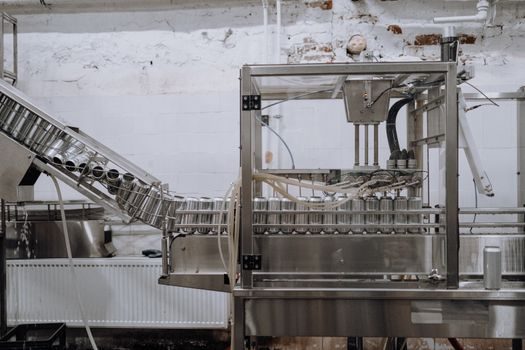
6xxx alloys combine magnesium and silicon as the principal additions, and they are the only series in this coil lineup that respond to T3–T8 heat treatment, reaching a middle-strength bracket well above 5xxx-O [S3]. Okorder's 6083-T5 plate-coil is listed at 4.0–12.0 mm thickness × 1000–1900 mm width, with 505/75/150 mm ID options and "eye-to-wall / eye-to-sky" packing, at a 90,000 m.t./month supply capability — aimed at printing PS plate base, aluminum-plastic composite panel base, construction, decoration, capacitor shells, and AC/auto deep-drawing stock [S3].
Choose 6xxx when the part must be extruded or stamped and then age-hardened to T5/T6 — typical for aluminum window door frames, structural profiles, and AC condenser plates. The T-temper gain is real but it costs formability: if your downstream step is severe deep-drawing, stay on 1xxx-O or 3xxx-O and accept lower finished strength.
Coil Envelope, ID/OD, and Packing — the Procurement Spec
Haomei's stock envelope covers 0.01–10.0 mm thickness × 800–1900 mm width × 2000–3000 kg coil weight across the full alloy range, with O, H12, H14, H16, H18, H24, H26, H32, H34, H111, H112, T3, T5, T6 tempers [S1]. The Okorder 1xxx thin-foil-grade spec is tighter: 0.2–4.0 mm × 20–1500 mm in O, H12, H22, H14, H24, H16, H26, H18, DC or CC casting route [S3].
Coil ID is a frequently-missed RFQ field. The Okorder spec lists 505 mm, 75 mm, and 150 mm as common IDs — 505 mm is the standard slit-coil ID for most recoiler lines, while 75/150 mm suits small-bay converters [S3]. For a color-coated coil line that feeds an ACP line, verify the ID matches the uncoiler mandrel; for a foil stock destined for the pharmaceutical converter, 75 mm is the historical standard. Standard 1050 O-temper coil on Okorder is offered 0.05–4.0 mm × 900–1500 mm × 2.5 ton net, packed on wooden pallets (2025-08) [S6].
Surface Treatment, Certification, and Min-Order Realities

Surface options across the live 2026-07 listings are: mill finish, coated, color-coated, and embossed [S2][S5]. The AA1100 color-coated coil on Okorder carries RoHS, ISO 9001:2000, ISO 9001:2008, CIS, SGS, and SONCAP certification, with a 1 m.t. minimum order and 60,000 m.t./month supply capability — a typical MOQ tier for a stocked prepainted line [S5].
Min-order quantity is the practical procurement gate: most stock coil listings sit at 5 m.t. (metric tons) MOQ, with 1 m.t. on prepainted AA1100 and 5 m.t. on 5052 [S2][S5]. Willstrong New Material (Guangzhou) lists ISO 9001, ISO 14001, ISO 14000, ISO 20000, and OHSAS 18001 as its cert stack, with main products spanning ACM, ACP, color-coated coil, and zinc composite panel [S7]. For aluminum die casting machine feed or large continuous-cast runs, look for a 100 m.t.+/month capable mill; for project tonnage above 10,000 t, plan a 6–10 week mill slot. Comparative read across the same steel-side landscape is in Carbon Steel Plate vs Alloy Steel Plate: A Spec-First Selection Map.
Alloy × Temper Selection Matrix (Coil-Format Use Cases)
Pick 1050/1060/1100-O when deep-drawing or chemical-lining duty dominates (coil thickness 0.2–1.0 mm typical, H14 if some stiffness is required) [S1][S3]. Pick 3003/3004/3105-H14 or H24 when the duty is roofing, gutter, or appliance wrapper — these get a small strength bump from Mn and still draw cleanly [S1]. Pick 5052-H32 or H34 when the part must take a saltwater or fuel splash, including marine panels and truck sidewalls [S2]. Pick 6061-T6 or 6082-T5 plate-coil when the duty is structural, age-hardenable, and requires machinability in the finished part [S3].
A direct strength ladder from the generic literature: 1xxx-O ≈ 70–90 MPa UTS, 3xxx-H14 ≈ 150–200 MPa, 5xxx-H34 ≈ 240–290 MPa, 6xxx-T6 ≈ 290–350 MPa — used here as a decision-band only, not a mill-cert substitute. The 1100 alloy specifically is "low strength" with "excellent corrosion resistance" and "great finishing capabilities" per Haomei [S1]. For a side-by-side steel-comparator selection rule, see Tool Steel vs Alloy Steel: 2026 Selection Map by Grade, Hardness, and Duty.
Recycling Content and European Sourcing Note
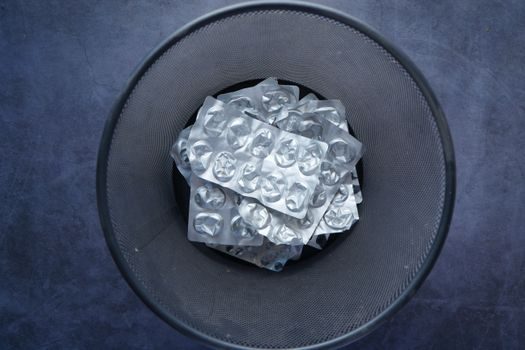
European aluminium recycling rates, as cited on a 2025-08 Okorder listing, are 42% for beverage cans, 85% for construction materials, and 95% for transport vehicles — a useful boundary condition when an OEM is asked to declare recycled content on an automotive or building RFQ [S4]. Recycled-content claims above these European averages need mill-specific EPD documentation, not generic "eco" marketing language.
For a sourcing path that locks alloy + temper + finish in one PO, Zhejiang GKO Aluminum (Taizhou, Zhejiang) lists aluminum coil, foil, strip, sheet, and drawing-block product lines backed by a USD 160,000,000 total investment from 2003 [S9]. Verify EN 485 / EN 573 mill cert and the actual casting route (DC vs CC) before accepting a 1xxx deep-drawing coil — CC stock has higher Fe/Si and is unsuitable for severe drawn parts.
Next spec to pin: confirm the casting route (DC for severe draw, CC for general stock) and the ID (505 mm vs 150 mm) on the next RFQ revision — both are reversible upstream and locked once the mill slits. Track the AA1100 prepainted 60,000 m.t./month capacity and the 6082-T5 90,000 m.t./month capacity as the two volume anchors in the 2026 Asian mill list [S3][S5].