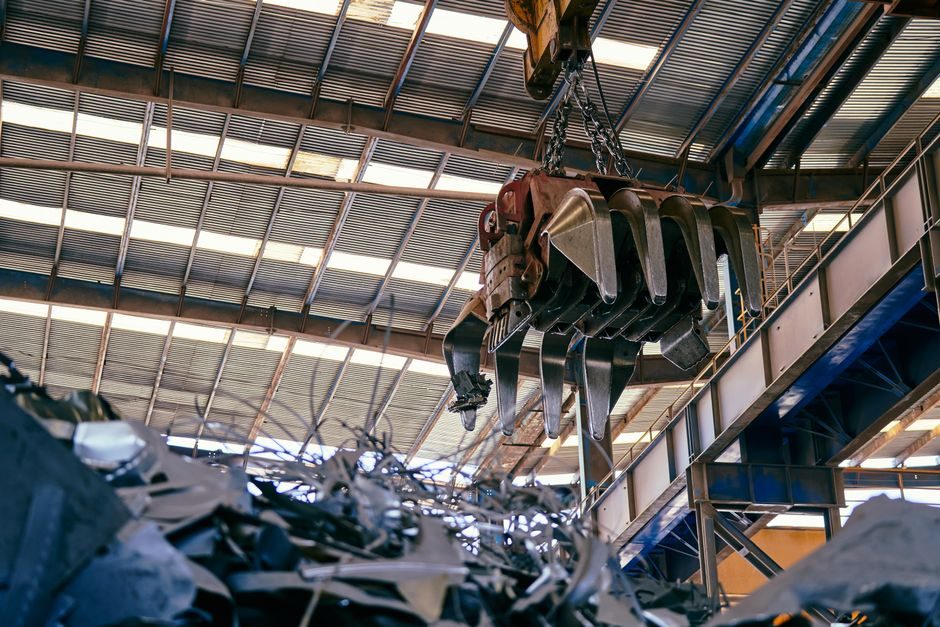
Galvanized steel coil is a carbon-steel substrate (commonly SGCC, DX51D+Z, or ASTM A653 CS-B) hot-dipped or electro-coated with zinc at 40-600 g/m² total coating mass, sold in thicknesses 0.13-5.0 mm and widths 600-1500 mm per EN 10346 / JIS G3302 / ASTM A653M specifications [S2][S6].
Alloy steel, by contrast, is a mill-form engineering material where deliberate additions of Cr, Ni, Mo, Mn, B, or V drive the mechanical envelope; Zhanzhi's product list groups it by alloy family (Cr series, Cr-Mo series, Mn-B series, Cr-Mn-Ti series, Mn-Ti-B series) and pairs it with normalized, quenched, and tempered heat-treatment routes [S3].
Grade, Coating, and Mechanical Anchors
Galvanized coil grade families map to three regional standards: JIS G3302 SGCC through SGC570 plus SGCH full-hard G550; EN 10346 DX51D+Z through DX53D+Z and structural grades S250GD-S550GD; ASTM A653M CS-B plus SS255-SS550 [S6]. The supplier data block on a 2026-06 okorder listing shows 0.3-100 mm thickness and 1000-2000 mm width for hot-rolled carbon galvanized coil, with OEM/ODM and mill-test certificate options on request [S2].
Mechanical targets differ sharply: galvanized coil data sheets focus on formability (elongation, n-value, bend radius) and coating adhesion rather than through-thickness hardenability. Alloy structural steel — see alloy steel — uses controlled additions to hit tensile strength above 1000 MPa with yield-to-tensile ratios around 0.85 after quenching and tempering, with the dominant microstructures being tempered sorbite, bainite, or extremely fine pearlite [S9].
Zinc Coating Mass and Corrosion Window
Coating mass on hot-dip galvanized coil is specified per side or total: Z40 means roughly 40 g/m² per side (about 5.6 µm pure zinc), Z275 maps to ~35 µm/side, and Z300 is the upper commercial band for atmospheric construction [S6]. The same spec set names surface options — regular spangle, zero spangle, or minimized spangle — plus chromate Cr3+ / Cr6+ / Cr0+ chemical treatment and skin-pass / non-skin-pass finishing for paint lock [S6].
For continuous hot-dip galvannealed (GA) coating used by press-hardened body panels, the coating is Fe-Zn alloy rather than pure zinc, with typical coating mass 60-90 g/m² per side; the GA layer resists weld spatter and paint-powdering better than pure zinc. Where aluminum-magnesium or zinc-aluminum-magnesium (ZAM, Zn-Al-Mg) coatings are specified instead, Zhanzhi lists these as a separate "Zm Alloy Steel" family claiming 2-4× longer cut-edge protection versus standard GI [S3].
Dimensions, Coil Geometry, and Mill Capacity
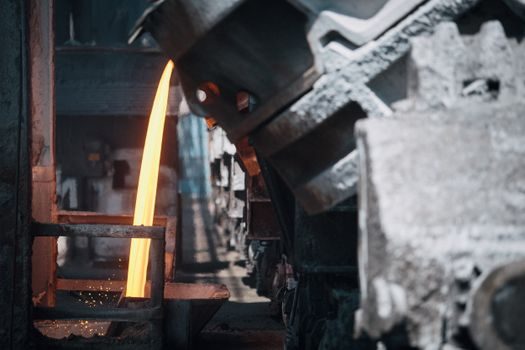
Standard galvanized coil is wound to 508 mm or 610 mm inner diameter, with coil mass 3-14 MT and outer diameter capped by mill handling equipment [S6]. Okorder's best-selling GI spec quotes annual capacity of 1,500,000 MT/year from the HBIS-Tangsteel mill alone [S6]. Yuanda (Qingdao) Steel Plate operates 14 production lines (pickling, cold-rolled, hot-dip galvanizing, prepainted) over a 1,400 mu site with RMB 60 M registered capital and up to 1,000,000 t annual capacity [S5].
Alloy steel bar geometry is a different problem: diameters typically 12-300 mm cut to 6 m length, with ultrasonic testing, end-quench Jominy hardenability verification, and per-bar mill-test certificates (MTC 3.1 / EN 10204). The reference product tree on Zhanzhi separates "Guarantee Hardenability Structural Steel Round Bar" from "Non-quenched and Tempered Steel Round Bar", confirming that heat-treatment route — not chemistry alone — drives the grade [S3].
Price and Lead-Time Snapshot (2026-07)
Made-in-China listings on 2026-05-17 show wholesale galvanized coil priced at US$ 630-780 per ton for Galvalume / GI / PPGI / PPGL at 5-ton MOQ, FOB Qingdao [S1]. A separate 2025-12-15 price feed on the same portal lists hot-rolled GI at US$ 840-880/t and ASTM Dx51d GI strip at the same band, while cold-rolled color-coated roofing sheet runs US$ 500-600/t and the lower spec band US$ 430-650/t [S8]. The 2024-02-24 okorder GI quote is older and now represents a floor: at typical 2026 prices, hot-dip galvanized coil lands between US$ 600-900/t depending on zinc mass, surface, and order size [S6][S8].
Alloy steel bar trades at a structurally higher level. Quenched-and-tempered alloy rounds (e.g. 4140, 4340, SCM415, 42CrMo) typically clear US$ 1,200-2,500/t at mill-direct MOQ, with tool-steel and bearing-steel grades higher again. A 2025 reference price band of 3-5× the GI cost per ton is consistent with what the trade-quote spread implies, though alloy bar prices vary more sharply with scrap-based EAF charge costs than zinc-coated sheet does [S3].
Application Fit: Pick GI for Atmosphere, Alloy for Stress
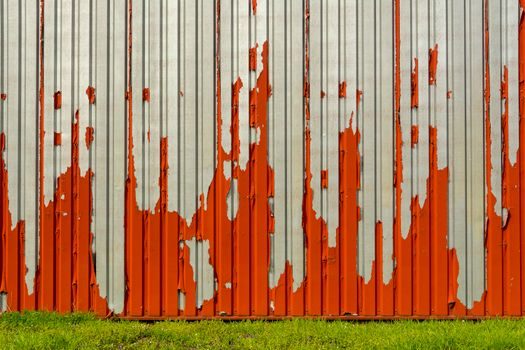
Galvanized coil is the default for building envelope, appliance shells, HVAC duct, automotive body-in-white (exposed panels), and culvert / highway safety parts where the failure mode is atmospheric corrosion rather than mechanical overload. The SUKALP galvanized corrugated sheet range targets roofing, siding, and structural cladding specifically, citing durability in roofing and siding service as the design driver [S7]. Color-coated and nano-coated variants from Yingli and Zhanzhi extend the same substrate into appliance steel and anti-static panel applications, again dominated by formability and surface durability rather than load-bearing fatigue [S3][S4].
Alloy steel belongs where cyclic load, impact, or section-size hardenability is the constraint. Cr, Cr-Mo, and Cr-Mn-Ti rounds are selected for crankshafts, connecting rods, transmission gears, and high-strength fasteners; spring steel rounds and bulletproof steel plate sit one tier further in the same catalog, confirming that the alloy route is engineered for stress, not corrosion [S3]. For buyers comparing flat product to round bar geometry, the carbon steel substrate is shared but the design intent, titanium alloy and aluminum alloy alternatives enter at higher specific-strength or corrosion budgets, while the nickel alloy option only becomes economic above ~600°C service. Where welded or fabricated structures using galvanized sections need power-source selection downstream of the steel choice, the MIG welding machine types and applications spec map covers the matching side of the decision.
Standards, Certification, and Traceability
Galvanized coil is governed by three parallel standards: JIS G3302 (Japan), EN 10346 (Europe, replacing EN 10147 / EN 10142 for the DX51D+Z and S250GD-S550GD structural series), and ASTM A653M (North America) [S6]. Zinc-coating weight designation is Z (EN) / G (ASTM, with G90 ≈ Z275) / Z (JIS, identical symbol to EN but different test method). Mill test certificates cite coating mass per side, surface condition, and base-metal mechanical properties.
Alloy steel grades are governed by AISI-SAE (e.g. 4140, 4340, 8620), JIS G4103-G4105 (SCr / SCM / SNCM series), and GB/T 3077 (Chinese structural alloy steel). For buyers specifying solenoid coil cores or other electromagnetic parts, the magnetic-permeability and residual-loss data on the mill sheet matter more than zinc-coating mass; that is one of the few crossover points where a buyer of flat-rolled steel is forced to compare coated-carbon against alloy electrical steel. For buyers who also handle sheet storage and yard handling, the tower crane vs stacker crane spec map is the natural next read on coil-yard logistics.
Decision Matrix and Recommendation
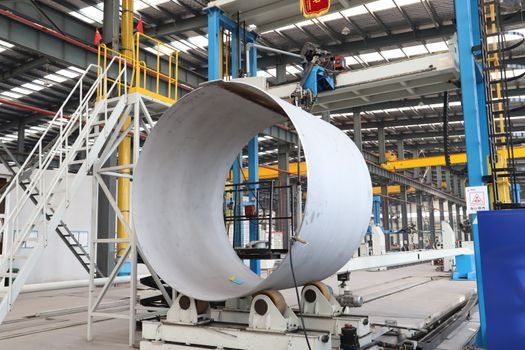
Four criteria line the two families up directly. (1) Cost: galvanized coil US$ 600-900/t vs alloy bar US$ 1,200-2,500/t mill-direct; galvanized is roughly 2-4× cheaper. (2) Tensile strength: galvanized substrate caps near 550 MPa (S550GD), while quenched-and-tempered alloy steel routinely hits 800-1200 MPa. (3) Corrosion behavior: GI gives 20-50-year atmospheric life depending on Z-mass and environment, while uncoated alloy steel needs paint, plating, or a separate stainless overlay. (4) Formability: galvanized sheet draws, roll-forms, and presses easily; alloy bar is machined or forged, not deep-drawn. [S3]
Decision rule for a 2026 specifier: choose galvanized coil (Z100-Z275, 0.4-1.2 mm, G550 substrate only if roll-forming without deep draw) when the part is a skin, a panel, or a structural section exposed to weather with no cyclic-stress requirement. Choose alloy steel bar (Cr-Mo or Cr-Mn-Ti series, quenched and tempered to 28-32 HRC, 12-150 mm diameter) when the part carries fluctuating load, requires impact toughness above 27 J at -20°C, or needs through-thickness hardenability on sections above 50 mm. For buyers who already run galvanized lines and need to add alloy bar capacity, watch for 2026-Q3 price posts on okorder and Made-in-China — both feeds moved noticeably between the 2025-12 and 2026-05 snapshots, and a second update before year-end is the next trackable signal [S1][S8].