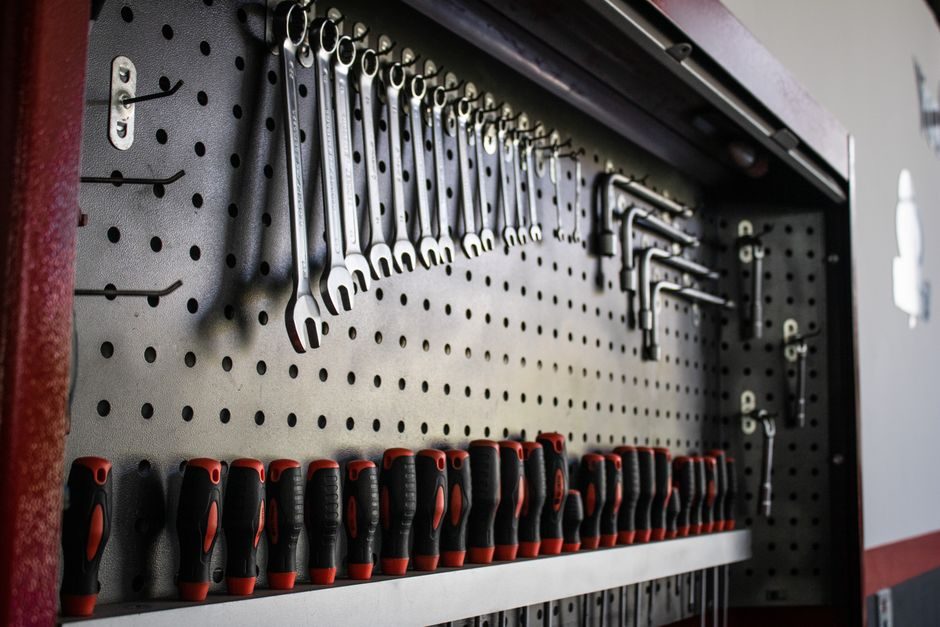
Tool steel and alloy steel are not interchangeable categories — they are two different specification branches that share an iron base but diverge sharply on carbon, alloying intent, and end-of-day hardness. In 2026 sourcing, the practical decision point is duty temperature and required Rockwell hardness, not whether a part "looks like steel".
Tool steel is defined as a family of carbon-and-alloy steels engineered for cutting, shearing, forming, molding, and die applications, with named grades such as A2, D2, S7, H13, O1, P20, M2 and M42 [S1]. Alloy steel, by contrast, is a broader family of low- and medium-carbon steels in which one or more alloying elements (Cr, Ni, Mo, V, Mn, Si) are added primarily to raise hardenability, tensile strength, and toughness in machine and structural parts [S2][S7]. The boundary is functional, not chemical — a 4140 shaft and an H13 die block can sit on the same shop floor but answer completely different questions.
What Each Family Is, in Spec Terms
Tool steel is purpose-engineered around three performance axes: hot hardness, wear resistance, and dimensional stability after quench. Hudson Tool Steel's 2026 catalog lists cold-work grades (A2, D2, D3, D7, A6, A7, A10 GraphAir, O1, O6), shock-resistant grades (S5, S7, L6), hot-work grades (H13, Premium H13), plastic-mold grades (P20, 420 Mold Quality), and high-speed grades (M2, M42, CPM M4, CPM T15, CPM Rex 76), plus CPM 1V/3V/4V/9V/10V/15V for high-impact wear [S1]. This is a grade-by-grade library where heat-treat recipe is part of the buy specification.
Alloy steel is engineered around through-hardenability, tensile/yield ratio, and fatigue. A Shandong mill offer dated 2026-06-17 lists alloy tool and alloy structural grades 20CrMo, 30CrMo, 35CrMo, 42CrMo, 4120, 4130, 4135, 4140, and SCM420 on a 20-ton MOQ at up to 1,000 metric tons per month [S2]. Other current offers cover C45/C50S/C55S/C60S medium-carbon strip, 50CrV4/51CrV4/60Si2Mn/75Cr1 spring-alloy strip, and SK4/SK5 high-carbon strip (akin to AISI 1095/1085) from Xinyu Yongli [S6], plus 1.8522 / 33CrMoV12-9 nitriding alloy and X21CrMoV12-1 / X22CrMoV12-1 creep-resistant bar from Chuansteel [S5]. All of these target gears, shafts, springs, and pressure-bearing components — not cutting edges.
Carbon, Hardenability, and the Numbers That Drive the Pick
Carbon content is the single most useful spec split. Tool steels routinely run 0.5–1.5% C with deliberate carbide formers (Cr, Mo, V, W) — D2 contains ~1.5% C and ~12% Cr for high wear, A2 ~1.0% C / 5% Cr for balanced cold-work, H13 ~0.4% C / 5% Cr / 1.5% Mo / 1% V for hot-work toughness, M2 ~0.85% C with W-Mo-V for red hardness [S1]. AISI O1 is a classic 0.9% C oil-hardening tool grade. Standard alloy structural grades sit much lower: 4140 ≈ 0.40% C / 1% Cr / 0.2% Mo, 42CrMo ≈ 0.42% C / 1% Cr / 0.2% Mo (4140's metric twin), 20CrMo ≈ 0.20% C for case-hardened shafts [S2][S7].
That carbon gap sets the achievable hardness. Through-hardened 4140 typically reaches 28–32 HRC at a 1-inch ruling section and 36–40 HRC at thin sections; quenched-and-tempered 42CrMo goes to 35–45 HRC. O1 and A2 tool steels hit 60–62 HRC after heat treat; D2 reaches 58–62 HRC; M2 and M42 cut at 62–67 HRC; H13 hot-work runs 48–54 HRC for die casting [S1]. If a drawing calls for ≥55 HRC with edge retention or abrasion resistance, the answer is tool steel, not alloy steel. If the drawing calls for ≥900 MPa tensile with through-thickness toughness in a 50–200 mm shaft, the answer is alloy steel.
Decision Matrix: Tool Steel vs Alloy Steel, Criterion by Criterion
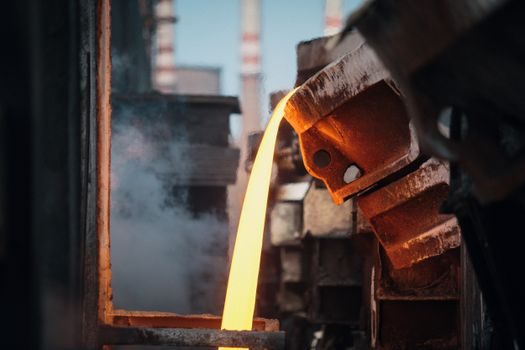
Comparing on the four criteria a buyer actually has to fill in on a PO: typical hardness range, primary duty, cost-per-ton in 2026, and lead-time shape. Tool-steel catalog (Hudson, US, ISO 9001:2015 certified) and alloy-steel mill offers (Qilu 20-ton MOQ / 1,000 t/month [S2]; Xinyu Yongli spring strip; Chuansteel special bar [S5][S6]) form the supply side; pricing data from Made-in-China 2026 lists alloy/stainless round/square/flat/plate at US$1,000–4,000 / ton on 1-ton MOQ from Ningbo Ningshing [S3]. Tool-steel cut-to-size bar in the US typically trades 3–6× higher per kilogram than commodity alloy bar, with premium CPM powder-met grades (CPM 10V, 15V, Rex 76) commanding a further 2–3× premium over A2/D2.
Five-criterion snapshot for an engineer filling out a BOM row:
<strong>Hardness after heat treat:</strong> Tool steel 58–67 HRC (A2, D2, M2, M42) vs alloy steel 28–45 HRC (4140, 42CrMo, 20CrMo) [S1][S2].
<strong>Primary duty:</strong> Tool steel → dies, punches, cutters, molds, knives, shear blades; alloy steel → gears, shafts, axles, springs (50CrV4, 60Si2Mn), high-pressure vessels, fasteners, crankshafts [S5][S6].
<strong>Form supplied:</strong> Tool steel → precision ground flat, decarb-free round, mold plate to 420 mm (P20, 420MQ); alloy steel → hot-rolled round, bar, billet, forged block, strip [S1][S2][S6].
<strong>Cost-per-ton band 2026:</strong> Alloy structural bar ~US$1,000–4,000 / ton at 1-ton MOQ [S3]; alloy tool/structural specialty (42CrMo, 4140) at 20-ton MOQ from Qilu [S2]; tool-steel precision bar typically 3–6× that per kg in the US market [S1].
<strong>MOQ / lead time shape:</strong> Chinese mill alloy offers run 1–20 ton MOQ with 1,000 t/month capacity [S2][S3]; US tool-steel service centers cut to size from in-stock inventory with cut charge listed separately [S1].
Who It's For, and Who It Is Not For
Specify tool steel when the part cuts, forms, shears, stamps, molds plastic or aluminum, or holds a hot die-cavity shape. Cutting-edge retention, polishability to SPI mold finish, or hot-strength above 500 °C is the trigger. Hudson's catalog explicitly segregates cold-work (A2, D2, O1), shock (S7, S5, L6), hot-work (H13), plastic-mold (P20, 420MQ), high-speed (M2, M42), and wear (CPM 1V–15V) — pick by failure mode, not by tonnage [S1].
Specify alloy steel when the part transmits torque, carries cyclic or impact load, or is the structural skeleton of a machine. 4140 and 42CrMo for through-hardened shafts and gears, 20CrMo/4120/SCM420 for case-hardened transmission components, 50CrV4/51CrV4/60Si2Mn/75Cr1 for springs [S2][S6], 1.8522/33CrMoV12-9 for nitrided high-strength machine elements, X22CrMoV12-1 / 1.4911 for creep-resistant bolting and turbine hardware [S5]. Reach for carbon steel instead of alloy steel when the duty is purely static, low-stress, and cost dominates.
Heat Treat, Standards, and Inspection Signals
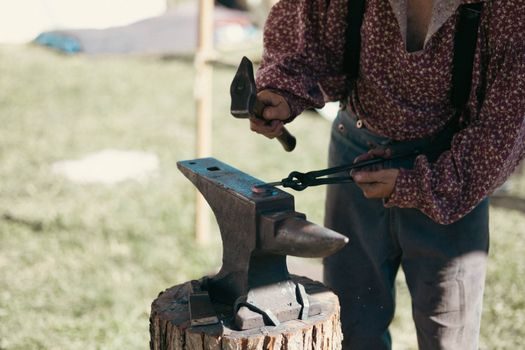
Tool steel arrives at the buyer as a stock-for-shapes catalog with grade-specific heat-treat recipes baked in (austenitize, quench, temper to working hardness), and quality systems tend to be ISO 9001:2015 with full mill test reports per heat [S1]. Hardness, decarburization, and ultrasonic cleanliness are the three inspection lines that matter.
Alloy steel ships more like a commodity — heat numbers, ladle analysis, and mechanical-property certs (tensile, yield, elongation, impact) per order, with end-quench Jominy data commonly available for 4140/42CrMo/20CrMo [S2]. The Chinese 2026 mill offer shows typical structural-grade commercial flow: 20-ton MOQ, 1,000 t/month capacity, T/T or L/C [S2]. For European/Indian mill sourcing, look for EN 10083 grades (42CrMo4 = 1.7225) and EN 10089 for spring strip; JIS equivalents are SK4/SK5 (AISI 1095/1085) and SCM420 (similar to 4120) [S6]. A useful side-by-side reference for steel-family selection sits in the stainless vs alloy steel plate selection map, which covers the adjacent "plate-form" decision with the same criterion-by-criterion format.
Failure Modes, Limits, and Common Mis-Specifications
Specifying alloy steel (4140) for a stamping die is the most common mismatch: 4140 at 32 HRC will deform and wear within hours on a blanking job that an A2 or D2 tool handles for tens of thousands of hits. Conversely, putting M2 tool steel into a structural shaft is wasteful — M2 at 64 HRC has almost no fracture toughness and will shatter under a fatigue cycle that 42CrMo absorbs routinely. [S2]
Other practical limits: D2 and CPM-family tool steels are not deep-hardenability grades — performance drops in sections above ~75–100 mm without powder-metallurgy processing. H13 hot-work must be double-tempered for die-casting duty, or it fails by gross cracking; Hudson even segregates "Premium H13" for the higher-tier duty [S1]. 4140/42CrMo lose through-hardenability above ~150 mm round and should be substituted with 4330V or forged billet for large marine and wind shafts. A useful adjacent spec comparison for the structural-plate side is the galvanized coil vs alloy steel selection map, which lines up corrosion-versus-strength trade-offs in the same family.
Closing signals to track: Hudson Tool Steel's 2026 catalog (ISO 9001:2015) remains the cleanest US reference for cold-work, hot-work, mold, shock, and high-speed grade selection with cut-to-size inventory [S1]. Shandong mill capacity is steady at 1,000 t/month for 20CrMo/30CrMo/35CrMo/42CrMo/4140/4130/4135/4120/SCM420 on 20-ton MOQ with L/C and T/T terms [S2]. For shops evaluating an alloy steel buy, the 1,000–4,000 USD/ton band at 1-ton MOQ for round/square/flat plate and bar on Made-in-China is the 2026 benchmark to negotiate against [S3].