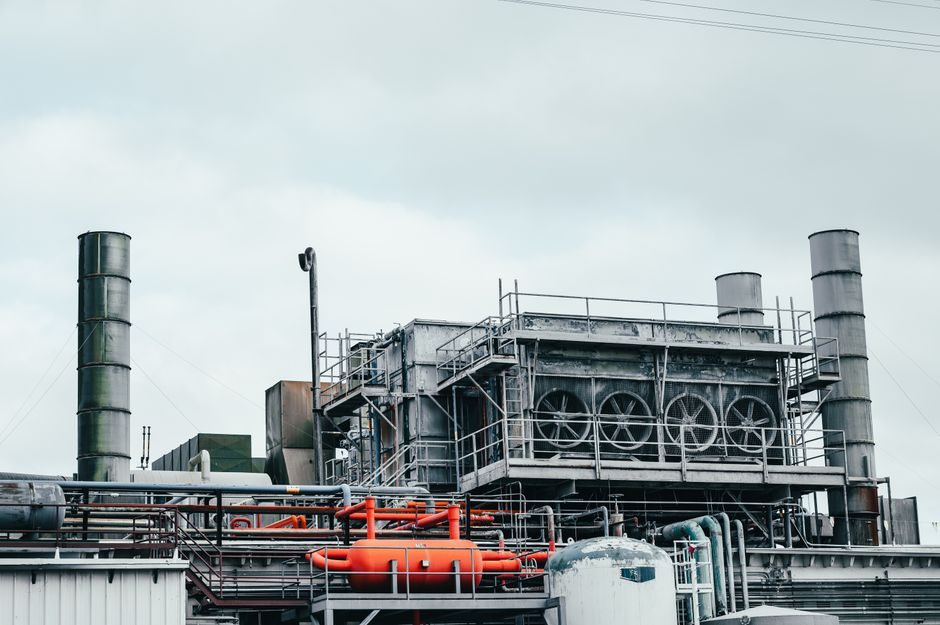
Installing a cold-chamber aluminum die casting machine is a 3-7 day job for a 200-850 ton unit when the foundation, anchor pattern and utility headers are pre-staged; it stretches to 2-3 weeks if the pit, overhead crane and power feed have to be built first [S1][S3].
The reference machine class on this page is the horizontal cold-chamber HPDC unit in the 80T-280T locking-force bracket, which is the standard building block for aluminum structural and housing parts in the auto, telecom and 3C supply chain [S3]. A working aluminum die casting machine at 80 tons is offered at roughly USD 17,000-22,000 on a 1-set MOQ basis, while 25 ton mini units used for sampling and small electronics sit at USD 10,000-11,000 per set [S3]. For an overview of how the cold-chamber differs from hot-chamber zinc and magnesium lines, the die casting machine entry maps the family tree.
Site Readiness and Foundation Tolerances
Concrete foundations for cold-chamber HPDC units are typically 200-300 mm thicker than the machine footprint pad and must achieve 25 N/mm² compressive strength before rigging; early loading of green concrete is the most common cause of frame twist and platen drift after 6-12 months [S1].
Anchor bolt holes are drilled to the OEM template, with embedment depths of 400-600 mm for M20-M24 anchor studs on a 200-400 ton machine; resin-anchored studs outperform mechanical expansion anchors under the cyclic shock loads that HPDC tie-bars transmit at every shot [S3]. Floor flatness must stay within 0.5 mm/m across the platen footprint, otherwise the stationary and moving platens go out of parallel and flash thickness drifts shot-to-shot. The same logic drives site prep for a vacuum die casting machine, where seal integrity across the platen face is the first line of defence against porosity.
Utility stubs must land inside the anchor pattern before rigging: 5-7 bar compressed air, 30-50 L/min die-spray water at 4-6 bar, 50-70 °C cooling-water supply with a 5 °C return differential, and three-phase 380-415 V at the rated kVA (a 280T cold-chamber typically draws 80-120 kVA). Hydraulic fluid is normally ISO VG 46 mineral oil, filled to the reservoir midpoint and circulated through the filter bank for 30 minutes before the first clamping motion [S1].
Rigging, Leveling and Tie-Bar Pre-Load
Move-in is done with an overhead crane rated at 1.5-2× the machine net weight; a 280T cold-chamber HPDC with accumulator and shot-end typically lands at 8-14 t bare, plus 2-4 t for the lubrication and hydraulic skid [S3].
After the unit is set on leveling shims, machinist's levels are read on both platens and across the platen parting line; the target is 0.05 mm/m or better, corrected with tapered shims under the four corner pads. Tie-bar nuts are then torqued in a star pattern to the OEM value, commonly 1,200-2,500 N·m per M42-M56 bar on a 400-850 ton locking unit, before the first dry cycle [S1][S3]. A correctly pre-loaded tie-bar keeps platen deflection under 0.1 mm at full tonnage, which is the band where flash stays below 0.2 mm and shot weight repeatability holds within ±1.5%. Shops that also run a magnesium die casting machine tend to keep the same platen-parallelism discipline, because magnesium's lower specific heat punishes any parting-line mismatch with burn-on defects.
Hydraulic, Lubrication and Shot-End Tie-In
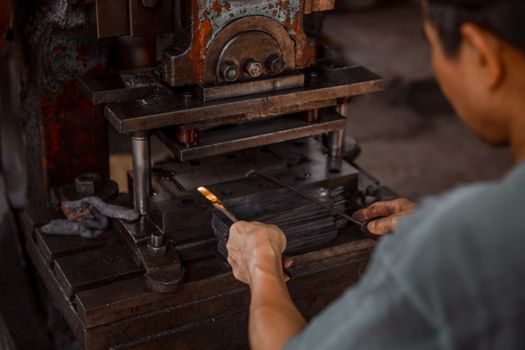
Hydraulic power-pack start-up must follow the OEM purge sequence: reservoir fill, pump cavitation test at 0 bar for 5 minutes, then step-up to 50/100/150 bar with a 10-minute dwell at each step to bleed air from the intensifier and accumulator lines [S1].
Accumulator pre-charge nitrogen is set to 60-70% of the system working pressure (typically 140-160 bar on a 280T machine) and verified with a gauge, not just the digital readout. The shot cylinder's intensification ratio on a cold-chamber aluminum HPDC is usually 1:10 to 1:20, so a 140 bar low-pressure line delivers 1,400-2,800 bar at the plunger tip; any nitrogen under-charge shows up as a soft first stage and short shots on thick sections. Die-spray, plunger-lube and ejector-pin lubrication circuits are then primed with their respective fluids (typically 1-5% water-based graphite or release agent concentrate, 5-10 cSt die lubricant, and ISO VG 68 grease) before the first dry shot [S1].
Die Clamping, Specific Pressure and First-Shot Setpoint
Clamp tonnage must be sized to the part's projected area at 30-70 MPa specific pressure, which is the working band for ADC12/A383 and similar aluminum die-casting alloys; under-spec'ing the lock is the single biggest cause of die flash and safety-stop trips during ramp-up [S1].
As a rule, a 100 cm² projected area at 50 MPa needs 500 kN (≈ 51 ton) of locking force, with a 1.3-1.5× safety margin layered on for the first 200-500 shots as die temperature stabilises. Real plants size the machine to part tonnage rather than the other way round; Technical Die-Casting's (Stockton, MN) die-cast floor runs 11 HPDC machines from 400 to 850 ton to give them the spread needed for short-run and high-volume OEM work without re-fixturing [S1].
On a typical 80T-280T cold-chamber, a dry cycle is run for 10-15 minutes at 30-50% clamp velocity to confirm limit-switch timing, then a heated die set is mounted and brought to 180-220 °C on the fixed half before any metal is dosed [S3]. For the smaller 25T-180T hot-chamber and mini-tonnage bracket that covers zips, fittings and electronics, a zinc die casting machine class unit is the closer reference, but the leveling, tie-bar and hydraulic tie-in steps are essentially the same.
Commissioning Sequence and Acceptance Criteria

First-shot acceptance is signed off against three numbers: cold-chamber shot weight within ±1.5% of the calculated fill, intensification pressure within ±5% of setpoint, and parting-line flash under 0.2 mm on a steady-state sample of 20-50 shots [S1].
Process monitoring should be live from shot one; the As400-style shot-scope systems used on technical die-casting lines record 100% real-time data on every shot, so any creep in intensification time, slow shot profile or clamp tonnage drift is logged and traceable back to the commissioning day [S1]. Robotic extractors and AI visual inspection are normally commissioned in parallel so that hand-loaded samples and full-production samples can be cross-checked on the same shift [S1]. This kind of one-stop commissioning is also what an OEM Tier 2 supplier like EMP Tech markets around its end-to-end HPDC capability, where in-house moldflow, DFM and porosity mitigation are validated against the same shot-data trail from day one [S5].
Common Pitfalls and When to Escalate
Three failure modes are most frequent in the first 30 days after a new HPDC install: (1) oil-temperature creep above 55 °C because the cooler is undersized for the duty cycle, (2) accumulator nitrogen loss that shows up as rising intensification time per shift, and (3) platen parallelism drift caused by uneven foundation loading [S1].
Items (1) and (2) are field-fixable: add a plate heat exchanger or re-charge the bladder to spec and re-check after a 24-hour run. Item (3) is not — if platen-to-platen parallelism exceeds 0.15 mm/m after the foundation has been re-grouted and shimmed, the frame itself is suspect and the OEM must be engaged before any further production shots. The same escalation rule applies if hydraulic pump noise exceeds 85 dBA at 1 m, which usually means cavitation from a mis-sized suction line rather than a pump fault. For plants scaling from sampling to serial production, the aluminum ingot manufacturing chain is the upstream spec gate that decides whether your melt stock will stay inside the 0.1% Fe and 0.05% Si bands that HPDC tolerates without die soldering. For larger shops running 3+ HPDC cells, the pallet shuttle installation workflow overlaps with the die-storage and mold-preheat staging, and the sequencing is worth lining up before the first pour.
Trackable next signal: monitor whether the new install holds intensification pressure within ±5% and parting-line flash under 0.2 mm through the first 5,000-shot break-in; if either drifts, escalate to die-spotting or accumulator service before scheduling any new alloy changeover.