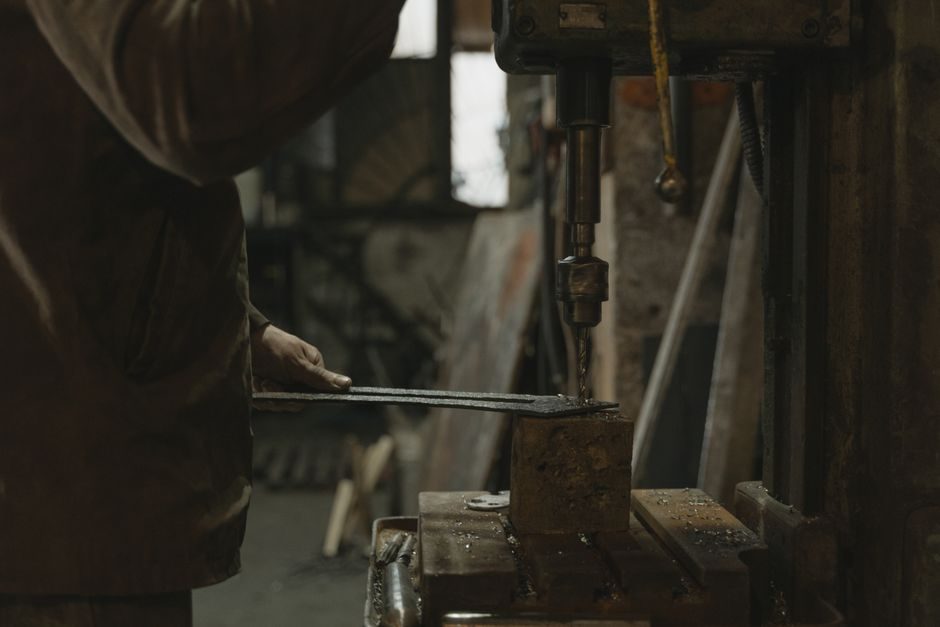
Primary aluminum ingot production runs as a four-stage chain — batching, smelting, deep-well casting, and post-cast homogenization — with alloy-grade selection (1xxx through 7xxx) dictating downstream heat-treatment and mechanical-property targets [S1][S2].
The chain is not generic: each stage carries a spec gate, and a process engineer specifying aluminum alloy feedstock for extrusion, casting or downstream aluminum veneer panel production must validate the melt chemistry, gas content, billet structure and surface finish before approving a lot for the next operation [S1].
Stage 1 — Batching and Alloy Calculation
Batch composition is computed against the target alloy grade (e.g. 6063, 6061, 6082, 7075) with strict limits on Fe, Si, Cu, Mn, Mg, Zn and trace elements such as Ti and B; Sr and Na modifiers are added separately when the cast house runs Al-Si hypoeutectic alloys [S1].
Practitioners compute the addition mass of pure aluminum, master alloys and return scrap, then verify the target against a spectrometer reading on a preliminary melt before tapping to the holding furnace. The cast-house discipline is that the recipe is fixed by the final-extrusion or cast-component spec, not by melt-shop convenience — a 6063 architectural extrusion line cannot accept a batch that drifts above 0.35% Fe or above 0.10% Cu without the surface-finish line rejecting the billet [S1]. For an architectural downstream product like aluminum veneer panel, the alloy window is even tighter because anodized color uniformity fails on Fe-rich streaks.
Stage 2 — Smelting, Degassing and Refining
Furnace types split between gas-fired reverberatory, induction, and electric-resistance holding furnaces, with bath temperatures typically held between 720 °C and 760 °C for 6xxx-series alloys and tightened to 700–740 °C for higher-mg 5xxx variants to control Mg burn-off [S1].
Clean-up is a three-step discipline: slagging (oxide skin and dross removal), degassing (rotary impeller or porous-plug argon/nitrogen injection with chlorine fluxing to drop hydrogen below ~0.10 ml/100 g Al), and refining (flux contact to settle non-metallic inclusions). The spec gate at this stage is hydrogen and inclusion content, not temperature alone — a melt held at 740 °C but under-degassed will produce gas porosity and pinholes in the billet that survive extrusion and show up as blisters after anodizing [S1][S2]. Online cell degassers such as SNIF, Alpur and compact in-line units are the dominant implementation in 2024–2026 primary casthouses, with melt-level cleanliness tracked via reduced-pressure test (RPT) and LiMCA-type inclusion counts before tap.
Stage 3 — Deep-Well Casting and Billet Structure
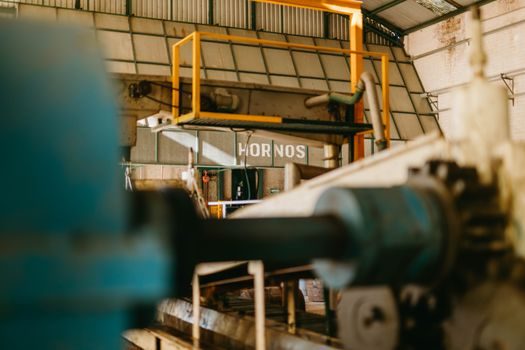
Casting uses a deep-well (vertical DC) system that feeds molten aluminum through a distributor, filter box and nozzle into a water-cooled copper mold, producing round billets in diameters typically 6″, 7″, 8″ and 10″ (152–254 mm) at casting speeds of 80–180 mm/min depending on alloy and billet size [S1].
The metallurgical target is a fine, equiaxed grain structure with no columnar feather crystals, no cold shuts at the surface, and a shell-to-core transition zone kept inside the scalping allowance (typically 5–10 mm per face). Cast-house spec gates include grain size (ASTM E112 or comparison charts), dendritic arm spacing (DAS, typically 20–40 µm for billet aimed at extrusion billet), and shell thickness from ultrasonic or macro-etch inspection. A poor cast — coarse grain or centerline shrinkage — propagates into the extruder as surface tear and through the press as low mechanical-property zones, regardless of how well the extrusion press and aluminum ladder fabrication line downstream are run [S1].
Stage 4 — Homogenization and Downstream Forming
Homogenization soaks the billet at 560–600 °C for 2–8 hours (alloy-dependent) to dissolve intermetallic phases, level the micro-segregation from casting, and condition the structure for either extrusion or re-melting; for 6xxx extrusion billet a slow cooling ramp after soak is critical to precipitate a fine, dispersible Mg-Si population that the extrusion press will re-dissolve during solution heat treat [S1].
Downstream forming options split the spec map. Extrusion presses run the homogenized billet through a heated die at 450–500 °C, then air- or water-quench to capture the T5/T6 temper state and follow with artificial aging (typically 175–200 °C for 6–10 h for 6063 T6). For cast products — including many aluminum ladder rungs and structural fittings — the path is different: re-melt into a holding furnace, pour into green-sand, permanent-mold or squeeze-casting dies, and solution-treat + age to the final T6 or T7 temper. A useful cross-reference is the squeeze-casting route summarized in Squeeze Casting Machine: Process Specs, Benefits and Trade-Offs, which sits between conventional casting and forging and inherits the upstream aluminum alloy melt discipline. Selection of route is governed by mechanical-property target, minimum section thickness, and surface finish required — extrusion wins on long uniform profiles, casting wins on complex 3-D geometry, squeeze casting wins where near-forging density and lower porosity than sand casting are both required.
Alloy Series vs Process Route — Decision Matrix
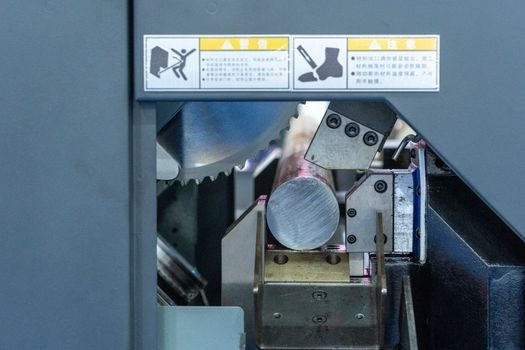
Engineers selecting a process route against an alloy series should line the four main options against cost, mechanical-property ceiling, minimum section thickness, and surface-finish capability: 1) Direct-chill cast billet + extrusion (best for long uniform profiles, lowest per-kg cost for 6xxx architectural and 6061 structural, anodizing-friendly surface); 2) Re-melt + sand or permanent-mold casting (best for complex geometry, moderate mechanical properties, wider alloy choice including 319 and A356); 3) Squeeze casting (best for high-integrity castings, near-forging mechanicals at higher tooling cost); 4) Roll-forming of pre-cast strip (best for thin-gauge, high-volume linear products such as aluminum spacer tape for insulated glass, where line speeds of 100–150 m/min with high-frequency induction welding are the operating norm) [S3].
The decision matrix is alloy-conditional rather than universal: a 6061-T6 structural hand-rail extrusion is not interchangeable with a 7075-T6 aerospace forging, and the upstream melt discipline for a 7075 melt (Zn 5.6–6.1%, tight Cu and Fe ceilings) is materially stricter than for a 6063 architectural billet. A foundry quoting A356-T6 castings and a mill quoting 6063-T5 extrusions are running two different specification regimes even though both label their output "aluminum" [S1][S2].
Common Failure Modes and Spec-Defect Links
Billet cold shuts originate at the deep-well casting meniscus when the metal level or water flow drifts; the failure signature is a sub-surface lap that opens into a surface crack during extrusion. Pinholes and blisters originate at the smelting/degassing gate as residual hydrogen expanding during the homogenization or extrusion re-heat, and they survive anodizing as visible bubbles. Coarse grain or centerline segregation originates at the casting-speed/grain-refiner gate and propagates as orange-peel surface and low elongation in the T6 product. Each defect maps cleanly to one stage of the upstream chain, which is why cast-house data — melt temperature, degassing time, casting speed, water flow, Ti-B rod feed rate — is the first forensic dataset an extruder asks for when a lot is rejected [S1][S2].
For buyers and process engineers the actionable signal is: insist on the upstream cast-house data sheet (alloy verification, hydrogen level, RPT sample, macro-etch grain rating) with each billet/batch lot, because the surface finish on an anodized aluminum veneer panel or the fatigue life of a multifunction process calibrator chassis fabricated downstream both trace back to the smelting and casting gate, not to the finishing line.